








Wild Asparagus
Inventory, lb : 0
Description/Taste
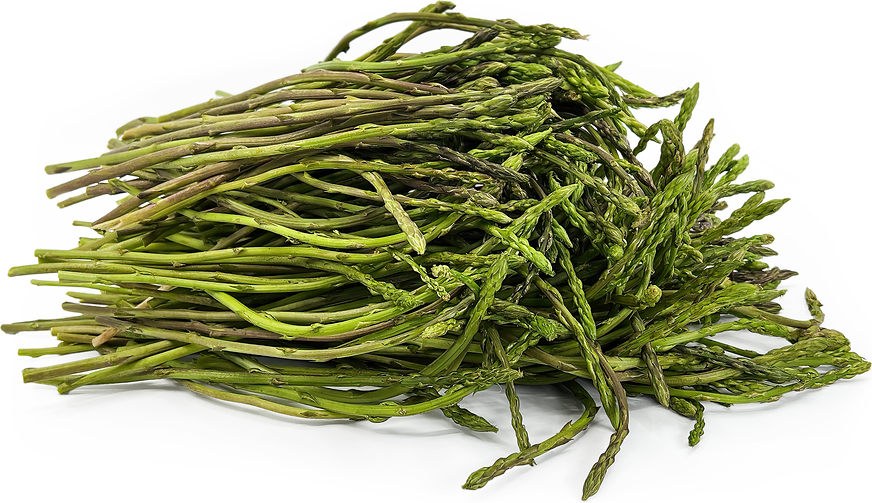
Wild asparagus can be found among the tall grasses and older growth from previous years. The stalks are thin and green with green or purple, coniferous-like crowns and similarly colored scales or leaves, growing along the stems. The stalks are firm and provide a crisp texture. Their flavors are earthy, grassy and nutty, reminiscent of the terrain in which they are surrounded. If left to grow, the stalk will begin to produce side shoots and eventually feathery, fern-like foliage.
Seasons/Availability
Wild asparagus is available during the late spring months.
Current Facts
Wild asparagus, botanically known as Asparagus officinalis, is the same species as the common cultivated asparagus or garden asparagus. The biggest difference between the two is that Wild asparagus has escaped cultivation and established itself in the wild on most continents. Asparagus is a perennial plant and if not over-harvested, will produce edible crops for up to 30 years.
Nutritional Value
Wild asparagus is nutrient dense, rich in potassium calcium, fiber and vitamin C. It is a good source of magnesium, iron, phosphorus and B-complex vitamins. The thin stalks also contain a sulfuric compound called asparagine, which provides diuretic properties.
Applications
Wild asparagus can be used like its common counterpart, prepared by snapping off the bottoms at their natural breaking or bending point. Wild asparagus is best showcased raw or briefly cooked; it can be sautéed, steamed, boiled, baked and fried. Spring ingredients such as morel mushrooms, green garlic, wild ramps, fennel, leeks, young lettuces and citruses are ideal pairings. Other complimentary ingredients include aged nutty cheeses such as pecorino and parmesan, bacon, prosciutto, cream, eggs, butter, shallots, herbs such as thyme, basil and chervil, yeasty breads like sourdough and wheat and grains such as arborio rice, quinoa and farro. Store Wild asparagus in the refrigerator upright in an inch of water and lightly covered or alternately with the ends wrapped in wet paper towel, for up to three days.
Ethnic/Cultural Info
Wild asparagus has been harvested in Greece for centuries. The plant was revered by the ancient Greeks and Romans and was used for both culinary and medicinal purposes. In Crete, the locals call the sometimes long, spindly stalks 'avronies'. During the spring, the markets are filled with bundles of Wild asparagus. The classic Greek use for Wild asparagus is paired with farm fresh eggs in a springtime omelet.
Geography/History
Asparagus is native to the eastern Mediterranean region, western Asia and southern Europe. There are hundreds of different asparagus species, including several in Africa that are grown as ornamentals. Its native habitat includes seaside areas, slopes, reservoir banks and areas where it may be difficult to see the spears amongst other vegetation. Other more accessible habitats include rural roadsides and ditches, parks, fence lines and field borders. Wild asparagus grows from a cluster of underground rhizomes that can produce stalks for over 30 years. The plants are insect pollinated and seeds are spread by birds, allowing for continuous future populations. Wild asparagus thrives in North America and Western Europe and can be found growing in the wild temperate regions of Africa, Australia, Asia and South America. It is most often foraged by individuals and rarely found at farmer’s markets.
Recipe Ideas
Recipes that include Wild Asparagus. One
 is easiest, three is harder.
Podcast