







Turnips
Inventory, 25 lbs : 13.74
This item was last sold on : 05/16/24
Description/Taste
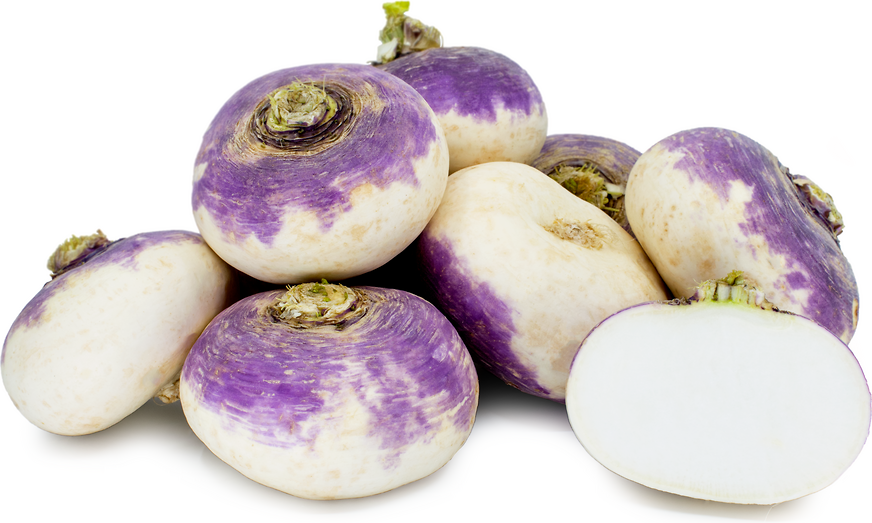
Turnips are small to medium edible roots, averaging 5 to 20 centimeters in diameter, and are attached to elongated, slender green stems and flat, broad leaves. The roots have a round, oval, to slightly flattened shape, and there is generally a thin, tapered taproot extending from the bottom, reaching 8 to 10 centimeters in length. In some commercial markets, the taproot is trimmed before selling for a cleaner appearance. The root’s surface is semi-smooth and firm, absent of side roots, and depending on the variety, the skin ranges in color from white with purple to red, green, orange, and solid white. The most common commercial Turnip is ivory to white with a signature purple ring surrounding the stem. This coloring is developed from sun exposure in the final growth stage. Underneath the surface, the flesh is white, dense, crisp, and starchy. Turnips have a subtly sweet, slightly spicy taste when raw, building in intensity in the nose, but when cooked, the roots soften in texture and develop more mellow earthy, nutty, and sweet flavors.
Seasons/Availability
Turnips are available year-round, with a peak season in the fall and spring.Common
Current Facts
Turnips, botanically classified as Brassica rapa, are ancient root vegetables belonging to the Brassicaceae or mustard family. The biennial plants have been cultivated for thousands of years and are one of the oldest known vegetables, used as a source of nutrients for both animals and humans. Historically, Turnips have carried a somewhat negative reputation as many civilizations used to consider the common root to be associated with poverty and livestock. Over time, Turnips have remained a steady crop in home gardens and have been a critical food source during shortages. In the modern-day, the name Turnip is a general descriptor given to over thirty domesticated varieties that vary in size, color, flavor, and usage. Most varieties cultivated for human consumption are smaller, more tender, and bear with a mild flavor, while larger, fibrous Turnip cultivars are given to animals as food.
Nutritional Value
Turnips are an excellent source of vitamin C to strengthen the immune system, reduce inflammation, and boost collagen production. The roots are also a good source of fiber to regulate the digestive tract, copper to maintain optimal metabolism, manganese to develop connective tissue, potassium to balance fluid levels, and contain lower amounts of phosphorus, calcium, iron, and folate.
Applications
Turnips have a mild, peppery flavor well suited to a variety of raw and cooked preparations. When the roots are harvested young, they can be consumed raw, similarly to a radish. The roots can be sliced and tossed into green salads, chopped into coleslaws, or served on appetizer plates with dips. It is important to note that the Turnip’s skin can be peeled or left on depending on individual preference. While Turnips can be served fresh, the roots are more popularly cooked to enhance sweetness and depth of flavor. Turnips can be baked, roasted, boiled, slow-roasted, sauteed, or mashed. The roots are popularly tossed into soups, stews, and curries, roasted and served as a simple side dish, boiled and mashed as a potato substitute, or cooked into casseroles with rich sauces for a thicker consistency. Turnip greens, also known as Turnips tops, are edible and can be steamed, stir-fried, sauteed, or blended into pesto, used in any recipe calling for mustard greens. Turnips pair well with herbs such as tarragon, parsley, thyme, and chives, aromatics including garlic, onions, and shallots, potatoes, beets, radishes, chestnuts, mushrooms, and meats such as lamb, beef, and pork. Turnip greens should be removed from the roots before storage to avoid moisture loss. The greens can be placed in a plastic bag and stored for 2 to 3 days in the refrigerator. Whole, unwashed roots should be wrapped in a damp paper towel and placed in a sealed container in the refrigerator's crisper drawer, where they will keep 2 to 3 weeks. Turnips can also be peeled, blanched, and frozen for extended use, stored for 8 to 10 months.
Ethnic/Cultural Info
In Ireland, Turnips were traditionally carved with scary faces during the Celtic festival of Samhain. The name Samhain translates to mean “summer’s end” and was a festival that represented a period of transition, as the seasons were changing from fall to winter, often the darkest and deadliest time of year. During Samhain, it was also believed that the supernatural world would overlap with the living, allowing spirits to roam the Earth bringing mischief and trouble. Large bonfires and sacrifices were performed to provide protection from the roaming spirits, and many Celtics would also wear masks and carve Turnips to ward off evil. The Turnips were customarily hollowed, carved with scary faces, and then lit with embers to make the ivory roots resemble glowing skulls. In the Museum of Country Life in County, Mayo, Ireland, two replicas of the lanterns can be seen in the present-day, capturing the Jack-O-Lantern predecessor's ghoulish essence. The replicas were made from a plaster cast of an original carved turnip that was donated to the museum in 1943.
Geography/History
Commercial Turnips are descendants of a wild species native to Europe and Asia. The wild roots were commonly found in temperate climates, and over time, civilizations began to cultivate the roots for improved growth characteristics. The domesticated origins of Turnips can be found in some Assyrian records, but extensive cultivation likely began in the Hellenistic period of Greece, approximately 300 BCE. In Ancient Rome, Turnips were rarely consumed by the upper class and were left to poor families who resided in the countryside. Turnips were also the root of choice to throw at unliked public figures. Throughout history, especially in the Middle Ages, Turnips were often overlooked due to their association with the poor and animals. It wasn’t until the 18th century that the roots received a more favorable reputation. Livestock, including pigs and cows, were traditionally slaughtered in Europe during the winter to cut down on the cost of feeding the animals. Charles Viscount Townshend, also known as “Turnip Townshend,” discovered that Turnips could be grown in rotation with other crops during the winter to provide an inexpensive food source for livestock. This discovery allowed farmers to keep their livestock alive, contributing to the increase in other commodities such as milk and cheese. Later in World War I, Turnips were no longer simply utilized as feedstock, as German families and soldiers survived on the cold hardy roots as a substitute for meat and potatoes, which were both extremely scarce. Turnips were also introduced into North America in 1609, where they were planted extensively in home gardens. Today there are many different varieties of Turnips cultivated worldwide, and the roots are sold through farmer’s markets, specialty grocers, and supermarkets.
Featured Restaurants
Restaurants currently purchasing this product as an ingredient for their menu.
| Mission Ave Bar and Grill | Oceanside CA | 760-717-5899 |
| Huntress | San Diego CA | 619-955-5750 |
| UCSD Food & Nutrition Department La Jolla | San Diego CA | 858-761-1269 |
| The Compass | Carlsbad CA | 760-434-1900 |
| Gold Finch | San Diego CA | 619-804-2051 |
| Saiko Sushi-North Park | San Diego CA | 619-886-6656 |
| La Costa Resort & Spa Main Kitchen | Carlsbad CA | 760-930-7063 |
| Louisiana Purchase | San Diego CA | 619-255-8278 |
| Darshan Bakery (Encinitas) | Encinitas CA | 858-925-7223 |
| Trust Restaurant | San Diego CA | 609-780-7572 |
| UCSD Food & Nutrition Department Hillcrest | San Diego CA | 619-380-9840 |
| Pacific Regent La Jolla | San Diego CA | 858-597-8008 |
| Panama 66 | San Diego CA | 619-206-6352 |
| Beaumont's | San Diego CA | 858-459-0474 |
| Farm Fresh Meals | Vista CA | 760-707-2383 |
| Little Lion | San Diego CA | 619-519-4079 |
| La Costa Glen South | Carlsbad CA | 760-704-1000 |
| Watershed | San Diego CA | 619-495-9814 |
| Viejas Casino Grove Steakhouse | Alpine CA | 800-295-3172 |
| Reata Glen | Ladera Ranch CA | 949-545-2250 |
| University Club | San Diego CA | 619-234-5200 |
| C 2 C | San Diego CA | 619-972-9345 |
| Fishery | San Diego CA | 858-272-9985 |
| La Costa Glen North | Carlsbad CA | 760-704-1436 |
| Lafayette Hotel - Quixote | San Diego CA | 619-296-2101 |
| PFC Fitness Camp | Carlsbad CA | 888-488-8936 |
| Saiko Sushi-Coronado | Coronado CA | 619-435-0868 |
| Wormwood | San Diego CA | 619-573-0289 |
| Vista Valley | Vista CA | 760-758-2800 |
Recipe Ideas
Recipes that include Turnips. One
 is easiest, three is harder.