








Taiwanese Star Fruit
Inventory, 20 lbs : 0
Description/Taste
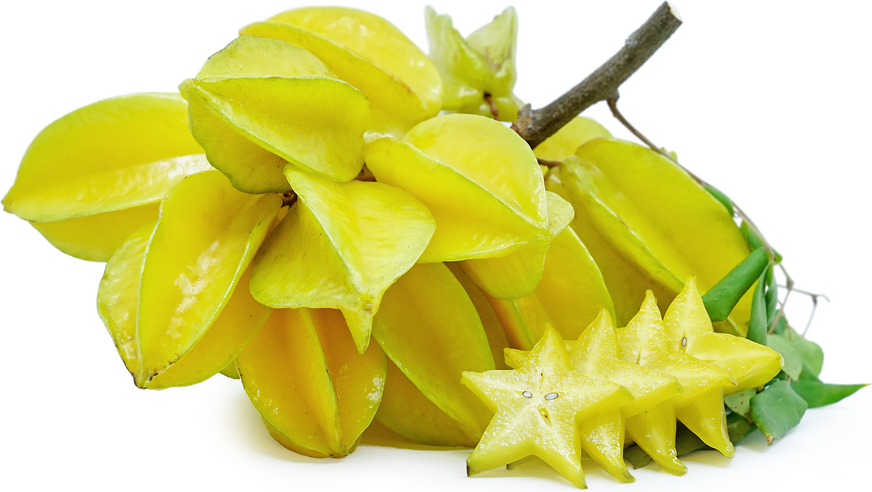
Taiwanese Star fruit are a larger and more flavorful version of the star fruit that we may be more familiar with. The fruit measures 15 centimeters long and 7 centimeters wide. It has deeply defined ridges or ‘wings’ giving it the quintessential star shape. Younger fruits tend to have a greener sheen, less weight and are considerably less aromatic. As the fruit ripens it will become yellow, often with an amber hue, while the tips of the wings may remain slightly green. its aromatics will be tropical with notes of pineapple and citrus. The entire fruit is edible, skin, flesh and the few flat, brown seeds at the center of each section. Taiwanese Star fruit has a crunchy, somewhat transparent skin and the texture of the flesh is succulent, similar to a pear.
Seasons/Availability
Taiwanese Star fruit is available year-round.
Current Facts
Taiwanese Star fruit is botanically knowns as Averrhoa carambola. It is often referred to as “Carambola” throughout the world, utilizing the scientific epithet. This fruit is easily identified by the 5 prominently shaped ribs that form a familiar star shape when sliced. There are two main varieties of star fruit, tart and sweet, the sourer varieties are processed for juice while the sweet are for fresh eating.
Nutritional Value
Taiwanese Star fruit is rich in vitamin C, B-complex vitamins, potassium, zinc and iron. The southeast Asian fruit offers antioxidant benefits in the forms of phytonutrient flavonoids. Unripe, green fruits contain oxalic acid, which can irritate the mouth and throat.
Applications
Taiwanese Star Fruit are best eaten fresh. Typically they are sliced into ubiquitous stars, utilized in fruit salads and as garnishes, though more imaginative applications certainly showcase the fruit for its flavor and textural appeal. Taiwanese Star Fruit pairs well with citrus fruits and bright, rich flavors. Perfect companion ingredients include pomegranates, tangerines, pork belly, creme fraîche, mascarpone, and avocados. The fruit can be slightly grilled to render more juice and flavor. It can also be made into a jam or compote and utilized for breakfast and savory main dishes. To really capture flavor and texture, Taiwanese Star Fruit can be dried or dehydrated into chip form. To store, ripen at room temperature until it develops its characteristic floral scent. If used within a day or two, keep at room temperature. Otherwise refrigerate for up to one week.
Ethnic/Cultural Info
Taiwanese Star fruit is almost always available solely in Taiwan, as there are laws governing the removal of certain fruits and vegetables from the country. In Taiwan, carambola has been developed into multiple varieties, Two Forest, Slant Tail, Malay, and Tai Farm #1, and other varieties known simply by numbers.
Geography/History
The history of Taiwanese Star Fruit dates to trading via the Silk Road during the Tang Dynasty in China. It was brought to Taiwan from mainland China in the 18th Century and has since become a symbolic fruit and important agricultural commodity for the country. Taiwan's vast tropical landscape allows for the fruit to be cultivated and harvested year-round. Taiwanese Star fruit grows in other tropical and subtropical regions throughout the world, including Thailand, India, Central and South America and Hawaii. The star-shaped fruit is originally native to Sri Lanka.
Recipe Ideas
Recipes that include Taiwanese Star Fruit. One
 is easiest, three is harder.