








Tahitian Squash
Inventory, lb : 0
Description/Taste
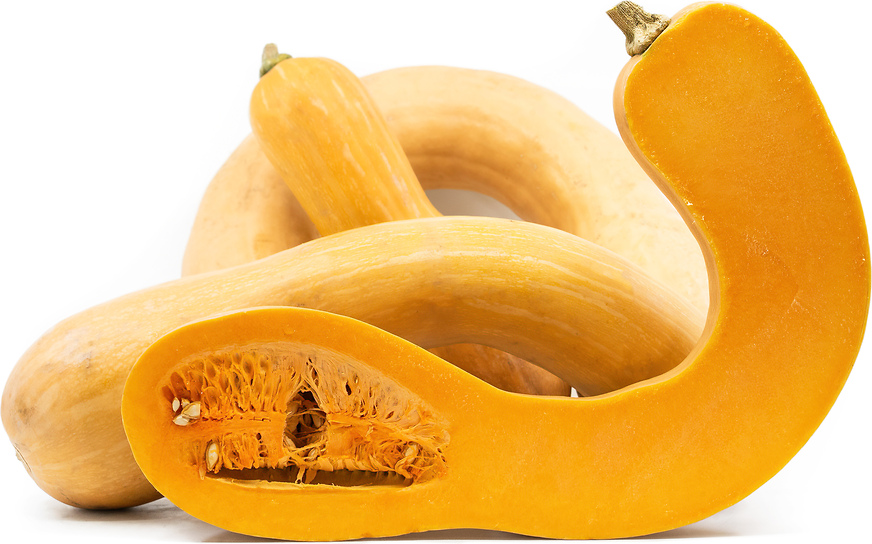
Tahitian squash is medium to large in size, averaging 8-30 pounds, and has the appearance of a large elongated butternut squash with lengthwise furrowing and some crookneck shape tendencies. The hard rind is smooth, tan and connects to a rough, small, light brown stem. The flesh is thick, firm, dry, and a rich golden yellow-orange with a seed cavity in the bulbous end containing stringy pulp and many flat, cream-colored seeds. When cooked, Tahitian squash is fragrant, tender, and smooth with a nutty and very sweet flavor.
Seasons/Availability
Tahitian squash is available in the fall through winter.
Current Facts
Tahitian squash, botanically classified as Cucurbita moschata, is the fruit of a large climbing vine and a member of the Cucurbitaceae family along with pumpkins and gourds. Also known as Melon squash, the Tahitian squash plant can produce over one hundred pounds of squash in one season with the fruits varying considerably in size and shape. Tahitian squash is a distant relative of the butternut squash and is known as one of the longest storing winter varieties. Even when cut, the Tahitian squash will develop a hard skin on the cut end of the remaining flesh, allowing it to be preserved for future use. This heirloom variety is extremely rare and is difficult to find in present day markets but is favored by squash enthusiasts for its storage capabilities, large size, dense flesh, and sweet flavor.
Nutritional Value
Tahitian squash contains vitamins A, C, and B, beta-carotene, manganese, and potassium.
Applications
Tahitian squash is best suited for both raw and cooked applications such as roasting, baking, grilling, steaming, sautéing, and boiling. Although the size of a Tahitian squash can be intimidating, pieces of the squash can be cut off, used for recipes, and the remaining can be left on the counter. The cut surface will harden and seal, preserving the flesh. Tahitian squash can be used raw in salads, or it can be cubed, cooked, and added to risotto, gnocchi, tacos, pizza, and ravioli. It can also be cooked and pureed and added to soups, curries, pies, puddings, sauces, bread, cakes, and muffins. When baked, Tahitian squash will have a stringy texture similar to spaghetti squash, and when roasted, the sugars in the flesh will caramelize creating a rich and decadent flavor. Tahitian squash pairs well with apples, butter, ricotta, aged cheddar cheeses, nuts, pears, chiles, curry, rosemary, cinnamon, citrus, chorizo, bacon, and poultry. An excellent keeper, Tahitian squash will keep up to nine months when stored in a cool and dry place. It is recommended not to refrigerate Tahitian squash as the sugars will convert into starch in chilled temperatures, and the squash will lose flavor.
Ethnic/Cultural Info
Though the official commercial introduction of Tahitian squash can be traced back to Thompson & Morgan Seed in 1977, it is believed seeds may have first been brought back to the United States from French Polynesia by grower and landscaper George Patton. Patton brought back seeds from a trip to Bora Bora and experimented with growing the unique squash in the Lucerne Valley, California in 1976.
Geography/History
Squash is native to Central and South America and was brought to Tahiti via explorers and traders stopping along expedition routes. It is believed that seeds from New World squashes were taken to the island of Tahiti, where new varieties such as the Tahitian squash would later be first cultivated. The Tahitian squash would eventually make its way back to Europe and the Americas where it was first released commercially by British seed company Thompson & Morgan in 1977 under the name Melon squash. Today Tahitian squash is rare and can be found at farmers markets, specialty grocers, and through online seed catalogs in Europe, the United States, Asia, and French Polynesia.
Recipe Ideas
Recipes that include Tahitian Squash. One
 is easiest, three is harder.
| Of The Dirt |
|
Tahitian Squash and Drunken Apple Pie |
| Veggie's Don't Bite |
|
The Ultimate Creamy Winter Squash Soup |
| Tasty Eats At Home |
|
Tahitian Squash Risotto |