







Spitzenburg Apples
Inventory, lb : 0
Description/Taste
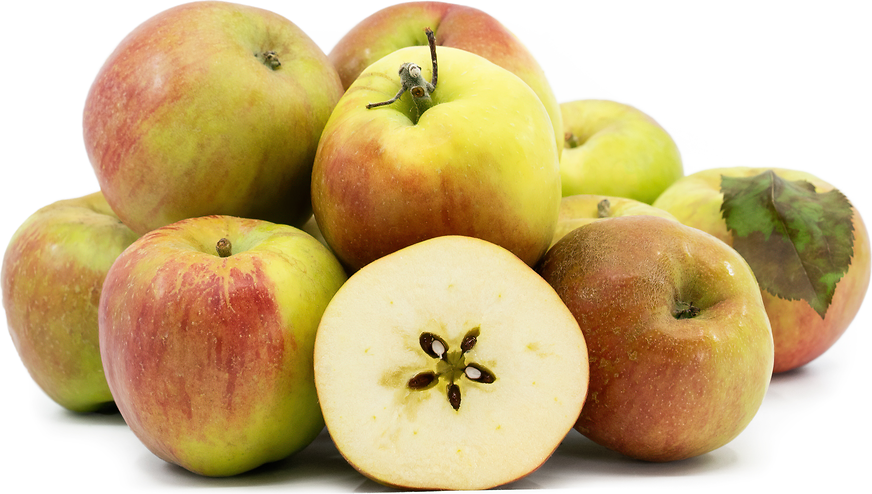
Spitzenburg apples are medium to large fruits, averaging 7 to 8 centimeters in diameter, and have an oval to oblong, blocky shape. The skin is taut, firm, semi-tough, and chewy with a green to yellow hue, covered in red striping and blush. There are also small, textured russet spots surrounding the stem and seen on the fruit's shoulders. Underneath the surface, the flesh is crisp, pale yellow to green, dense, aqueous, and semi-coarse, encasing a central, fibrous core filled with dark brown seeds. Spitzenburg apples are aromatic and have a bright and balanced, sweet-tart flavor with subtle, spice-filled undertones.
Seasons/Availability
Spitzenburg apples are available in the fall through early winter.
Current Facts
Spitzenburg apples, botanically classified as Malus domestica, are an American heirloom variety belonging to the Rosaceae family. The crisp, sweet-tart fruits were first discovered in the 18th century and quickly rose to fame as one of the best fresh eating and dessert varieties available along the east coast of the United States. Spitzenburg apples are also known as Esopus Spitzenburg, named after the settlement of Esopus where the first apple of the variety was found. Despite their initial popularity, Spitzenburg apple trees were susceptible to many diseases, matured late in the season, and were slow-growing, leading growers to eventually phase out the variety in favor of hardier cultivars. Spitzenburg apples drastically declined in cultivation, almost disappearing entirely, but in the modern-day, the variety is slowly remerging as a favored heirloom cultivar grown at specialty orchards and in home gardens.
Nutritional Value
Spitzenburg apples are a good source of fiber, which has been shown to promote digestion and maintain healthy bowels. The apples also contain potassium to balance fluid levels in the body and offer small amounts of vitamins A and C, which can help boost the immune system.
Applications
Spitzenburg apples are best suited for both raw and cooked applications, including baking, steaming, and poaching. When fresh, the fruits are primarily eaten straight, out-of-hand, or they can be sliced and tossed into green salads, chopped and mixed into grain bowls, or displayed on appetizer platters with cheese. Spitzenburg apples are also popularly juiced and used for craft apple ciders. In addition to fresh applications, Spitzenburg apples can be hollowed, stuffed, and baked as a sweet-tart dessert, or they can be incorporated into tarts, pies, muffins, cakes, and galettes. In the 19th century, Spitzenburg apples were one of the most popular apple varieties used for apple pies. The crisp fruits can also be cooked and pureed into sauces, or they can be dehydrated and canned for extended use. Spitzenburg apples pair well with nuts such as pecans, hazelnut, and almonds, vanilla, pumpkin, spices such as nutmeg, cinnamon, and cloves, herbs such as rosemary, mint, and parsley, citrus, and ginger. Whole Spitzenburg apples will keep 2 to 4 months when kept in cold storage. The flavor of Spitzenburg apples will improve with prolonged storage.
Ethnic/Cultural Info
In the Hudson Valley of New York, heirloom apples, including Spitzenburg, have been recently revived through smaller boutique orchards. New York state is the second-largest apple producer in the United States, and many of the orchards in the Hudson Valley are focused on small market harvests to sell directly to consumers through farm stands and farmer’s markets. Heirloom varieties are increasing in popularity among consumers for their unusual flavors, rarity, and diversity. As more consumers seek to shop locally, they are visiting the orchards to pick their apples directly from the trees, which is, in turn, encouraging orchards to make the extra effort to grow more difficult heirlooms. Hudson Valley orchards are also opening cafes and retail stores on-site and are offering activities for families, including outdoor picnics, lawn games, and hayrides as additional sources of income. Spitzenberg apples are considered one of the best-known heirloom varieties in the Hudson Valley and were once one of the most essential varieties for commercial retail. In the present, it is frequently featured in apple pies and craft ciders in addition to being sold fresh.
Geography/History
Spitzenburg apples were first discovered naturally growing as a spontaneous mutation in an orchard in Esopus, New York, in the early 18th century. Esopus was a settlement situated along the Hudson River in Ulster County, New York. In the 19th century, Thomas Jefferson chose to plant thirty-two Spitzenburg apple trees in his Monticello Garden, and the variety began to widely increase in popularity throughout the region for fresh eating and baked applications. After extensive cultivation through local farms and home gardens in New York, Spitzenburg apples were introduced to the rest of the United States in the 20th century. Today Spitzenburg apples are grown through specialty farms in the Northeastern region of the United States and are also cultivated in select areas along the West Coast.
Recipe Ideas
Recipes that include Spitzenburg Apples. One
 is easiest, three is harder.