









White Sapote
Inventory, 10 lbs : 0
Description/Taste
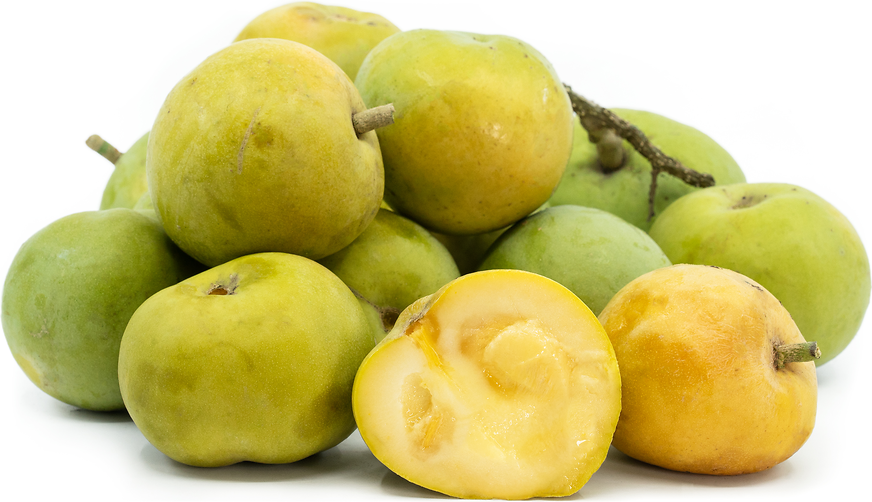
White sapotes are small fruits, averaging 5 to 10 centimeters in diameter, and have an oval, round to ovoid shape. The fruit’s surface ripens from green to green-yellow and has a textured, bumpy, and waxy feel, sometimes coated in a faint bloom. When ripe, the fruit will have a slight give, and the skin is thin, bruising easily. Underneath the surface, the flesh ranges in color from white, ivory to yellow and has a creamy, smooth, and dense, custard-like consistency reminiscent of an avocado's texture. There are also 1 to 5 white, inedible seeds within the flesh that can be small to large depending on the variety. White sapotes have a mild, sweet, and tropical flavor with vanilla, banana, pear, and caramel nuances. The fruits may also contain a subtle tartness or bitterness due to the degree of ripeness, variety, and cultivation techniques.
Seasons/Availability
White sapotes are available year-round, with varying seasons depending on the growing region.
Current Facts
White sapote, botanically classified as Casimiroa edulis, is a subtropical fruit belonging to the Rutaceae family. There are multiple varieties of fruits generally categorized under the name White sapote, and the soft fruits grow on evergreen trees that can widely range in size, sometimes reaching up to 18 meters in height. White sapote is also known as Zapote Blanco in its native region of Mexico and is cultivated and sold strictly as a fresh fruit in local markets. The fruits are not produced commercially due to their short shelf life and are also not suitable for canning, freezing, or puréeing because of their low acid content. In the modern-day, White sapote is grown on a small scale worldwide and is primarily harvested from wild or home garden trees as a unique, fresh eating fruit.
Nutritional Value
White sapotes are an excellent source of vitamin C to strengthen the immune system, boost collagen production within the skin, and reduce inflammation. The fruits also provide calcium and phosphorus to strengthen bones and teeth and contain lower amounts of fiber, iron, thiamine, and riboflavin.
Applications
White sapotes have a custard-like texture best suited for fresh applications to showcase the fruit’s sweet, mild flavor. The fruits are most commonly eaten fresh, out-of-hand, and can be scooped with a spoon. The skin is generally discarded as it contains a slightly bitter flavor, and the seeds are also removed as they are inedible. White sapotes can be sliced and combined into fruit and green salads, used as a topping over yogurt, granola, and cereal, or mixed into overnight oats. In addition to incorporating the flesh into bowls and salads, White sapotes can be sliced and served with cream and sugar, blended into smoothies and milkshakes, frozen into popsicles, cooked into jelly or marmalade, or incorporated into sorbet and ice cream. White sapotes pair well with citrus juices, including orange, lime, and lemon, and other flavorings such as vanilla, ginger, and chocolate. Whole, unopened White sapotes should be ripened at room temperature. Once ripe, the fruits can be stored in the refrigerator for 3 to 5 days.
Ethnic/Cultural Info
It is important to note that the descriptor sapote is used worldwide in many common names of tropical fruits from different biological families. Fruits such as black sapote, yellow sapote, and mamey sapote, belonging to the Sapotaceae and Ebenaceae families, are botanically different from White sapote and widely range in appearance, flavor, and texture. The primary reason these fruits share the same name of sapote can be traced back to the Aztecs. The Aztecs frequently consumed White sapote as they believed it would promote better sleep, and name sapote is derived from the Nahuatl word “tzapotl,” meaning “sweet, soft fruits.” Tzapotl, later sapote, was used generally to describe any type of soft-textured fruit with a sweet, pleasant flavor. This overlap has caused confusion among the different types of creamy-fleshed fruits worldwide, but despite its lack of clarification, White sapotes are still considered a favored specialty fruit throughout the Americas.
Geography/History
White sapotes are native to regions of Central Mexico, where they have been growing wild since ancient times. The fruits are also found in subtropical areas of Guatemala, El Salvador, and Costa Rica and were later spread to the Caribbean, Southeast Asia, and the Mediterranean through explorers and trade routes. In 1810, White sapotes were introduced to California by Franciscan monks. Since their introduction, the fruits have been studied and bred for hundreds of years to produce newer White sapote varieties with improved fresh eating qualities. Today White sapotes are grown in home gardens worldwide and are commercially cultivated in South Africa, Mexico, Australia, New Zealand, and the United States. When ripe, the fruits can be found through local farmer’s markets and are mainly sold for fresh use.
Recipe Ideas
Recipes that include White Sapote. One
 is easiest, three is harder.