








Santa Rosa Plums
Inventory, 22 lbs : 0
Description/Taste
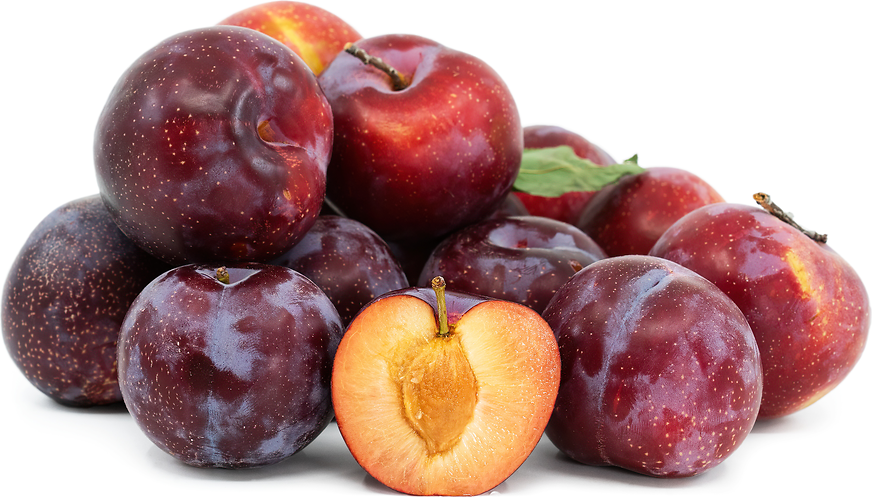
Santa Rosa plums are a medium to large varietal, averaging 4 to 8 centimeters in diameter, and have a round to oval shape with a prominent suture line extending from the stem to the base. The plum’s skin is thin, delicate, taut, and smooth with a glossy, dark red to purple base, covered in white speckles and an opaque purple bloom. Underneath the surface, the flesh showcases a yellow-orange center surrounding the pit and darkens into a red-orange hue just underneath the skin. The flesh also features a slightly firm but tender, succulent, and aqueous consistency, clinging tightly to the central pit. Santa Rosa plums are delicate and easily damaged when ripe and have low acidity mixed with moderate sugar levels. The plums are known for their fruity, sugary-sweet flesh balanced with a hint of tartness, a flavor found within the skin. In addition to the fruits, Santa Rosa plum trees produce small white-pink blossoms in the spring and are often favored as an ornamental addition to home gardens.
Seasons/Availability
Santa Rosa plums are available in the summer.
Current Facts
Santa Rosa plums, botanically classified as Prunus salicina, are a famous stone fruit cultivar belonging to the Rosaceae family. The plums grow on deciduous trees that can reach up to seven meters in height, and the variety bears fruit within 3 to 5 years, versus other cultivars that typically require 4 to 6. Santa Rosa plums were developed in the early 20th century as an improved variety and were highly favored for their balanced flavor, tender texture, high yields, and self-pollinizing nature. The plums were also widely grown for many years as a commercial and home garden variety, and the trees were utilized for fruit production as well as a universal pollinizer in orchards. In the modern-day, Santa Rosa plums are primarily found in home gardens and specialty growers as newer, more disease-resistant plum cultivars have been introduced for commercial production. Santa Rosa plums are also challenging to ship due to their delicate nature, reserving the variety to farmer’s markets and local vendors. The fruits bear a semi-firm and juicy flesh and are incorporated into a wide variety of both fresh and cooked preparations.
Nutritional Value
Santa Rosa plums are an excellent source of vitamin A to maintain healthy organ functioning, vitamin C to boost the immune system, and are a good source of vitamin K to promote faster wound healing. The plums also contain fiber to regulate the digestive tract, calcium to strengthen bones and teeth, potassium to balance fluid levels within the body, and the fruit’s dark purple coloring is a source of antioxidants to reduce inflammation and protect the cells against free radical damage.
Applications
Santa Rosa plums have a sweet, subtly tart flavor well suited for both sweet and savory dishes. The plums can be eaten raw or cooked, and the skin can be kept on for a tangy flavor or removed for a sweeter taste. Santa Rosa plums are traditionally consumed straight, out of hand, or they can be sliced and tossed into green salads, fruit bowls, smoothies, or quartered for appetizer plates. The plums can also be sliced and stirred into breakfast dishes, including yogurt, cereal, or oatmeal. In addition to fresh preparations, Santa Rosa plums hold their shape well when heated and can be incorporated into desserts such as cakes, tarts, cobblers, crumbles, and pies, or they can be blended into sorbet and ice cream. The plums can also be simmered into compotes, jams, reductions, and sauces to serve with roasted meats. Santa Rosa plums can be halved, grilled, and topped with creamy cheeses and honey, or they can be poached with spices to create a flavorful and healthy dessert. Santa Rosa plums pair well with citrus, raspberries, blackberries, strawberries, herbs such as basil, mint, and lavender, fennel, vanilla, chocolate, cheeses such as ricotta and chevre, meats such as lamb, pork, turkey, and poultry, and seafood including scallops, crab, and whitefish. Whole, unwashed Santa Rosa plums are ripened at room temperature. Once ripe, the fruits can be stored in the refrigerator for up to one week, or they can be canned, dried, or frozen for extended use.
Ethnic/Cultural Info
Santa Rosa plums were named after Santa Rosa, a city in Sonoma County in Northern California. The plums acquired this geographical moniker as they were first developed and cultivated in the garden of famous horticulturist Luther Burbank in Santa Rosa city. Burbank resided and conducted research in his personal garden and was regarded as a plant breeding artist, attempting many different crosses while recording little information about each experiment. During his career, many celebrities visited Burbank’s home, including Henry Ford and Thomas Edison, and the fruit varieties Burbank created are still being studied and commercially grown in the modern-day. Burbank developed more than 800 varieties of plants throughout his career and created 250 plum varieties, which were the most cultivars of any of the fruits he worked with in his research. Modern-day horticulturists widely consider Santa Rosa plums to be one of Burbank’s most well-known plum varieties. The plums were also named after Santa Rosa to increase awareness and boost business within the Northern Californian city. In the present day, Burbank’s house and garden are now a one-acre city park and were decreed a National Historic Landmark to preserve the horticulturist’s work.
Geography/History
Santa Rosa plums were developed by horticulturist Luther Burbank in 1906 in Santa Rosa, California. Burbank began seeking out and importing Japanese plums in the late 19th and early 20th centuries, eventually creating Santa Rosa plums. The variety was produced from crosses between Asian and European plum cultivars and was selected for its improved growth characteristics and flavor. Burbank also drew upon the genetic diversity of Japanese plums to develop new varieties that would thrive in the growing regions of California. Today Santa Rosa plums are not commercially grown and are primarily cultivated through select farms for local sale. They are also a popular home garden cultivar among plum enthusiasts. When in season, Santa Rosa plums can be found through farmer’s markets, specialty distributors, and in home gardens in the United States, especially in California.
Recipe Ideas
Recipes that include Santa Rosa Plums. One
 is easiest, three is harder.
Podcasts