







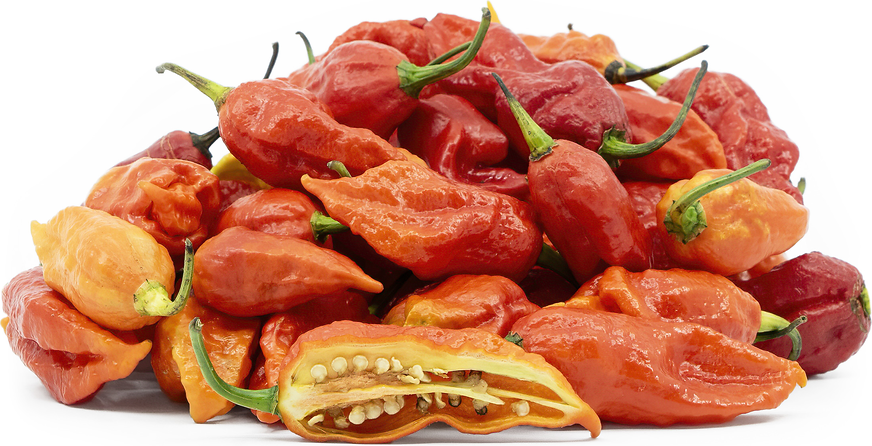


Red Ghost Chile Peppers
Inventory, 8 ct : 2.25
This item was last sold on : 05/11/24
Description/Taste
Red ghost chile peppers are small, grooved pods, averaging 5 to 7 centimeters in length, and have a conical, curved to straight shape that tapers to a distinct point on the non-stem end. The pods will widely vary in shape, size, and spice, depending on the soil and climate the pepper is grown in. The skin is waxy and semi-rough, covered in deep furrows and wrinkles, giving it a crinkled, bumpy appearance, and ripens from green to bright red when mature. Underneath the thin skin, the flesh is crisp and pale red, encasing a central cavity filled with very spicy membranes and round, flat, cream-colored seeds. Red ghost chile peppers are initially sweet, fruity, and smoky, followed by a scorching heat that builds in intensity and lingers on the palate.
Seasons/Availability
Red ghost peppers are available year-round, with a peak season in the summer through fall.
Current Facts
Red ghost chile peppers, botanically classified as Capsicum chinense, are gnarled, very hot pods that belong to the Solanaceae or nightshade family. Also known as the Bhut Jolokia, a name derived from the Bhutia Indians and from the word bhut, which roughly translates to “ghost,” Red ghost peppers are native to India and were first introduced to western markets in the year 2000. Red ghost peppers range 855,000 to 1,041,427 SHU on the Scoville scale and were one of the first varieties to be labeled as a “superhot.” Legend has it that this pepper also received its ghoulish name from the delayed spiciness that sneaks up and surprises with its powerful heat, sometimes lingering in the throat and mouth for up to thirty minutes after pepper consumption. Though it is considered a common culinary pepper in India, Red ghost peppers have developed an infamous reputation in the western world through viral videos and pepper eating competitions. Despite their troublesome reputation, Red ghost peppers are one of the most common ghost varieties found in markets and are frequently grown in home gardens by self-proclaimed “chiliheads” for specialty hot sauces.
Nutritional Value
Red ghost peppers are an excellent source of vitamin C, which is an antioxidant that can help boost the immune system and contains vitamin D, which can help with calcium absorption to strengthen bones. The peppers also contain a high amount of capsaicin, which is a chemical compound that triggers the brain to feel the sensation of heat or spice. Capsaicin contains many anti-inflammatory properties that can help settle stomach acid, decrease allergy symptoms, and reduce digestive irregularities.
Applications
Red ghost chile peppers should be used with extreme caution as the intense spice may be too overpowering and can render a dish inedible. It is recommended to be used sparingly, and gloves and goggles should be worn when handling and slicing the pepper. Red ghost chile peppers are best suited for both raw and cooked applications such as stir-frying, simmering, and sautéing. When fresh, Red ghost chile peppers can be pureed into sauces, relishes, and marinades, chopped into salsa, or dried, ground into a powder, and used as a spice or rub on grilled meats. The peppers can also be charred and blended with herbs and aromatics to make a smoky hot sauce, cooked into jelly, diced and mixed into curries, stews, and chilis, or served in fish-based dishes. In addition to sauces, Red ghost peppers have become a popular flavoring in novelty snack items such as cheeseballs, candied bacon, and ice cream. Red ghost chile peppers pair well with pineapple, mango, meats such as poultry, beef, pork, and fish, garlic, onions, ginger, cilantro, tomatoes, beans, and rice. Fresh peppers will keep 1-2 weeks when loosely wrapped in plastic and stored in the refrigerator.
Ethnic/Cultural Info
Ghost chile peppers are widely used in Indian cuisine, but they have also become a natural repellent developed into defense weapons. The Indian military is utilizing the high amount of capsaicin found in the Red ghost pepper for pepper sprays, pepper balls, and smoke bombs as an alternative to tear gas to help control violence. Despite the modernization of how capsaicin is used, chile pepper deterrents have been used in India for hundreds of years and were primarily rubbed on property fences to keep wild elephants from entering into farmland. The elephant’s trunk is extremely sensitive to capsaicin and is a natural way to deter the elephant before damage or harm can be inflicted. Some farmers even light dry elephant dung mixed with ground peppers on fire to create a spicy smoke bomb to deter away large groups of elephants, locally called a “dung bomb."
Geography/History
Red ghost chile peppers are native to the states of Assam, Nagaland, and Manipur, located in the small northeastern panhandle of India. These regions are known for their extreme temperatures, reaching up to 54 °C, and it is believed that the temperature and high humidity are what contribute to the escalating heat levels within the ghost chile peppers. Today Red ghost chile peppers are somewhat difficult to find as they are not sold in commercial markets. The peppers are available through online seed catalogs, farmers markets, specialty grocers, and through chile pepper enthusiasts in India, Bangladesh, Sri Lanka, Mexico, the United States, and Europe.
Featured Restaurants
Restaurants currently purchasing this product as an ingredient for their menu.
| Plan 9 Alehouse | Escondido CA | 760-489-8817 |
| San Diego Yacht Club | San Diego CA | 619-758-6334 |
| Comercializadora de Especialdides | Vista Hermosa Ej Chapuitepec B.C. | 646 128 7028 |
| Bishop School | San Diego CA | 858-459-4021 |
Recipe Ideas
Recipes that include Red Ghost Chile Peppers. One
 is easiest, three is harder.