








Red Cactus Pears
Inventory, lb : 0
This item was last sold on : 03/23/24
Description/Taste
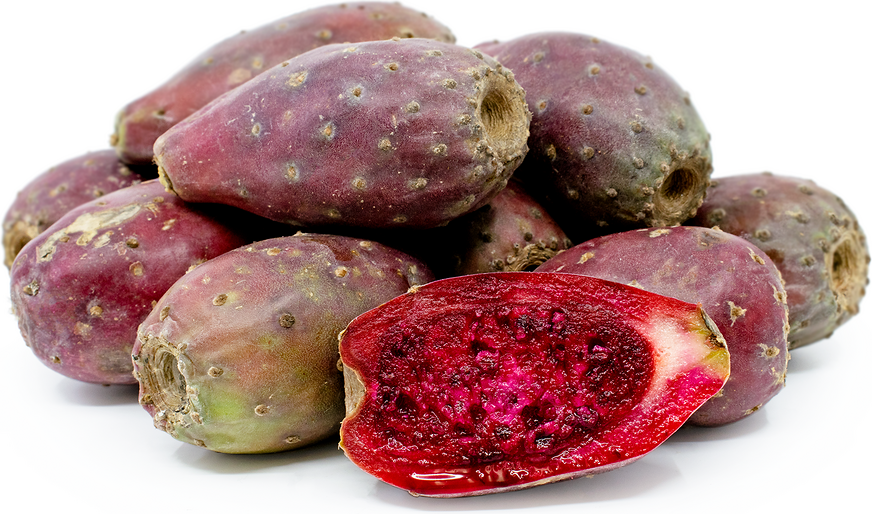
Red Cactus pears are small to medium in size, averaging 5-10 centimeters in length, and are oblong in shape similar to an avocado. The fruits form from yellow, pink, red, or purple flowers that grow on nopales or cactus pads, and the thick skin of the fruit is light green when immature and transforms into a deep rosy red when mature. Red Cactus pears are also covered in rough bumps and spines known as glochids. These sharp spines are tiny, hair-like, and difficult to see and are found in the areoles or brown spots on the skin. Inside the fruit, the vibrant magenta flesh is moist with many hard, edible brown-black seeds. The seeds are too tough to chew fully and can be swallowed whole or discarded completely. When ripe, Red Cactus pears are juicy and aromatic offering a very sweet flavor reminiscent of watermelon.
Seasons/Availability
Red Cactus pears are available in the early fall through spring.
Current Facts
Red Cactus pears, botanically classified as a part of the genus Opuntia, are the annual edible fruits that grow on the edges of the flat pads of the cactus and are members of the Cactaceae family. Also known as Cactus apple, Prickly pear, Barbary, Tuna fruit, and Indian Fig, there are many different varieties of cactus pears that can range in color from yellow, red, orange, to green. Despite its name, Red Cactus pears are not members of the pear family and were given this name in reference to their similarity in shape. Red Cactus pears grow wild all over Mexico and Central America and are commonly cultivated in home gardens to large plantations. They are favored for their sweet flesh and can be incorporated into a wide variety of culinary applications both raw and cooked.
Nutritional Value
Red Cactus pears are an excellent source of vitamin c, magnesium, and dietary fiber. They also contain calcium, potassium, zinc, and iron.
Applications
Most commercially sold Red Cactus pears have been mechanically de-pricked but some hair-like spines may remain, so care must be taken when handling the fruits. Red Cactus pears must be peeled before serving. The fruit can be held with tongs, and the spines can be burned off or scrubbed, and then the fruit can be sliced open, and the skin gently peeled away. Red Cactus flesh can be sliced and served atop yogurt, salads, in salsas, cereal, crackers, and cream cheese. The flesh is also commonly pressed through a fine mesh sieve to make a puree which can be used to make smoothies, sauces, dressings, marmalades, and jam. Pureed fruit can be frozen for later use in pies, cakes, sorbets, and chilled beverages. Red Cactus fruit pairs well with lemon, lime, salmon, barbeque chicken, grilled pork chops, feta, cilantro, dill, and cucumbers. They will keep 1-2 weeks when stored in the refrigerator.
Ethnic/Cultural Info
In Mexico, Red Cactus pears were used with the cactus pad pulp and juice in traditional folk medicine to help reduce symptoms of digestive issues, irritation, urinary tract infections, and skin wounds. Today supplements made from the plant are also available in capsule form as an updated remedy and are believed to help reduce symptoms of nausea and digestion.
Geography/History
Native to Mexico and the Americas, both the pears and pads of the prickly pear cactus have been used since ancient times and eventually made their way to Europe via explorers and expeditions. Spreading throughout the Mediterranean, the fruit became extremely popular in Sicily where it thrived in the dry terrain and warm climate. The fruit also thrived in the climate of Australia, and some consider the plant to be a prolific weed. Commercial farming of the cactus pear in the United States began in the early 1900’s by a Sicilian immigrant in California by the name of Marco Rancadore. Today Red Cactus pears can be found at local farmers markets and specialty grocers in the Southwestern United States, Mexico, Northern Africa, Middle East, the Mediterranean, Australia, Southern Asia, and select regions of the South Pacific
Recipe Ideas
Recipes that include Red Cactus Pears. One
 is easiest, three is harder.
| Honest Food dot Net |
|
Prickly Pear Glazed Pheasant |
| Dora's Table |
|
Frozen Prickly Pear Margarita |
Podcasts