








Japanese Cucumber
Inventory, 10 lbs : 3.00
This item was last sold on : 04/25/24
Description/Taste
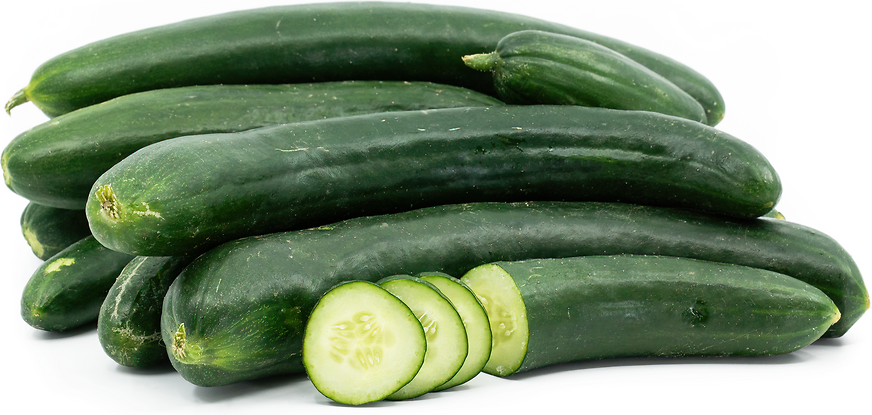
Japanese cucumbers are generally small to medium-sized varietals, averaging 15 to 30 centimeters in length, and have a narrow and elongated shape with slightly tapered, rounded ends. Each cucumber can appear straight to curved, and the skin ranges in texture from smooth, mildly bumpy, to ridged, depending on the specific variety. Japanese cucumbers have thin, tender, and edible skin with a dark green to forest green hue. Underneath the surface, the flesh is comprised of a crisp, aqueous, and semi-firm consistency with a succulent nature. The flesh varies in color from white to pale green and contains no developed seeds. Japanese cucumbers have a mild and refreshing, sweet, vegetal flavor with subtle melon-like, green nuances. The cucumbers also contain a less bitter taste than other cultivars, providing a more pleasant eating experience.
Seasons/Availability
Japanese cucumbers are available year-round.
Current Facts
Japanese cucumbers, botanically classified as Cucumis sativus, are sweet, biter-less fruits generally prepared and colloquially regarded as a vegetable belonging to the Cucurbitaceae family. There are many different varieties of cucumbers labeled as Japanese cucumbers in commercial markets, but most of these cucumbers share a similar mild flavor, slender shape, and dark green coloring. Japanese cucumbers are also known as Kyuri, and the crisp, aqueous cucumbers have been a staple culinary ingredient in Japanese cuisine for centuries. Japanese cucumbers can be incorporated into a wide variety of raw and cooked culinary preparations, and compared to other cucumber varieties, the cucumbers have a sweeter, less bitter taste and a burpless, non-gas-causing nature.
Nutritional Value
Japanese cucumbers are an excellent source of vitamins such as vitamin C to strengthen the immune system, vitamin K to assist in faster wound healing, vitamin E to protect the cells against free radical damage, and vitamin A for faster wound healing. The cucumbers also contain potassium to balance fluid levels within the body, magnesium to control nerve functions, manganese to develop connective tissue, and other amounts of folic acid, calcium, and iron.
Applications
Japanese cucumbers have a mild, sweet, and vegetal flavor suited for various raw or cooked preparations. The cucumbers bear thin skin and do not need to be peeled before consumption, being sliced or served in sticks with fresh dips or on appetizer platters. Japanese cucumbers can also be chopped into salads, sliced and layered into sandwiches, cut and rolled into sushi, or mixed into side dishes for bento boxes. In Japan, cucumbers are viewed as a cooling ingredient, utilized as a reprieve to spicy or hot foods. Popular Japanese cucumber preparations include ceviche, chilled soups, and pickled dishes. Pickled Japanese cucumbers are an essential component in Japanese cuisine, served with rice and miso soup. The pickles provide a variety of health benefits along with improved visual appeal and texture. Japanese cucumbers are turned into pickles through an ancient pickling method called shiozuke, where the cucumbers are weighted down, layered in salt, and left to ferment. Kyuri asazuke, or salt-pickled cucumbers, are a popular street food during the summer in Japan. Beyond fresh preparations, Japanese cucumbers can also be incorporated into stir-fries or lightly cooked in soups. Japanese cucumbers pair well with tomatoes, chile peppers, broccoli, and beans, fruits such as citrus, berries, melons, papaya, and mango, seafood such as cured and smoked fish, and herbs including mint, chives, and parsley. Whole, unwashed Japanese cucumbers will keep for a couple of days or up to one week when stored in a paper towel, in a plastic bag, and kept in the refrigerator. Once sliced, the open end should be wrapped in plastic wrap and stored in the refrigerator’s crisper drawer.
Ethnic/Cultural Info
Cucumbers are loved by a mythical Japanese creature known as the Kappa. According to folklore from Kyushu, one of the major islands of Japan, Kappa are small creatures that live in or around water, such as rivers, lakes, and swamps. There are many descriptions of the creatures, from looking like a monkey to resembling a turtle, but these descriptions generally share the common theme of the Kappa being scaly, green, and slimy with webbed feet and hands. The name Kappa roughly translates to mean “water sprite” or “river child,” and the creatures are excellent swimmers with immense strength, capable of drowning adults. Legend has it that these creatures love cucumbers more than any other type of food. In Japan, there are several communities with shrines near areas of water that offer cucumbers to the water spirits as a request for peace and safety from drowning or water accidents. Cucumbers are left floating in lakes, placed as offerings at the shrines, or dropped in moving rivers to flow downstream. In the modern-day, several Japanese lakes and rivers use cartoon pictures of Kappa on their warning signs for dangerous swimming areas. Sushi establishments also sell signature Kappa maki rolls, made with raw rice, seaweed, and cucumbers in honor of the creature’s favorite food.
Geography/History
Cucumbers are native to India and have been cultivated for over 3,000 years. The vining plants were spread to Eastern Asia sometime in the early ages, and records show that cucumbers were present in China and Japan by the 10th century. The initial cucumbers introduced into China often had a bitter flavor, but new varieties were created with a more palatable taste over time. Cucumbers grown in Japan were developed from Chinese-created cultivars, and Japanese breeders continued to develop hybrid varieties for increased culinary appeal. Japanese cucumbers were widely popular throughout Japan in the 17th century, and by the 19th century, the cucumber varieties were being grown in home gardens in Asia, the New World, and Europe. Today Japanese cucumbers are commercially cultivated and planted in home gardens worldwide, and the elongated varieties are sold through farmer’s markets, grocers, and distributors.
Featured Restaurants
Restaurants currently purchasing this product as an ingredient for their menu.
| Park Hyatt Aviara | Carlsbad CA | 760-448-1234 |
| Wayfarer Bread | La Jolla CA | 805-709-0964 |
| La Costa Resort & Spa Main Kitchen | Carlsbad CA | 760-930-7063 |
| Fifty Two Remedies Bar | San Diego CA | 858-707-7016 |
| The Whaling Bar | La Jolla CA | 858-355-9218 |
Recipe Ideas
Recipes that include Japanese Cucumber. One
 is easiest, three is harder.