





Inchelium Garlic
Inventory, lb : 0
Description/Taste
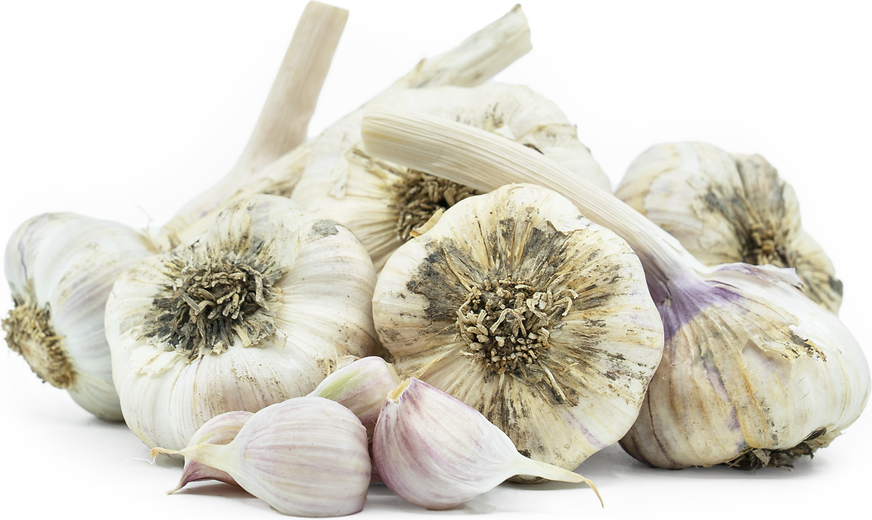
lnchelium garlic produces a large, flattened bulb, 6-7 centimeters in diameter, which contains anywhere from 12 to 20 plump cloves arranged in layers. The outer ivory bulb wrappers are several sheets thick which protect the bulb, enhancing its storage quality. The inner, easy-to-peel maroon wrappers envelop individual creamy cloves. Inchelium garlic has a mild pungent taste with a medium level of spiciness.
Seasons/Availability
Inchelium garlic is available in late summer through early fall.
Current Facts
Inchelium garlic, botanically classified as Allium sativum, is a softneck artichoke variety. Artichoke varieties are typically the standard supermarket garlic known by consumers that have a long shelf life and pleasant taste. As a softneck variety, Inchelium garlic will not produce a firm flower stalk, and its soft neck and coloring makes it ideal for producing braided garlic.
Nutritional Value
Inchelium garlic is an excellent source of vitamin B6, vitamin C, iron, and manganese.
Applications
Inchelium garlic can be used in both raw and cooked applications. Crushing, chopping, pressing, or pureeing raw Inchelium garlic releases even more of its oils providing a sharp, more assertive flavor than slicing or leaving it whole. Inchelium garlic does exceptionally well as the central flavor in butter, dressings, sauces, and salts. Roasting Inchelium garlic will enhance its flavor and add a subtle sweetness. It can also be blended with mashed potatoes. Pair Inchelium garlic with ingredients such as cheese, cream, olive oil, seafood, grilled meats, poultry, eggs, tomato, potatoes, spinach, and fresh herbs such as basil, sage, parsley and oregano. Inchelium garlic will keep up to nine months when stored in a cool and dry place.
Ethnic/Cultural Info
Inchelium garlic is an heirloom variety that is listed on Slow Food USA's Ark of Taste. Through the Ark of Taste Agricultural Conservation program, Inchelium garlic is being introduced to farmers and growers to increase demand for a garlic that was once common and now nearly unknown.
Geography/History
The true origin of Inchelium garlic is unknown, but it was found originally on the Colville Indian Reservation in Inchelium, Washington. It has been identified as the oldest strain of garlic grown in North America, having been grown far before the arrival of English settlers. Today Inchelium garlic can be found at farmers markets throughout the Pacific West and the Northwest United States.