








Horseradish Leaves
Inventory, lb : 0
Description/Taste
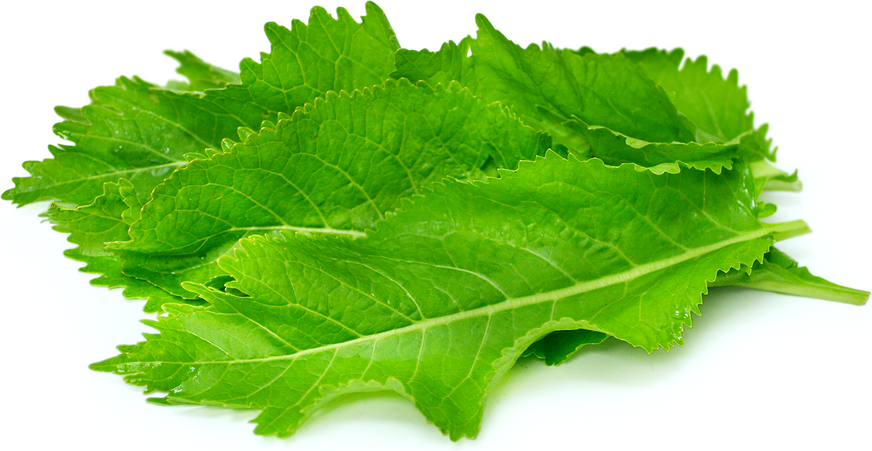
Horseradish leaves are medium to large in size and oblong and elongated in shape, averaging a half a meter to one meter in length. The bright green leaves have serrated, saw-toothed edges and the texture can vary from smooth to crinkled depending on the variety. Horseradish leaves grow in clusters forming a rosette pattern with leaves that sprout out of the plant’s base known as the taproot. Its flavor is sharp, bitter, and peppery with a taste similar to kale and arugula. Small, young Horseradish leaves are milder in flavor and have a delicate texture, while the mature full-sized leaves are coarse and piquant.
Seasons/Availability
Horseradish leaves are available in the spring.
Current Facts
Horseradish leaves, botanically classified as Armoracia rusticana, grow on an herbaceous perennial and are members of the Brassicaceae family along with mustard, rutabaga, kale, and daikon. Horseradish is grown mainly for its root which is used to make the popular condiment, but the leaves have also been used for both culinary and medicinal attributes. The leaves are not widely commercially cultivated and are typically found in home gardens and farmers markets. There are three main varieties of horseradish grown including Common, Bohemian, and Big Top Western. Its Latin name, Cochlearia armoracia was given by Linnaeus who thought the leaves resembled a type of long-handled spoon known as a cochleare.
Nutritional Value
Horseradish leaves contain potassium, magnesium, vitamin C, and calcium. They also contain glucosinolates, which are enzymes that give the leaves and root its spicy flavor.
Applications
Horseradish leaves can be used in both raw and cooked preparations such as boiling, steaming, and sautéing. Young, tender leaves can be added whole to salads, chopped and added to vegetable dishes, or minced and incorporated into salad dressings. They can also be used to make lettuce wraps, dolmades, or used instead of seaweed in sushi rolls. Horseradish leaves can be combined with basil when making pesto or other sauces and also added to smoothies for a peppery kick. Older horseradish leaves can be chopped and added to soups or cooked with other leafy greens such as kale and cabbage. Larger and mature leaves may have a tough texture, so steaming will help make them tender. Horseradish leaves pair well with red meat, shellfish, eggs, sushi, chickpeas, avocado, tomatoes, leafy greens, and basil. They will keep for a couple of days when stored in a plastic bag in the refrigerator.
Ethnic/Cultural Info
Since the middle ages, bitter herbs such as Horseradish leaves have been one of the five components of the traditional Passover Seder Plate. The bitter herbs are also known as Maror and symbolize the bitterness of the slavery the Jewish people had to endure in Egypt.
Geography/History
Horseradish is believed to have originated in Russia and Eastern Europe and has been used for over 4,000 years. It was then cultivated by the Greeks and Romans both as food and for medicinal purposes during the middle ages. Today Horseradish leaves are available in fresh markets in the United States, Europe, and Asia.
Recipe Ideas
Recipes that include Horseradish Leaves. One
 is easiest, three is harder.
| Get Rawcous |
|
Creamy Kale Salad with Wild Horseradish Leaf |
| Honest Food dot Net |
|
Wild Greens Colcannon |
| Eat Weeds |
|
Horseradish Leaf Bubble and Squeak |