







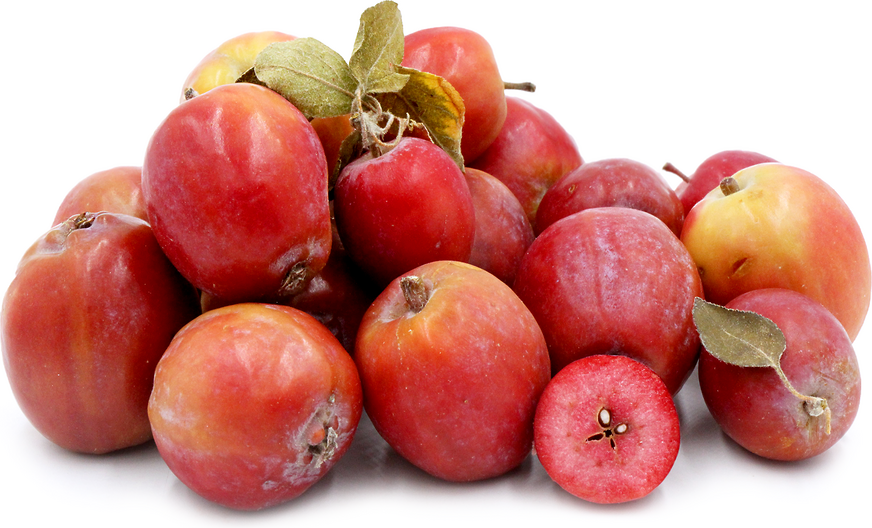


Red Vein Crabapples
Inventory, 12 lbs : 0
Description/Taste
Red Vein crabapples are about the size of a golf ball, measuring about an inch or less in diameter. The color of Red Veins is what sets this variety apart— the skin varies in shades of red, ruby, pink and gold. Inside, the flesh ranges in color from a saturated deep cranberry color to light striations of red running throughout. Red Veins are juicy, firm and crisp, with a brightly acidic taste.
Seasons/Availability
Red Vein crabapples are available in the fall.
Current Facts
Red Vein crabapples are known botanically as Malus pumil v. Niedzwetzkyana, part of the Rosaceae family. Crabapples are related to regular apples, and are simply varieties that are smaller than two inches. This particular variety is fairly old, becoming known in North America in the late 1800s. As the name implies, Red Veins are identified for their red color—the skin, flesh, blossoms, and young foliage are all a rich red color. They grow on small, compact trees, so they are a good choice for the garden.
Nutritional Value
Crabapples are nutritionally dense, although they contain a small amount of overall nutrients because each fruit is so small. Crabapples have Vitamin and a type of fiber called pectin. Pectin promoted cardiovascular health, and may lower the risk of heart disease.
Applications
Like other crabapples, this variety is not ideal for fresh eating, but rather for cooking, sauces, and preserves. The red flesh and skin of the Red Vein crabapple can dress up many dishes calling for apples or acidic flavors. Cooking down Red Veins makes a beautiful, tangy sauce for tarts or other baked goods. They make good jelly, apple butter, and applesauce, especially combined with sweeter, larger varieties of apples that offset the tartness. Adding Red Veins to cider produces a pink rosé. Red Vein crabapples can be stored for one to two months in cool, dry conditions.
Ethnic/Cultural Info
Red Vein crabapples are often used for experimental breeding and grafting of other crabapple varieties because of their cold hardiness and red color. They have historically been used to hybridize with other crab apple varieties to produce ornamental crab apples with pink or red flowers, rather than the usual white or pale pink. The Red Vein crab apple is also the genetic origin of most red-fleshed apples.
Geography/History
Red Vein crabapples originated from Eurasia. They were then introduced to the United States in the 1890s, where researchers began cross breeding and hybridizing them with other crab and large apple varieties. Red Veins can tolerate a wide variety of climates.
Recipe Ideas
Recipes that include Red Vein Crabapples. One
 is easiest, three is harder.
| Magical Childhood |
|
Easy Crab Apple Cider |
| Brooklyn Farmgirl |
|
Sugar Free Applesauce |
| Hint of Vanilla |
|
Spiced Crab Apple Mini Pies |