







Chayote Squash
Inventory, 40 lbs : 4.07
This item was last sold on : 04/25/24
Description/Taste
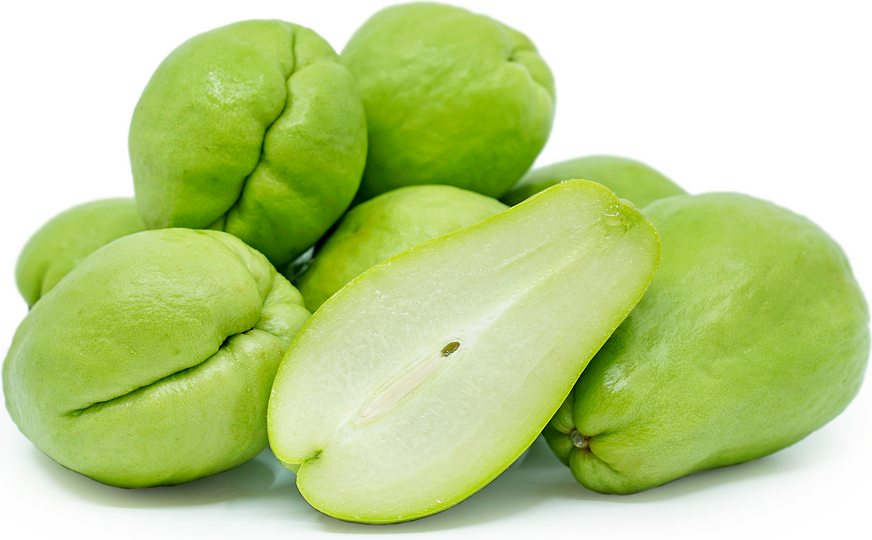
Chayote squash is small to medium in size, averaging 10-20 centimeters in length, and has a pear-like shape with deep linear indentations, folds, or puckers that run vertically along the fruit's skin that meet at its flower end. The pale green rind is thin, smooth, firm, and edible but is often discarded because of its tough nature. The creamy white flesh is crisp to starchy and becomes succulent to cottony as it matures, and the central core contains one small, edible seed. Chayote squash is crunchy and very mild with a slightly sweet taste and light notes of cucumber. The Chayote fruit is just one of the edible elements of the plant, and its tendrils, flowers, and roots are also consumed.
Seasons/Availability
Chayote squash is available year-round, with peak season in the fall and occasionally in the late spring.
Current Facts
Chayote squash, botanically classified as Sechium edule, is the fruit of a tropical, perennial, and prolific vine that can grow up to fifteen meters in length and is a member of the Cucurbitaceae family along with pumpkins and gourds. Although the most commercially known varieties are lime green and pear-shaped, Chayote squash varieties come in different colors, shapes, and textures with a shared common denominator of the flesh's color and the fruit's flavor. Chayote squash is used around the world in many different cultures and is predominately used as a carrier to soak up accompanying ingredients. It has adopted many other common names including Vegetable pear and Mirliton in North America, Sayote and Green Gold in the Philippines, Christophene in the Caribbean and France, Pipinella in Italy, Pipinola in Hawaii, and originally Chayotli by the Aztecs.
Nutritional Value
Chayote squash contains vitamin C, vitamin B-6, folate, dietary fiber, and potassium.
Applications
Chayote squash is best suited for both raw and cooked applications such as grilling, stir-frying, boiling, steaming, and baking. When young, they can be sliced or shredded in salads and slaws along with ingredients such as citrus, cabbage, arugula, and fresh herbs. They can also be pickled and preserved. When ripe, Chayote squash can be peeled, sliced, and added to soups, stews, curries, and casseroles. Fully mature Chayote can be boiled and mashed or slow roasted and served like a potato as an accompaniment to main courses featuring grilled meats and fish. When slicing into the raw fruit, it is recommended to wear gloves as the squash secretes a sticky, nontoxic residue which may cause some irritation to sensitive skin. Chayote pairs well with chile peppers, cream-based sauces, bacon, curry, mole, garlic, onions, both soft and hard cheeses, melon, cumin, coriander, oregano, cilantro, lemon or lime juice, almonds, and coconut milk. They will keep up to four weeks when wrapped in a paper towel, placed in a plastic bag, and stored in the refrigerator.
Ethnic/Cultural Info
Chayote squash is widely used around the world in a variety of culinary applications. Cajun cuisine popularly uses Chayote squash to make stuffed chayotes or pirogues, which translates to mean "dugout canoes." In Louisiana, Chayote squash has long been a popular backyard fruit and growth of it dates back to 1867. In Latin America, Chayote is commonly used like pumpkin and is made into a sweet pie. Chayote is also used in the Philippines to make chop suey, stir-fries, and soups. In addition to culinary uses, the vines are utilized in the West Indies to make sturdy, woven ropes.
Geography/History
Chayote squash is native to Mesoamerica, specifically central Mexico. It was one of the earliest cultivated plants within the New World, though there is no definitive archaeological evidence to prove just how long Chayote squash has been in existence. Today Chayote squash can be found at specialty grocers and farmers markets in North, Central, and South America, Australia, Asia, Europe, and Africa.
Featured Restaurants
Restaurants currently purchasing this product as an ingredient for their menu.
| Portside Pier (Miguels) | San Diego CA | 858-268-1030 |
| Our Green Affair | San Diego CA | 858-337-9196 |
| Pacific Regent La Jolla | San Diego CA | 858-597-8008 |
| Sabi Juice | Chula Vista CA | 619-971-8545 |
| Vista Valley | Vista CA | 760-758-2800 |
| Monarch School | San Diego CA | 619-804-1766 |
| Born & Raised | San Diego CA | 619-944-1631 |
| Coasterra | San Diego CA | 619-814-1300 |
| Estancia Adobe | San Diego CA | 858-550-1000 |
| Fresco Cocina | Carlsbad CA | 760-720-3737 |
| Echale | Encinitas CA | 303-210-2892 |
| Gravity Heights Mission Valley | San Diego CA | 619-384-5993 |
| La Costa Glen North | Carlsbad CA | 760-704-1436 |
| Mission Pacific | Oceanside CA | 760-450-7864 |
| Avant | San Diego CA | 858-675-8505 |
| Salt and Lime | Del Mar CA | 858-926-8582 |
| La Costa Resort & Spa Main Kitchen | Carlsbad CA | 760-930-7063 |
| Beaumont's | San Diego CA | 858-459-0474 |
| La Costa Glen South | Carlsbad CA | 760-704-1000 |
| Morgan Run Resort and Club | Rancho Sante Fe CA | 858-759-5473 |
| Miguel's Cocina Carlsbad | Carlsbad CA | 760-759-1843 |
| Miguel's Cocina Pt Loma | San Diego CA | 619-224-2401 |
| UCSD Food & Nutrition Department La Jolla | San Diego CA | 858-761-1269 |
| Miguel's Cocina Coronado | Coronado CA | 619-437-4237 |
| Our Green Affair - HC | San Diego CA | 858-337-9196 |
| WineSellar & Brasserie | San Diego CA | 858-450-9557 |
| US Grant Hotel Grill | San Diego CA | 619-232-3121 |
| Artifact at Mingei | San Diego CA | 619-846-2164 |
| Miguel's Old Town | San Diego CA | 619-298-9840 |
Recipe Ideas
Recipes that include Chayote Squash. One
 is easiest, three is harder.