







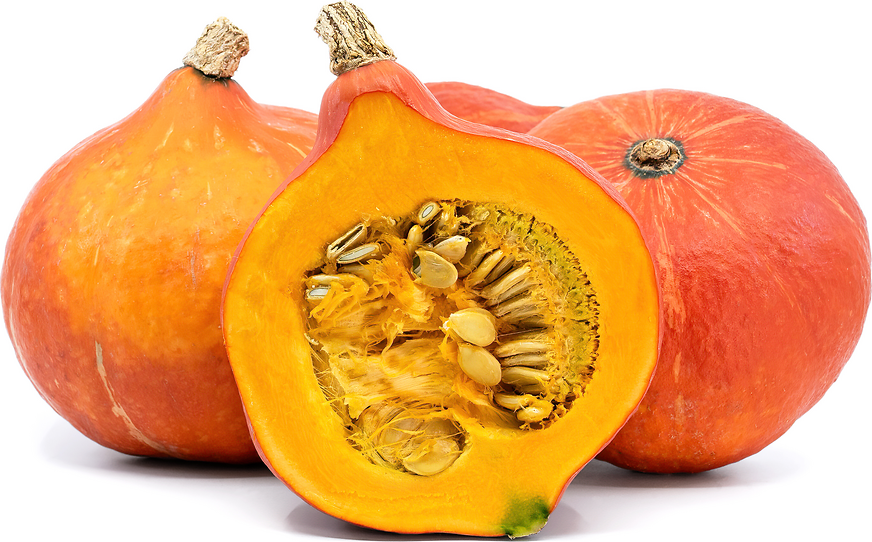


Hard Red Kuri Squash
Inventory, 25 lbs : 0
This item was last sold on : 03/10/24
Description/Taste
Red Kuri squash is small to medium in size, averaging eighteen centimeters in diameter and 3-7 pounds, and has a pear or teardrop-like shape with a thick, rough, light-brown stem. The skin is smooth, firm, and thin with a vibrant red-orange hue and faint light orange to tan vertical ridging. The flesh is dense, thick, dry, and gold to yellow, and encases a large central cavity with stringy pulp and many flat, cream-colored seeds. When cooked, Red Kuri squash has a smooth and tender texture with a sweet, nutty flavor reminiscent of chestnuts.
Seasons/Availability
Red Kuri squash is available from summer into mid-winter.
Current Facts
Red Kuri squash, botanically classified as Cucurbita maxima, is a member of the Cucurbitaceae family along with pumpkins and gourds. Also known as Climbing Onion squash, Hokkaido squash, Baby Red hubbard, Uchiki Kuri squash in Japan, and Potimarron squash in France, Red Kuri squash is well-adapted to many climates across the world and is valued for its unusual shape, bright color, and sweet, nutty flavor. The word “kuri” translates from Japanese to mean chestnut and is a descriptor of the main flavor profile of the squash. Red Kuri squash is extremely popular in Japan but is only cultivated in limited areas, so the majority of the squash grown in California and New Zealand is exported to meet the market demand in Japan.
Nutritional Value
Red Kuri squash is a good source of vitamin A, vitamin C, calcium, potassium, and iron.
Applications
Red Kuri squash is best suited for cooked applications such as roasting, boiling, baking, and sautéing. The hard-skinned squash can be difficult to peel and is most easily cooked with the skin on and when cooked, the skin is tender enough to consume. Red Kuri squash can be added to soups, risotto, stews, and curries, grated and baked into gratins or casseroles, and is ideally sized to be halved, hollowed, stuffed, and baked. Pureed squash can also be used in sweet preparations such as bread pudding, pies, bread, muffins, and tarts. Red Kuri squash pairs well with onion, bay leaf, fresh herbs, leeks, dried cranberries, white beans, mustard greens, maple syrup, curry powder, roasted fennel, pecans, cinnamon, nutmeg, goat cheese, parmesan cheese, and olive oil. The squash will keep 3-6 months when stored whole in a cool and dry place.
Ethnic/Cultural Info
The Red Kuri squash is known by many different names around the world. In France, the Red Kuri squash is known as Potimarron which is a combination of the French words "potiron," meaning "pumpkin," and "marron," meaning "chestnut" which is a nod to the squash’s chestnut-like flavor. In Germany, the Red Kuri is known as Hokkaido, a name given after the Japanese island where the squash is grown. Prior to the arrival of the Red Kuri squash in Germany, winter squash was relatively unknown in German cookery, but since its introduction, winter squash has become an important part of the culinary culture.
Geography/History
Red Kuri squash is native to Japan and was first grown on the island of Hokkaido and in Kanazawa city in the Ishikawa prefecture in the early 1920s. The squash is believed to be a descendant of the hubbard squash which was introduced to Japan in 1878, recently after Japan opened to international trade. The Red Kuri squash is considered to be an improved variety that was bred to be smaller, have thinner skin, and have a nuttier flavor than the hubbard. Today Red Kuri squash is harvested in limited areas of Kanazawa city in Japan and can be found at farmers markets, specialty grocers, and through online seed catalogs in Asia, Europe, New Zealand, and the United States.
Recipe Ideas
Recipes that include Hard Red Kuri Squash. One
 is easiest, three is harder.