



Yuca Root
Estimated Inventory, 40 lbs : 0
This item was last sold on : 04/29/25
Description/Taste
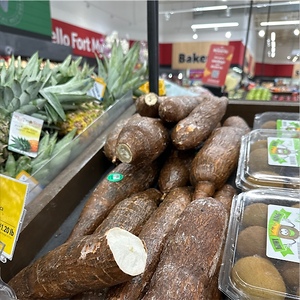
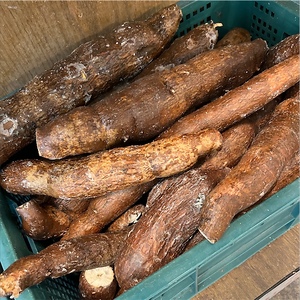
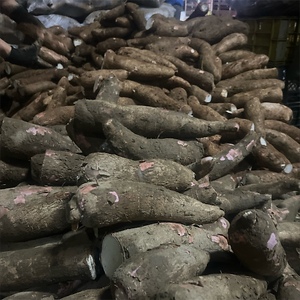
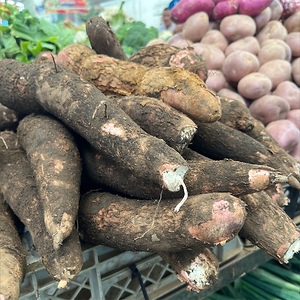
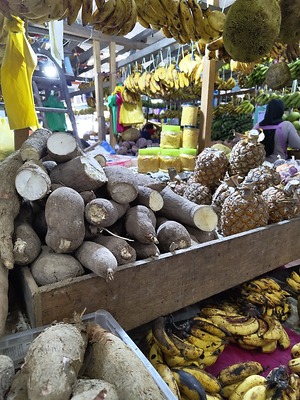
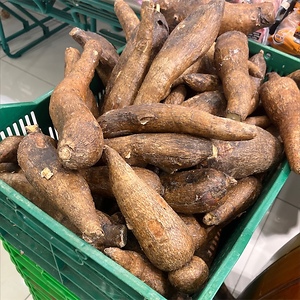
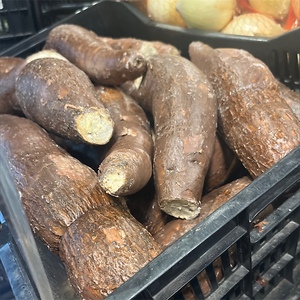
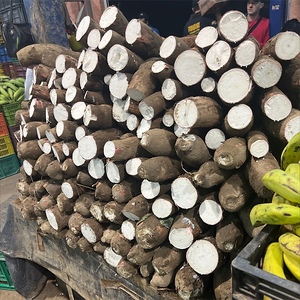
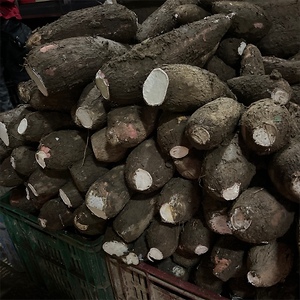
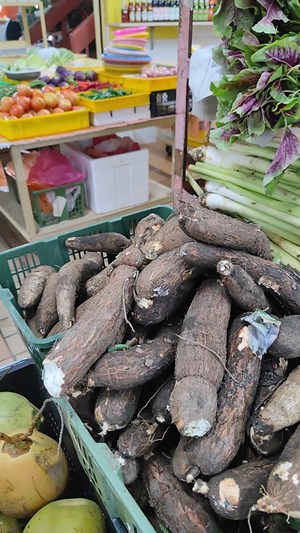
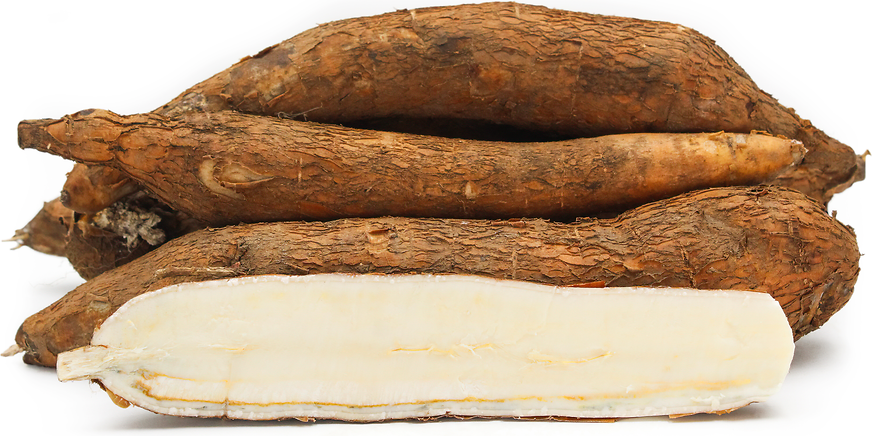
Yuca roots widely range in size and shape, depending on growing conditions, and are generally elongated, cylindrical, and tapered, averaging 15 to 30 centimeters in length and 5 to 10 centimeters in diameter in commercial markets. Yuca's appearance is variable worldwide, and outside of standardized sizing, the roots can grow to be much larger, sometimes extending over one meter in length. The root's skin is toxic and inedible, comprised of a thick, rough, firm, and scaly, bark-like layer. The skin varies in shades of dark brown to orange-brown and has a textured, fibrous, and occasionally waxy feel. Underneath the surface, the flesh is white when raw and transitions into translucent, pale yellow to yellow-white hues when cooked. The flesh is dense, starchy, and grainy, developing a chewy, filling nature when incorporated into dishes. Yuca root is inedible raw and must never be consumed without adequately preparing. The skin is always peeled and removed, and the root must be cooked to neutralize harmful elements. Once cooked, Yuca roots have a mild and neutral, starchy flavor with nutty, subtly sweet, and earthy nuances.
Seasons/Availability
Yuca is available year-round.
Current Facts
Yuca, botanically classified as Manihot esculenta, is an ancient species belonging to the Euphorbiaceae family. The elongated roots develop underground beneath a perennial, woody shrub, and the plant has broad, multi-lobed leaves forming along thin, branching limbs reaching up to three meters in height. Yuca is known by several names worldwide, with the main monikers being Cassava, Tapioca, Manioc, Medioc, Casabe, and Mandioca. There are two types of Yuca: Sweet Yuca and Bitter Yuca, and each type has many different varieties. Sweet Yuca is the most common type of Yuca found fresh in markets and has the lowest concentration of cyanogenic glucosides. These roots are relatively easy to prepare and can be incorporated into a wide array of cooked preparations. Bitter Yuca has a much higher cyanogenic glucoside content and is often deemed unsafe for everyday consumption. Most markets only sell Sweet Yuca. Bitter Yuca is reserved for professional companies processing the root into flour and starches. Yuca is a drought-resistant crop developed over time as a valued famine crop. The species is cultivated worldwide and is one of the most important sources of carbohydrates grown in various countries. When searching for Yuca root online and in markets, it is important to note that there is an ornamental shrub known as yucca, spelled with two c's. This plant is distinct from Yuca, spelled with one c, and belongs to the Asparagaceae family, mostly found in the southwestern United States.
Nutritional Value
Yuca root is a source of calcium to build strong bones and teeth, vitamin C to strengthen the immune system while reducing inflammation, and fiber to regulate the digestive tract. The roots also provide potassium to balance fluid levels within the body, magnesium to control optimal nerve functioning, and other nutrients, including riboflavin, vitamin B6, niacin, and thiamine. Yuca root is gluten-free, and the starch made from the root is easily digested. The root is also an important source of carbohydrates. Beyond its beneficial properties, it is essential to note that raw Yuca contains cyanogenic glucosides, known as saponins, that release cyanide into the body if not removed prior to cooking. Peeling, soaking, and cooking the root will help to eliminate cyanide, and if prepared correctly, according to the type of Yuca, the roots are deemed safe for consumption.
Applications
Yuca root is poisonous when raw and should never be consumed fresh. It is vital to always peel the root before use and to properly prepare it in culinary preparations to prevent toxicity. It is recommended to only use Sweet Yuca root versus Bitter Yuca root as it contains lower levels of cyanide, which is mostly in the peel. Once the root is peeled, soaked, and cooked, much of the cyanide is removed, creating a safe culinary ingredient. In most commercial markets, only Sweet Yuca is offered in the form of whole roots. Yuca root is popularly boiled, mashed, and sprinkled with lime juice, salt, and pepper as a side dish to roasted meats or fried fish. The roots can also be boiled and fried in butter and spices, simmered in soups, stews, and curries, or made into dough-like side dishes as a filling accompaniment. In South America, Yuca root is often cut into thick slices, boiled, and fried to create a French fry variation. This dish is favored in Venezuela and Columbia and is served with various dipping sauces and toppings. Yuca root is also incorporated into tamales and empanadas, sliced and fried into chips, or used as flour in cheese-flavored rolls known as pan de Yuca. In northern Brazil, Yuca is used to make a dish referred to as 'tapioca' made from the starch of the Yuca root. Tapioca starch is mixed with water for a sand-like consistency and is then spooned into a heated non-stick frying pan and spread out to make a crepe. The tapioca mixture sets, gets flipped, then is topped with cheese, chocolate, fruits, and more, and folded over to make a little pocket. Another dessert made from Yuca root, boiled condensed milk, and coconut is known as "cuscuz blanco," and the name translates to "white pudding." In the Caribbean, Yuca root is traditionally used in Yuca con mojo, a Cuban dish comprised of an aromatic sauce served with the cooked root, and the root is also used as a simple dish to pork dishes and plantains. In Jamaica, Yuca is processed into a type of flour and utilized in baked goods, pancakes, and bread, and in the Dominican Republic, the roots are found in various turnovers. Outside of the New World, Yuca root is incorporated into African fu-fu and swallow, dough-like recipes to consume with soups and stews, and in Asia, the roots are dried and ground into flour and starch as a dessert ingredient for puddings and cakes. In the Philippines, Yuca is grated, cooked with coconut and sugar, and boiled in a banana leaf to make a snack food known as suman. The plant's young leaves are also cooked and served in savory dishes throughout Southeast Asia. Yuca root pairs well with aromatics such as garlic, onion, and ginger, spices including cumin, pepper, and coriander, seafood, and meats such as pork, beef, and wild game. Whole, unprepared Yuca root will keep up to one month when stored in a cool, dry, and dark place. Once cooked, the roots should be consumed within 1 to 3 days.
Ethnic/Cultural Info
In the Brazilian Amazon, Yuca root acquired the name Mandioca after a local story traditionally referred to as Maní. Legend has it that the daughter of a Tupí chief, one of Brazil's largest indigenous people groups, suddenly became pregnant, and her father was furious at this discovery. The chief insisted the daughter tell him the name of the male suitor who brought dishonor onto their family name, but every time he pushed his daughter using threats and punishment, she always replied that there was no man. The chief eventually grew tired of his daughter's unwavering silence and banished her from the village to live in isolation. Some of the villagers took pity on the daughter and brought her food. One day when they were bringing her food, they discovered that she had given birth to a baby girl whom she had named Maní. The baby had skin as white as the moon, and the villagers were enamored with the child's unique complexion. Maní and the daughter were welcomed back into the village after news spread of the child. The villagers lived in harmony with the daughter and child until the child suddenly died in the early years of her life. The daughter and chief were devastated by their loss and buried the child beside their home. The daughter cried over the grave for many days until she noticed a small plant that had sprouted from the grave. The sprout was cared for, eventually producing a plant that grew large roots. The roots were broken open, revealing flesh as white as snow, reminiscent of the lost child's moon-like complexion. The roots were praised as a gift from the gods and were named Mandioca in honor of the child.
Geography/History
Yuca is native to South America and has been growing wild since ancient times. Sites of origin include southwestern Brazil, likely along the border of the Amazon, and parts of Bolivia and the species is thought to have been present for at least 10,000 years. In early history, Yuca was spread throughout South America, Central America, and the Caribbean and was domesticated as a food crop among indigenous communities. One of the earliest records of Yuca was present at Joya de Ceren, an excavated Mayan village that was preserved through a volcanic eruption in El Salvador. Burned Yuca tubers were discovered in garden beds approximately 170 meters away from the village, and scientists believe the garden plots date to around 600 CE. Yuca was also used among the Taino, Arawak, and Carib people groups in the Caribbean, especially as flour for bread, and pollen from the plant was found in the San Andres archaeological site in the Gulf of Mexico. Over time, Yuca was spread by Spanish and Portuguese explorers into other regions of the world, including Africa and Asia, and was extensively cultivated in Asia by the 20th century. Today Yuca is grown worldwide in tropical and subtropical areas and is valued as a carbohydrate source and famine crop. The roots and young leaves are sold fresh throughout farmer's markets, grocers, and distributors, and the roots are also processed and incorporated into commercial goods.
Featured Restaurants
Restaurants currently purchasing this product as an ingredient for their menu.
| The Glen at Scripps Ranch | San Diego CA | 858-444-8500 |
| Camino Riviera | San Diego CA | 619-685-3881 |
| UCSD Food & Nutrition Department Hillcrest | San Diego CA | 619-380-9840 |
| Sensations Salud | San Diego CA | 619-933-3489 |
| Dija Mara | Oceanside CA | 760-231-5376 |
| Coya Peruvian Secret | Del Mar CA | 619-295-3172 |
| Bishop School | San Diego CA | 858-459-4021 |
Recipe Ideas
Recipes that include Yuca Root. One
 is easiest, three is harder.
Latest in season fruits and vegetables posted from the Specialty Produce App