


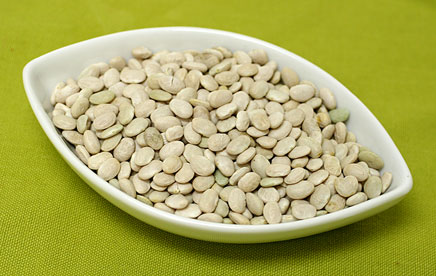


White Tepary Shelling Bean
Estimated Inventory, lb : 0
Description/Taste
White Tepary beans are very small, nearly as small as lentils. They vary in shape from oval to round and are nearly flat. Their skin is pale white and it is often faintly dotted with specks of red and brown. The most memorable characteristic of White Teparay beans is their flavor and texture. Cooked White Tepary beans are creamy, their flavor rich and nutty.
Seasons/Availability
White Tepary beans are available in late summer into early fall.
Current Facts
White Tepary shelling beans are heirloom beans and members of the Phaseolus vulgaris genus, the most widely cultivated genre of beans in the world. Though, once a common crop centuries ago, Wite Tepary beans are considered rare in contemporary times; not only are they not produced on a commercial scale, they are planted on a limited basis primarily by families and small farmers who are trying to keep the Tepary bean relevant. The namesake for the White Tepary bean is "Pawi", the Papago Indian word for bean.
Applications
As the White Tepary bean has been regionally cooked for centuries, they are traditionally cooked into many traditional southwestern stews and one-pot dishes as well as a version of ground Pinole. Customary and complimentary pairings include corn, squash, chiles, tomatoes, rice, onions, garlic, achiote, epazote, cilantro, citrus, pork, poultry and eggs.
Ethnic/Cultural Info
The Hopi Indians use the White Tepary beans to break a traditional fast by placing the beans under the hot sand and cooking them with salt water.
Geography/History
The White Tepary bean is native to the Sonora Desert. Its culinary legacy stretches back six thousand years to the arid regions of Northern Mexico. It was brought to America by Native Americans and as by many food historians, it is considered the oldest true American shelling bean. It is drought-resistant as it has inherently adapted to the dry conditions of the American southwest. One singular downpour could maintain crops for an entire season. One of the most significant agricultural points in the Tepary bean's history is that Native Americans of the arroyos of Arizona used the "Three Sister Method" to grow Tepary beans. This method would become the standard companion planting method for three specific crops. Maize, squash and beans are planted closely together for fertilization, shade, structural support, moisture and weed prevention. Today the beans are not always planted with the companion crops in tow, yet still planted with biodiversity methods practiced by the indigenous people of the Americas.