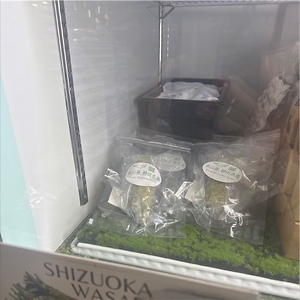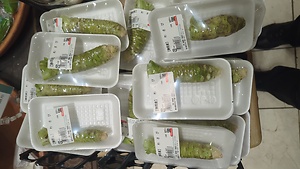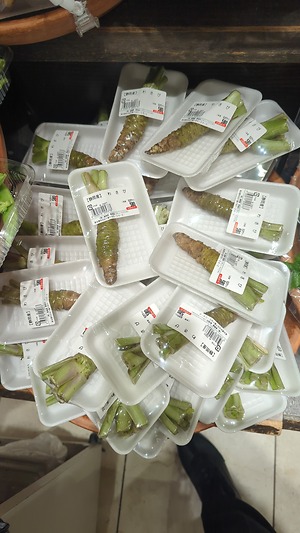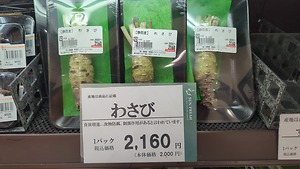




Wasabi Root
Estimated Inventory, oz : 0
This item was last sold on : 03/14/25
Description/Taste
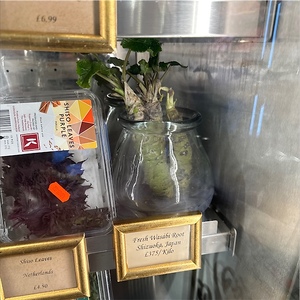
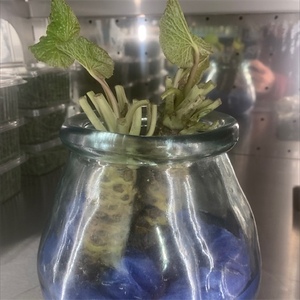
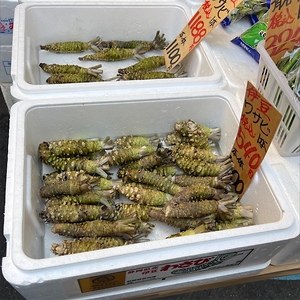
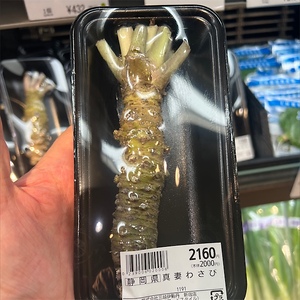
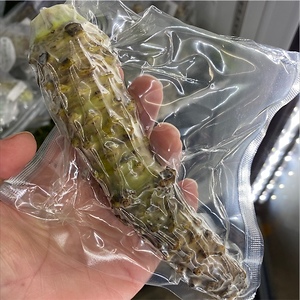
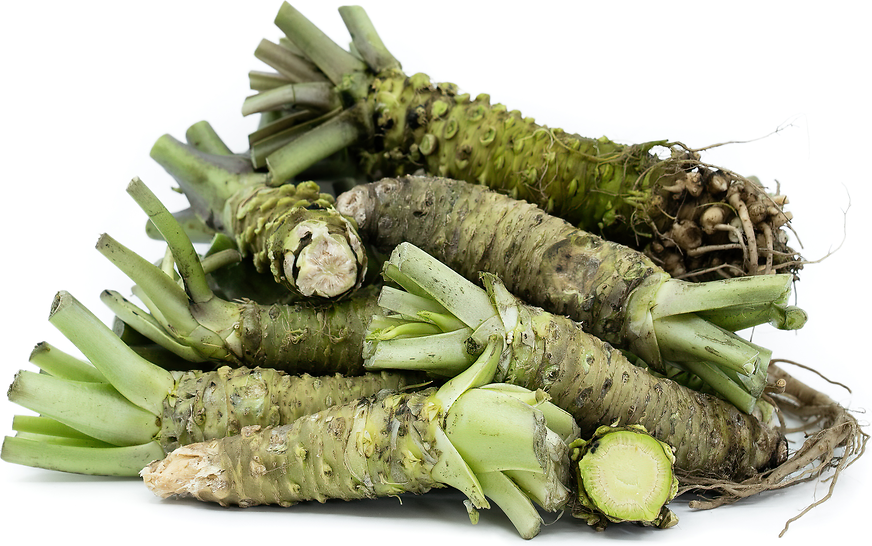
Wasabi root is the long, knobby tuber of a branchless plant that produces single-stem, rounded leaves. A mature wasabi root is firm, cylindrical, brown and green-skinned and tapered. It resembles a stalk of brussel sprouts after the sprouts have been removed. The leaves and stems are edible, and the entire plant is used in both food and health applications. It should be about six inches long and two inches in diameter when harvested. Its pale, lime green flesh appears somewhat dry and emits little aroma. However, once grated it reveals a creamy, moist consistency with a fiery, mustard-like flavor and pungent fragrance. Of the two types of Wasabi, the aquatic “sawa” Wasabi has an intense flavor that lingers just a short while, leaving a slightly sweet after-taste. “Oka” Wasabi has a less intense taste and the flavor lingers a bit longer. The compounds responsible for the intense flavors found in Wasabi are the same that make it valued as a health food.
Seasons/Availability
Wasabi root is available year-round.
Current Facts
Wasabi root is a member of the cruciferous family of vegetables, the Brassicaceae, and is in fact the rhizome or root-like stem of the Wasabia japonica plant. Wasabi is most widely known in its paste form as an accoutrement to sushi, alongside pickled ginger. However, not all powdered forms of the root are true Wasabi, and many contain horseradish. “True Wasabi” is known in Japan as semi-aquatic Wasabi or “sawa" Wasabi, and is considered a rare delicacy. Field Wasabi, or "oka" Wasabi is grown in full soil and is more commonly grown around the world. Wasabi contains special compounds called isothiocyanates (ITCs) which are referred to as nutraceuticals – compounds present in foods that have health benefits above basic nutritional value. These compounds are what give Wasabi its unique spicy flavor, the aquatic-grown form contains higher ITCs than the field-grown version.
Nutritional Value
Wasabi root has very unique nutritional and health benefits. Wasabi contains fiber and protein as well as calcium, potassium and magnesium and vitamins B6 and C. The isothiocyanates (ITCs) present in the rhizome give Wasabi both anti-inflammatory and antioxidant properties. The compounds serve as an anti-coagulant and an immune boost. Research has demonstrated that ITCs can also inhibit the growth of certain cancerous cells in the body.
Applications
Wasabi root is traditionally used as an herb and flavoring agent for condiments and in various dishes. Wasabi root is very intensely flavored, so it should be used sparingly. Peel and grate fresh Wasabi and puree with mayonnaise to use as a condiment for sandwiches, fish or in coleslaw. Fresh Wasabi can be grated into a paste and used as an accompaniment to sushi, with or without soy sauce. Toss minced Wasabi with sesame oil, soy sauce and rice wine vinegar, and mix into a dressing or marinade. Fresh Wasabi root will keep, wrapped and refrigerated, for up to two weeks.
Ethnic/Cultural Info
Wasabi is a staple condiment in Japanese cuisine. It is sold fresh in markets and it is served in restaurants alongside sushi, sashimi and soba noodles. Sawa, or aquatic Wasabi, is the most expensive form of Wasabi and is considered a delicacy. In Japan, Wasabi is traditionally grated with a sharkskin grater or “oroshi".
Geography/History
Wasabi root is native to the wet banks of Japan’s mountain streams. In the United States, Wasabi root is grown in the rainforest-like areas of Oregon, Washington and British Columbia. Wasabi grows best in a humid and damp, temperate environment. It can take up to three years to cultivate a Wasabi plant. The nutrients and flavor are concentrated in the rhizome, so the longer it remains in the ground, the more potent the flavor and beneficial the nutrients. The ideal time-frame for optimal size and flavor is around 24 months.
Recipe Ideas
Recipes that include Wasabi Root. One
 is easiest, three is harder.
Latest in season fruits and vegetables posted from the Specialty Produce App