



Uzbek-Russian Melons
Estimated Inventory, lb : 0
Description/Taste
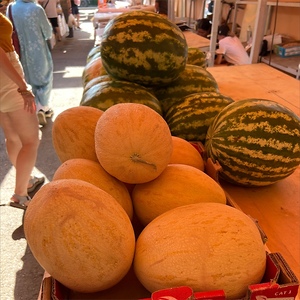
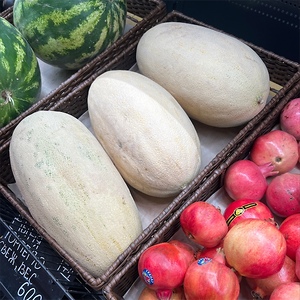
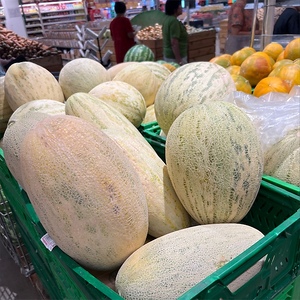
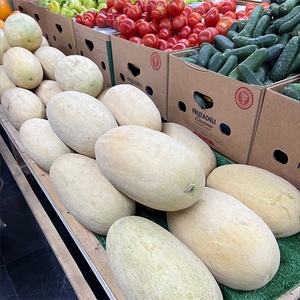
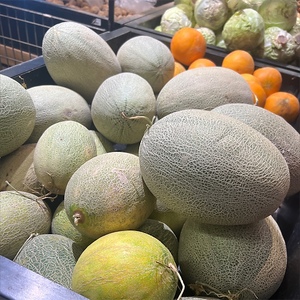
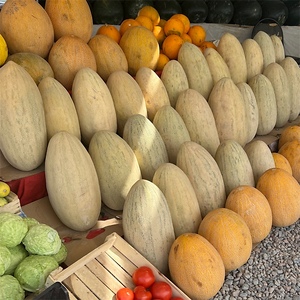
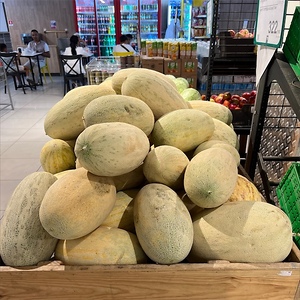
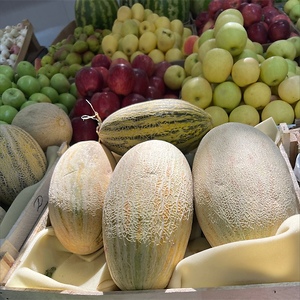
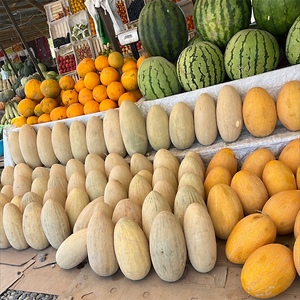
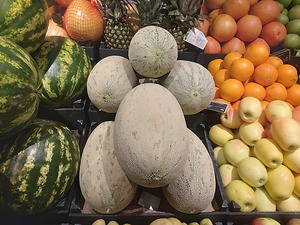
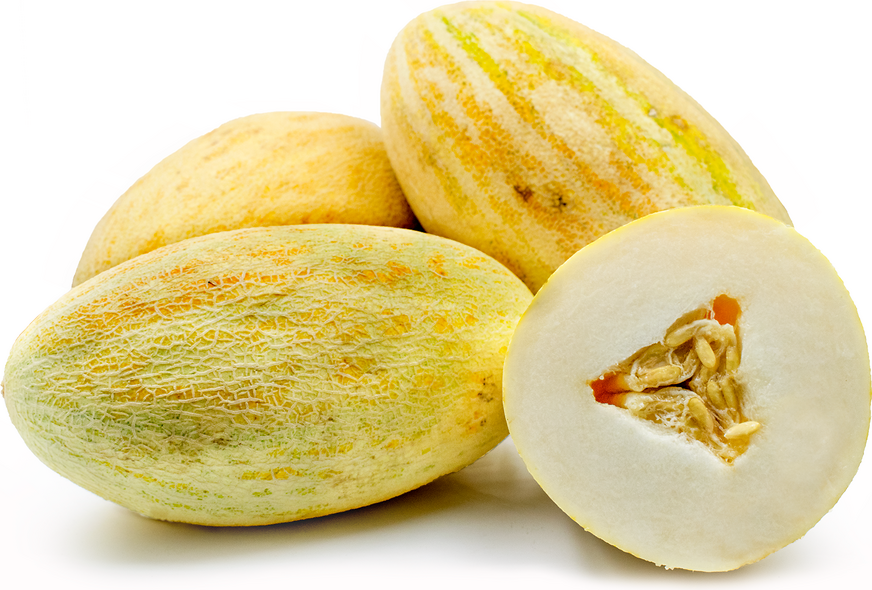
Uzbek melons vary in size and weight, depending on their growing environment, and generally have an elongated, tapered shape with a broad middle and somewhat pointed ends. The melons often share a shape similar to a football and can weigh anywhere from 2 to 9 kilograms. The melon's rind is semi-thick, tough, and hard, showcasing variegated and mottled hues of golden yellow, orange, and green. The rind may also feature some striping and be covered in a raised, textured, and rough netting. Underneath the surface, the white to ivory flesh is firm, aqueous, and succulent, with a melting consistency when ripe. The flesh can also develop an orange hue toward the center and encases a seed cavity filled with flat, oblong, tan seeds suspended in a slippery coating and stringy fibers. Uzbek melons release an aromatic, floral aroma when ripe, and the flesh has a high sugar content, contributing to the melon's honeyed, floral, and sweet taste.
Seasons/Availability
Uzbek melons are available in the summer.
Current Facts
Uzbek melons, botanically classified as Cucumis melo, are a Central Asian variety belonging to the Cucurbitaceae family. There are over 160 varieties of melons cultivated in Uzbekistan, and the name Uzbek melon can be confusing as many varieties may be associated with this moniker, depending on the region and market. In the United States, Uzbek melons mostly refer to a species introduced from Uzbekistan in the late 20th century. The true varietal name was not revealed when the melons were planted in California, and the melons were called Uzbek, Uzbek-Russian, or occasionally Silk Way melons in American markets. In Uzbekistan, many melon varieties are sold throughout the country and are consumed as an integral staple in daily life. In the United States, Uzbek melons are known for their juicy and exceptionally sweet flavor and are a rare variety sold as a delicacy in select fresh markets.
Nutritional Value
Uzbek melons have not been studied for their nutritional properties, as the true variety is unknown. Like other melons from Central Asia, the melons may be a source of potassium to balance fluid levels within the body, vitamin A to maintain healthy organ functioning, and vitamin C to strengthen the immune system. The melons may also provide vitamin K to assist in faster wound healing, calcium to build strong bones and teeth, fiber to regulate the digestive tract, iron to develop the protein hemoglobin for oxygen transport through the bloodstream, and other nutrients, including phosphorus, manganese, and folate. In Uzbekistan, melons are believed to increase endorphins in the brain when consumed, which is thought to lower depression and boost happiness.
Applications
Uzbek melons have a refreshing, sweet, and honeyed flavor suited for raw and cooked preparations. The melons are traditionally consumed out of hand and savored for their juicy nature. In Uzbekistan, melons are served as a light dessert or hydrating snack throughout the day. Field workers also commonly consume chilled melon slices with flatbread as an on-the-go lunch. Uzbek melons can be used in any preparation calling for muskmelon, and the sweet flesh can be served with nuts and cheeses, tossed into salads, or sprinkled with spices and herbs as a flavorful side dish. In addition to fresh recipes, Uzbek melons can be simmered into jams, jellies, and preserves, infused into honey, or candied as a sweet treat. The melons can also be used as a fresh dessert topping or dried for extended use as a chewy snack. Uzbek melons pair well with herbs such as cilantro, basil, parsley, and dill, spices including cumin, pepper, and cumin, citrus, ginger, and nuts such as pine, almonds, and pistachios. Whole, unopened Uzbek melons will keep for around one week when stored at room temperature in a cool, dry, and dark place. Once sliced, store the melon pieces in a sealed container and keep them in the refrigerator, where the melon will keep for 3 to 4 days.
Ethnic/Cultural Info
In the United States, Uzbek melons had a rocky introduction into commercial markets as they were infamously associated with a murder in the late 20th century in Fresno, California. In 1993, Victor Kotchkin, a Russian immigrant and art importer, decided to import melon seeds from Uzbekistan. Kotchkin had previously lived in the former Soviet Union and resided in the region now known as modern-day Uzbekistan. He leased around 200 acres of farmland in Fresno, imported melon seeds, and hired four laborers from Uzbekistan. It is unknown what melon variety Kotchkin imported, as the melons were labeled Uzbek melons during cultivation. Kotchkin and his team felt that the melons would sell well in the American market, and around five years after leasing the land, Uzbek melons were being grown in California. Around the same time Kotchkin was importing Uzbek melon seeds, Yakov and Raisa Altman, a couple formerly from Ukraine, had settled in California and ran an auto-repair shop in Long Beach, California. Despite their business being in Long Beach, the Altmans resided in the Pacific Palisades and were looking for ways to invest their money when they met Kotchkin. The Altmans eventually invested $200,000 for a 50-percent share of Kotchin's melon business. At the time, Kotchin needed investors as he struggled to cultivate the melons in California's soil. Uzbek melons also suffered from insect infestations, worms, and other cultivation issues, and it was reported that many arguments were had in Russian throughout the fields. The melons struggled to attract consumer attention, and a lack of marketing prevented the melons from increasing in popularity. As the melons failed to be sold, Yakov and Raisa Altman grew unsettled over their investment. Stories from field workers report that Raisa Altman drove up to Fresno in the fall of 1998 and screamed at Kotchkin in the melon fields, spreading rumors of embezzlement, involvement of the Russian mafia, and money disputes. Later that year, at around 5:00 PM on September 24, 1998, Raisa Altman was shot twice in the chest and killed in the doorway of her home. The murder attracted statewide attention, and after media outlets, including the Fresno Bee, commented on the Altman's investment in Uzbek melons in their article "Melons & Murder," the sales of the Central Asian melon plummeted, leaving the melons to rot in the fields. Raisa Altman's murder is still unsolved to this day.
Geography/History
Uzbek melons are an unnamed variety of melon originally bred in Central Asia and imported to the United States from Uzbekistan in the late 20th century. Experts believe Central Asia to be the center of origin for melons, and melon seeds were discovered in excavations of Toprak-kala, an ancient site in Uzbekistan dating back to the 4th century CE. Melons were extensively cultivated throughout Central Asia, and growers traveled long distances to attend annual melon festivals to share varieties and learn from other growers. Over time, these meetings encouraged advancements in breeding, and the sweet melon cultivars were transported along trade routes, including the Silk Road, to sell varieties throughout Asia, the Middle East, and Europe. There are six main areas of melon cultivation in Uzbekistan, and these regions are found in Khorezm, Samarkand, Bukhara, Fergana, Tashkent, and other South zones. In 1993, an unknown Uzbek melon variety was imported into the United States and was given the general moniker of Uzbek as a commercial descriptor. This variety was planted in Fresno, California, and became intertwined in a tumultuous story of investments and murder later in 1998. Uzbek melons disappeared from California markets for several years after the incident, but in 2005, Fresno County Farm Advisor Richard Molinar used seeds he had saved from the original Uzbek melon fields to replant the variety. Molinar sent the seeds to Balakian Farms in Reedley, California, and the variety was eventually sold in the San Francisco Ferry Plaza and other Northern California farmer's markets. Uzbek melons have slowly resurfaced in California markets in the 21st century, and the melons are sold as a specialty item through select grocers, distributors, and farmer's markets.

Latest in season fruits and vegetables posted from the Specialty Produce App
View Full Share Market®