



Turmeric Root
Estimated Inventory, 30 lbs : 1.43
This item was last sold on : 06/18/25
Description/Taste
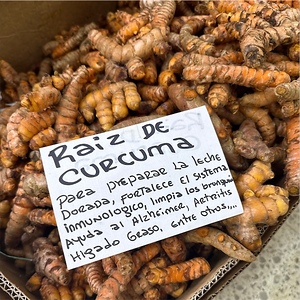
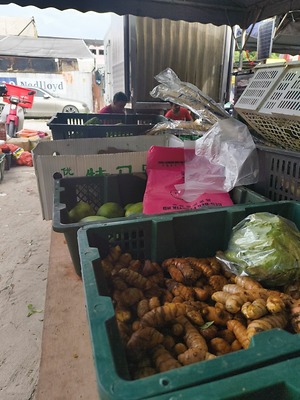
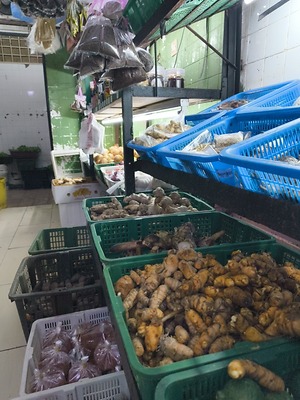
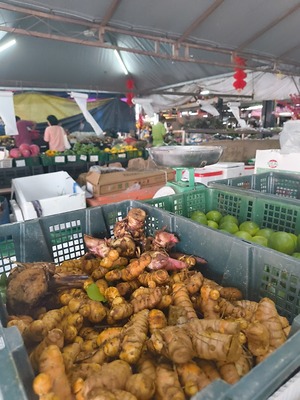
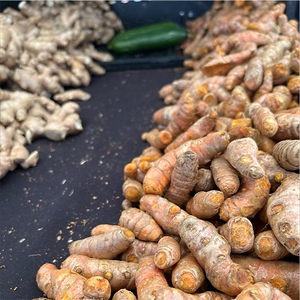
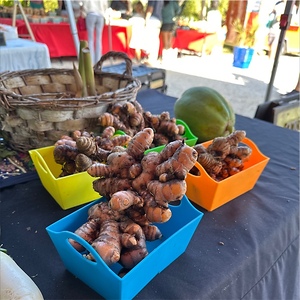
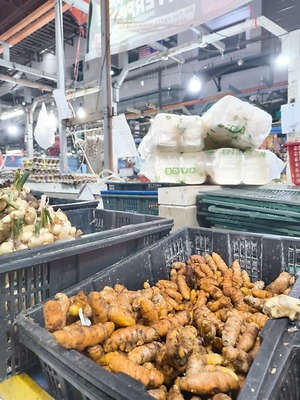
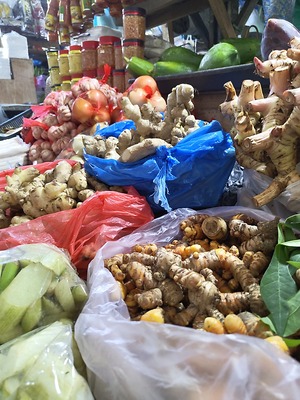
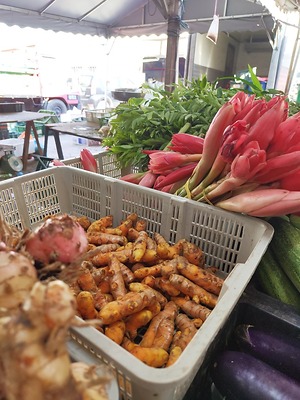
Turmeric is the rhizome, or root stem, of a tropical blade-leafed plant. The root has a finger-like shape with smaller tubers branching off of it. Its rough skin is marked with knobs and rings. Turmeric root is about 2.5 to 7 centimeters long and 2.5 centimeters wide. Its skin is pale brown with occasional bright orange splotches of its flesh peeking through, similar to the color of orange sweet potatoes. When cut in half, the flesh of the Turmeric root has a lighter orange ring on the outside and a bright orange flesh that’s firm and dense, similar to the texture of ginger root. Turmeric root has a warm, earthy, and spicy scent. Its flavor is bitter and peppery yet warm and sweet with a slight acidity.
Seasons/Availability
Turmeric root is harvested from late fall to early winter. Ground Turmeric spice is available year round.
Current Facts
The botanical name for Turmeric root is Curcuma longa and it belongs to the Zingiberaceae family, which also includes ginger and cardamom. Turmeric root is commonly boiled, ground up, and dried to create Turmeric spice, which is popular in Asian, East African, and Caribbean cuisine. Turmeric has at least 53 different names worldwide, including Haldi in Northern India and Manjal in Southern India. The name Turmeric originates from the Latin word terra merita, which means meritorious earth. This refers to ground Turmeric's resemblance to the color of mineral pigment. The use of Turmeric root dates back 4,000 years to the Vedic culture of India. Both the Ayurvedic and Unani systems of medicine used Turmeric for its therapeutic properties. Ancient Ayurvedic texts recommended the use of Turmeric for relieving food poisoning, purifying blood, and treating sprains and swelling.
Nutritional Value
The culinary and medicinal benefits of Turmeric root can be attributed to curcumin, the primary active ingredient in Turmeric. It has been used to treat a wide variety of ailments, particularly in Ayurvedic, Indian, and traditional Chinese medicine. In Ayurvedic practices, it was thought to be beneficial for increasing energy levels, dispelling worms, improving digestion, relieving arthritis, purifying blood, and treating skin conditions, liver disorders, and rheumatism. In many South Asian countries, Turmeric is used as an antiseptic for bruises, burns, and cuts. In Pakistan, people used it to treat gastrointestinal discomfort and applied it to burnt cloth to cleanse wounds. Turmeric root paste is used in India to remove unwanted hair and is applied to the skin of brides and grooms before weddings. Turmeric is used in many sunscreens and face creams as it’s thought to give the skin a glowing quality. In traditional Chinese medicine, Turmeric is used for abdominal pain and is considered a bitter digestive and a carminative. Turmeric is sometimes mixed with water or milk to treat colds and sore throats.
Applications
Turmeric root is not often consumed whole. It's usually grated, diced, or ground up to create Turmeric spice. Turmeric can be used in juices, smoothies, teas, vinaigrettes, lattes, and canned beverages. When chopped or grated into small pieces, Turmeric root can be added to salads, mashed potatoes, pasta, wraps, baked goods, veggie burgers, roasted vegetables, and stir-fries. Ground Turmeric spice is one of the most common and accessible ways to use it and can be incorporated into sauces, curries, soups, stews, stir-fry, and rice dishes, giving all of these dishes a bright yellow hue. Turmeric pairs well with chicken, seafood, tofu, mushrooms, pistachios, onions, garlic, spinach, kale, tomatoes, mangos, carrots, cauliflower, chickpeas, squash, almond and soy milk, nutritional yeast, paprika, black pepper, ginger, sea salt, olive oil, celery, cranberries, mustard, and lemon. Turmeric root must be washed and peeled before use. It can be kept in the fridge for up to three weeks.
Ethnic/Cultural Info
India is the largest producer of Turmeric root and consumes 80% of the world's supply. The Southern Indian city of Erode is known as Yellow City and Turmeric City, producing the largest amount of Turmeric and serving as a crucial trading center for it. Turmeric is important in South Asian, Middle Eastern, and Ethiopian cuisine. It's also used in South African cuisine to give white rice a golden hue and in Asia to make fresh Turmeric pickles. In Asia, the average human consumption of Turmeric is around 200 to 1,000 milligrams a day and 160 to 440 grams a year. Turmeric is one of the ingredients in curry powder, which also includes cumin, ginger, and black pepper. Turmeric is often used as a replacement for the more expensive saffron spice.
Geography/History
Turmeric root is native to Southeast Asia, particularly Indonesia and southern India, where it has been used for 5,000 years. It thrives in tropical climates with a significant amount of both sun and rainfall. Turmeric root may be found growing in forests, though it is more commonly cultivated for commercial purposes. This root may also be harvested in home gardens. Turmeric root began to spread worldwide when it was traded along the Silk Road in 700 CE, thus introducing it to the Middle East and North Africa. It was then brought to Europe in the 13th century through trade routes developed during the Crusades. European colonists then introduced Turmeric cultivation to Africa and the Caribbean, where it remains a valuable crop. Turmeric root was once again introduced to the Caribbean when indentured servants from India were brought there during the 19th and early 20th centuries. Though Turmeric root is less common outside of the Middle East, India, and Southeast Asia, the dried Turmeric spice made from it is much more popular and widely available. This spice can be found in grocery stores and farmers’ markets worldwide.
Featured Restaurants
Restaurants currently purchasing this product as an ingredient for their menu.
| Panama 66 | San Diego CA | 619-206-6352 |
| Dot Cafe | San Diego CA | 914-263-1424 |
| Dija Mara | Oceanside CA | 760-231-5376 |
| Madi | San Diego CA | 320-491-1217 |
| Beaumont's | San Diego CA | 858-459-0474 |
| Palmys | San Diego CA | 858-886-7111 |
| Sabi Juice | Chula Vista CA | 619-971-8545 |
| Marisi La Jolla | La Jolla CA | 951-852-6730 |
| Nostrum | Escondido CA | 858-442-4527 |
| Temecula Olive Oil Company | TEMECULA CA | 8666548396 |
| 4 The Love Of Lemons | San Diego CA | 760-613-1104 |
| Espadin | Temecula California | 951-383-5585 |
| Pacific Yacht Agents | Los Angeles CA | 808-214-0970 |
| Bea Green Cold Pressed Juice | Alpine CA | 619-398-6295 |
| Juice Wave | San Diego CA | 240-246-5126 |
| PureTaco | Carlsbad CA | 760-845-3346 |
| Cross Roots | San Diego CA | 858-245-1678 |
Recipe Ideas
Recipes that include Turmeric Root. One
 is easiest, three is harder.
Latest in season fruits and vegetables posted from the Specialty Produce App