


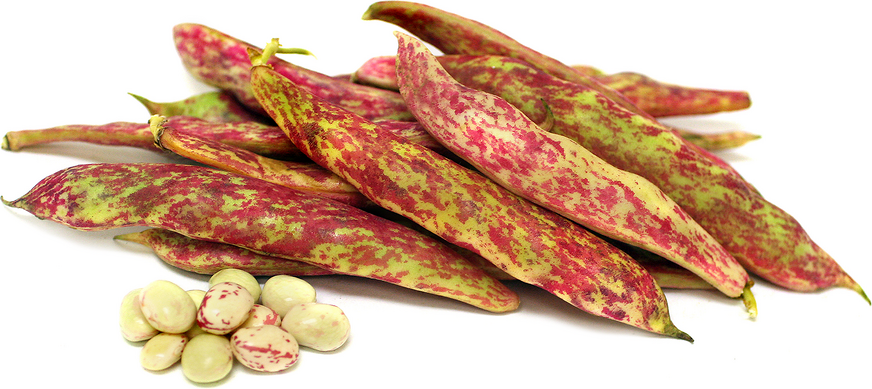


Tongue of Fire Shelling Beans
Estimated Inventory, lb : 0
Description/Taste
Tongue of Fire shelling beans when fully mature will have long pods measuring approximately six to seven inches in length. The pods will be green with red stripes when immature and then when mature turn a creamy white with red stripes, similar to that of the cranberry bean. The plump seeds within the pods as well when mature will have a white background decorated with speckles of red. When used as a shell bean Tongue of Fire beans offer a meaty yet creamy texture and a nutty, somewhat sweet bean flavor. In their immature stage when used whole as a snap type bean Tongue of Fire will offer a vegetal taste, reminiscent of green beans and broccoli. Enjoy their colors before preparing because like many beans Tongue of Fire will lose its signature red streaks once cooked.
Seasons/Availability
Tongue of Fire shelling beans are available in the summer months stretching into early fall.
Current Facts
The Tongue of Fire shelling bean is known as an Italian heirloom variety of Phaseolus vulgaris, and may also be referred to as Borlotto Lingua di Fuoco, and Borlotti bean. It is often compared to the cranberry bean in appearance and the kidney bean in taste. Like many beans, it can be picked young at approximately fifty-six days from planting and used as a snap or green bean or it can be allowed to fully mature and be shelled for its internal seeds at about seventy-five days. Most often today they are used as a shelling type bean and can be found when in season at farmers markets near bean growing regions. Additionally in some areas they can be found sold as a dried legume and canned bean.
Nutritional Value
Tongue of Fire beans are rich in protein and carbohydrates, a fact that makes them an excellent nutritional substitute for meat in main dish soups, stews, and braises. Additionally, Tongue of Fire beans offer some copper, fiber, zinc, niacin, iron, and calcium.
Applications
Tongue of Fire beans can be prepared when immature as a snap type bean in a fashion similar to that of romano or green beans. Once mature the beans are shelled from their pods and used as a legume. Freshly shelled Tongue of Fire beans can be simmered, braised, sautéed, roasted and fried. The beans are known to easily take up the flavors of whatever they are cooked with making them an excellent addition to stews, soups, and cassoulets. Cooked beans can be added to bean, grain and pasta salads or they can be mashed with herbs and olive oil to make a bean spread or dip. Tongue of Fire beans are also known to be an excellent bean for use in the classic preparation of baked beans. Their flavor and texture pairs well with tomatoes, shallot, garlic, corn, greens such as kale, spinach and chard, fresh herbs like basil, parsley and sage, fennel, leek, zucchini, tuna, pork, parmesan and pecorino cheeses, olive oil, vinegar, and citrus juice. To store keep fresh Tongue of Fire shelling beans refrigerated and use within four to five days.
Ethnic/Cultural Info
Tongue of Fire beans are a favorite bean in Italy where they are used traditionally in soups and stews. Beans are an important ingredient in the classic Italian bean and pasta soups known as, minestrone and pasta e fagioli. In northern Italy Tongue of Fire beans are the bean of choice for both soups but in Tuscany Italians prefer another white bean known as the cannellini bean.
Geography/History
Tongue of Fire shelling beans are believed to be native to Tierra del Fuego on the tip of South America. From there they spread to Spain then to Italy where they quickly became a regional favorite. Tongue of Fire beans are a bush type and will thrive in warm, full to semi-sunny climates. They can be drought tolerant but will be more of a prolific fruiter if provided with ample watering after plants have flowered.
Recipe Ideas
Recipes that include Tongue of Fire Shelling Beans. One
 is easiest, three is harder.