



Tindora
Estimated Inventory, lb : 0
Description/Taste
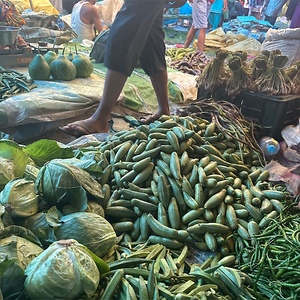
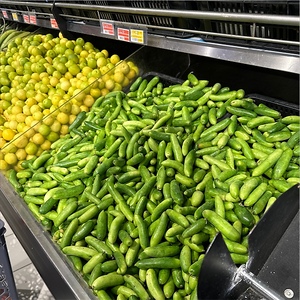
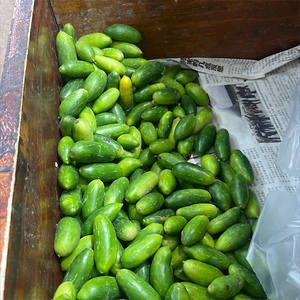
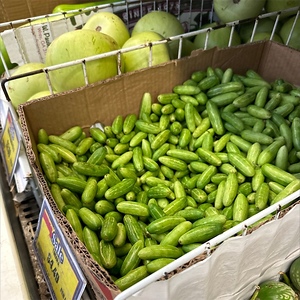
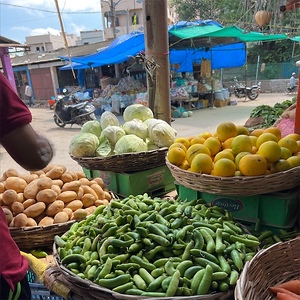
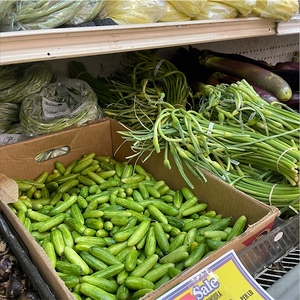
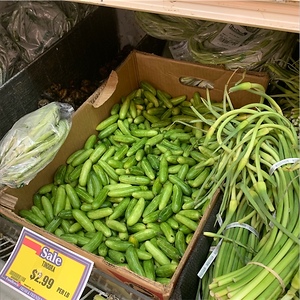
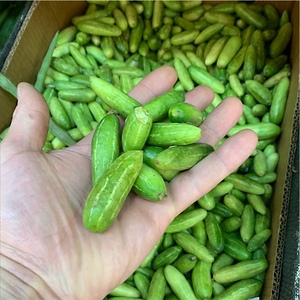
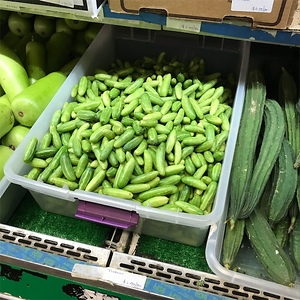
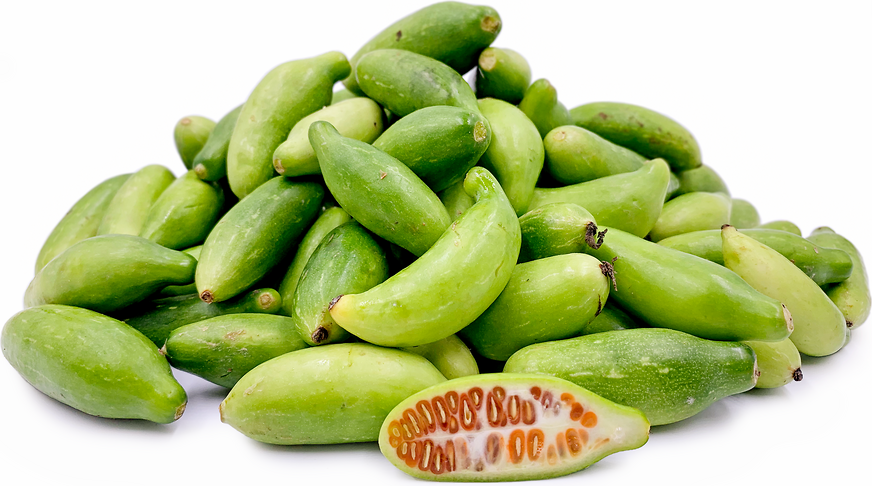
Tindora fruits are small in size, averaging 6-9 centimeters in length, and are ovoid to ellipsoid in shape, connected to slender climbing vines and broad, wide, five-lobed leaves. The skin is smooth with variegations and light striping of pale green, dark green, and white hues. Underneath the surface, the translucent white flesh is aqueous and crisp, encasing many seeds in a slippery, pale red coating. Tindora fruits are juicy and crunchy when young with a mild, slightly bitter aftertaste. As the fruit matures, it develops a soft and a sweeter quality, and depending on variety, the skin can also change to bright red.
Seasons/Availability
Tindora are available year-round.
Current Facts
Tindora, botanically classified as Coccinia grandis, is a vigorous, tropical climbing vine that can grow up to ten centimeters per day and belongs to the Cucurbitaceae family. Found growing in the wild and cultivated for its edible shoots and fruits, Tindora has several other common vernacular names that vary by region including Dondakaya, Scarlet gourd, Ivy gourd, Kovakka, Tendli, and Tondi. Though Tindora is a favored ingredient in Indian cooking, it is also considered an aggressive invasive species in other parts of the world as it grows dense foliage smothering other plants. Tindora is favored for its crunchy texture and is utilized in heavily spiced dishes to add a cooling, mild flavor.
Nutritional Value
Tindora is a good source of vitamin A, vitamin B, and beta-carotene. It is also known for its toxin eliminating properties and can help clean the bloodstream.
Applications
Tindora can be eaten raw as a salad vegetable, though its bitter flavor can be strong so the addition of vinegar and sugar can reduce or remove any bitter aftertaste the fruit may impart. The fruit is more popularly cooked and added to curries, stir-fries, and used as the main ingredient in Indian pickles and chutneys. They can also be coated in spices and roasted as a crunchy side dish. In India, Tindora is commonly utilized in urad dal, which is Tindora soaked in warm water cooked with lentils, Tindora Payla, which is Tindora mixed with spices and dried, roasted lentils, or slow-cooked in coconut milk as a savory curry. In Southeast Asia, the leaves, shoots, and stems are used as potherbs in soups or served in rice dishes. Tindora naturally absorbs accompanying flavors. It pairs well with ginger, garlic, chiles, stewed meats and vegetables, baked fish, coconut cream, peanuts, pickling spices such as mustard and coriander, light-bodied vinegar, and aromatics such as cumin and cilantro. The fruits are perishable and will keep up to one week when stored in a paper bag in the refrigerator.
Ethnic/Cultural Info
In India, Tindora is used in Ayurvedic medicine as a way to reduce inflammation and as a treatment to help regulate sugars in the body, especially for diabetic patients. It is also used to maintain the health of endocrine glands for overall well-being. In addition to the fruits, the leaves are made into a paste and applied topically to help heal skin wounds caused by leprosy, psoriasis, and scabies. Tindora is also a popular home garden plant in Southern India for culinary and medicinal uses and is grown along walls and fences.
Geography/History
Tindora plants are native to tropical and subtropical regions of Africa and Asia. The vine was then quickly dispersed by both animals and humans across Asia, and since its first cultivation, Tindora has been introduced as a food crop in Southeast Asia, the South Pacific, the Caribbean, the Southern United States, including Hawaii. Today Tindora can be found growing in the wild and at local markets in India, Cambodia, China, Myanmar, Thailand, Vietnam, Indonesia, Malaysia, the Philippines, Guam, Fiji, Papua New Guinea, Samoa, Tonga, Australia, and the United States.
Recipe Ideas
Recipes that include Tindora. One
 is easiest, three is harder.
| Monsoon Spice |
|
Spicy and Crispy Tindora Roast |
| Spice up the Curry |
|
Tindora Aloo Masala |
| Madhura's Recipes |
|
Tindora Fry |
| Sailu's Kitchen |
|
Dondakaya Vepudu - Tindora Stir Fry |

Latest in season fruits and vegetables posted from the Specialty Produce App