



Tarocco Blood Oranges
Estimated Inventory, 18 lbs : 0
Description/Taste
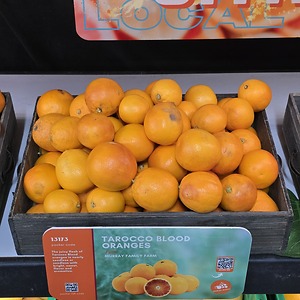
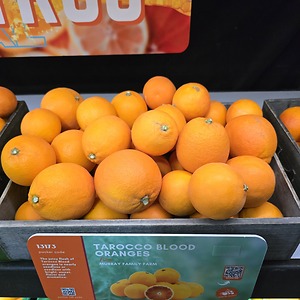
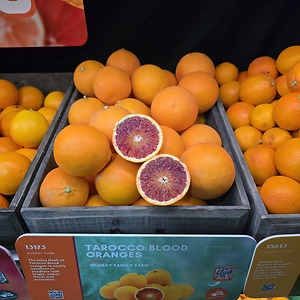
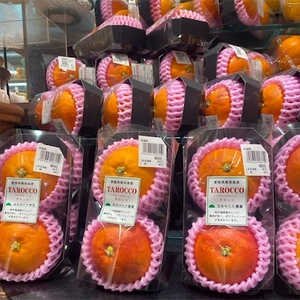
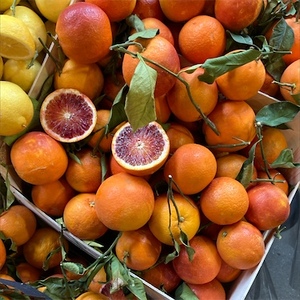
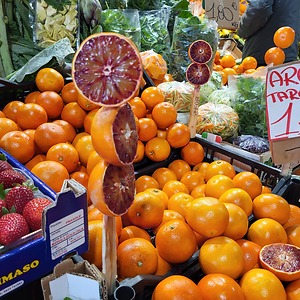
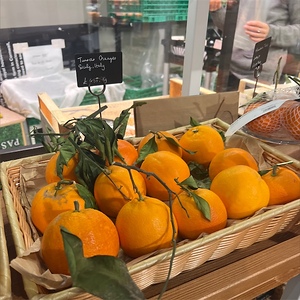
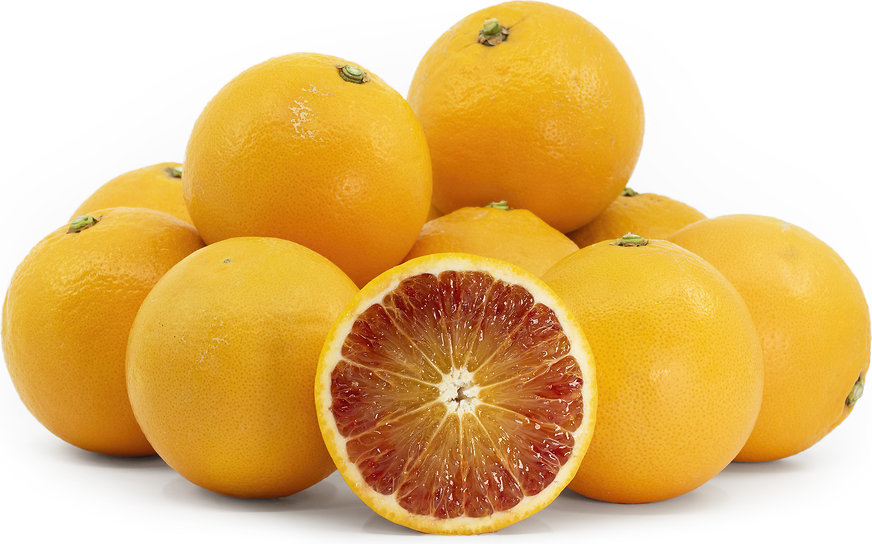
Tarocco blood oranges vary in size and shape, depending on the specific clone, but are generally medium to large, averaging 7 to 10 centimeters in diameter. The fruits are globular to round with blunt, curved edges and sometimes feature a prominent bump on the stem end, known as a neck or collar. Tarocco blood oranges are commonly harvested between 200 and 250 grams in weight, and their rinds are semi-smooth, taut, and tightly adhered to the flesh. The rinds ripen from green to shades of yellow-orange and are occasionally blushed with faint patches of pink or red. Tarocco blood orange rinds have a leathery feel and are covered in sunken oil glands, creating a lightly rough, pebbled surface. Underneath the rind, the flesh is divided into 10 to 12 segments by thin membranes and has a tender, soft, aqueous, and succulent consistency. Tarocco blood oranges are nearly seedless and characteristically flushed with pink, red, and purple-red pigments. The pigments vary in each fruit, depending on cultivation conditions, and some may be more colored than others. The color also often appears at the bottom of the fruit. Tarocco blood oranges are edible raw once ripe and release a faintly fruity aroma. The flesh is sweet and balanced with acidity, creating a rich, sweet-tart, and fruity taste with subtle nuances of raspberries.
Seasons/Availability
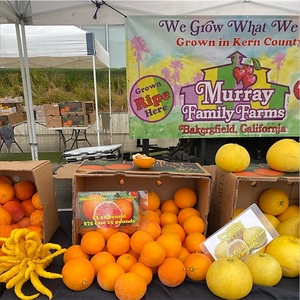
Tarocco blood oranges are available in the winter through spring, typically between November and May. Each Tarocco clone will have a staggard ripening time during this period in Italy for an extended season. In California, Tarocco blood oranges are generally harvested between December and February and sold for several months in commercial markets.
Current Facts
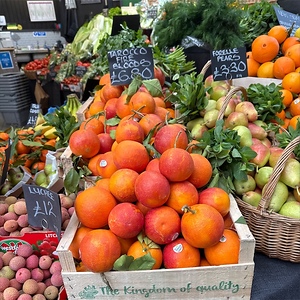
Tarocco blood oranges, botanically classified as Citrus sinensis, are a category of multiple fruits belonging to the Rutaceae or citrus family. In Sicily, Tarocco blood oranges are nicknamed the “queen of blood oranges” and are the choice table orange, referred to in Italian as arancia da tavola. Tarocco blood oranges are considered one of the sweetest types of blood oranges and are known for their tender flesh, juicy nature, and floral, fruity flavor. It is important to note that the name Tarocco is a category or grouping encompassing over sixty clones of the originally discovered fruits. These clones may vary slightly in appearance and flavor and are created with different ripening times to extend the category’s season. Some commercially cultivated clones include Tarocco Comune, Tarocco Gallo, and Tarocco Nucellare. New clones are also still being developed, like Tarocco Ippolito in 2022 and Tarocco Vigo in 2024, to showcase improved characteristics and increased pigmentation. Since their discovery in Sicily, Tarocco blood oranges have expanded in cultivation to citrus-growing regions worldwide. The fruits are still seasonally treasured throughout Italy as one of the most popular oranges, seen in delicately stacked piles in fresh markets when in season, and outside of Italy, they are sold as specialty citrus. Tarocco blood oranges are sought by chefs and home cooks for their versatility in culinary preparations and beverages.
Nutritional Value
Tarocco blood oranges are known for their pigmented flesh, a feature created by anthocyanins, or natural compounds with antioxidant properties. Anthocyanins are believed to help the body reduce inflammation and guard cells against damage caused by free radicals. In Italy, blood oranges are occasionally used in natural medicines to ward off colds and other sicknesses and as a remedy to improve digestion. Tarocco blood oranges are a source of vitamins A and C that can aid in strengthening the immune system and maintaining healthy organs. The fruits also provide minerals such as calcium, phosphorus, potassium, iron, and magnesium. Phosphorus and calcium support bones and teeth, while potassium balances fluid levels in the body. Iron develops the protein hemoglobin for oxygen transport through the bloodstream, and magnesium assists in controlling nerve functions. Other nutrients include some copper, zinc, and manganese.
Applications
Tarocco blood oranges have a sweet-tart taste suited for fresh and cooked preparations. The variety is traditionally eaten out of hand and is enjoyed for its juicy, tender nature. Tarocco blood oranges are commonly consumed in the morning in Italy in slices or squeezed as fresh juice. An Italian proverb states “Le arance sono oro al mattino, argento a mezzogiorno e piombo la sera,” translating to “Oranges are gold in the morning, silver at noon, and lead in the evening.” This proverb highlights that oranges are typically consumed for improved digestion in the morning and afternoon and are customary in Italy. In addition to eating and juicing, Tarocco blood oranges are added to salads and fruit bowls. They are also juiced and used in sauces, dressings, and marinades. Worldwide, Tarocco blood oranges can be used in any recipe calling for blood oranges. The fruits have a sweeter flavor than other blood orange types and are infused as flavoring into fillings for baked goods and other parties. Tarocco blood oranges are also simmered into jams, jellies, and compotes or added to gelato and ice cream. It is worth noting that freshly squeezed juice should be immediately used or consumed to prevent it from discoloring and sometimes developing a bitter flavor. Tarocco blood orange rinds are also candied into sweet treats. Tarocco blood oranges pair well with aromatics such as red onions, herbs including fennel, mint, cilantro, and parsley, soft cheeses, honey, olives, and nuts such as pistachios, almonds, and pine. Whole, unwashed Tarocco blood oranges will keep for one week when stored at room temperature and up to two weeks when stored in the refrigerator.
Ethnic/Cultural Info
Tarocco blood oranges are protected in their native growing region of Sicily under the Arancia Rossa di Sicilia PGI, a Protected Geographical Indication. Arancia Rossa di Sicilia translates to “Red Oranges of Sicily,” and the geographical indication encompasses the three main blood orange varieties grown in eastern Sicily, including Tarocco, Moro, and Sanguinello. Blood oranges protected by the PGI can only be cultivated in thirty-two municipalities within the provinces of Syracuse, Catania, and Enna on Sicily. This PGI is also monitored by the Consorzio di Tutela Arancia Rossa di Sicilia IGP, meaning the Consortium of Sicilian Red Orange PGI, a group established in 1994 of over five hundred industry professionals involved in blood orange cultivation, packing, and marketing. Tarocco blood oranges sold under the Arancia Rossa di Sicilia PGI label indicate they have passed specific cultivation and harvest standards to ensure the fruits were produced with quality methods.
Geography/History
Tarocco blood oranges were first discovered in Sicily and are descendants of other blood orange cultivars, commonly referred to as red oranges in Italy. The pigmented oranges were noticed growing as a natural mutation of the Sanguinello variety in the Syracuse province in eastern Sicily. The new variety was identified by grower and merchant Gesualdo Di Naro in the Pedagaggi area of Syracuse sometime in the 19th or early 20th centuries and quickly spread in cultivation to the Francofonte and Lentini areas. Tarocco blood oranges also expanded in production to areas of the Catania province and into orchards around Mt. Etna, an active volcano known throughout Sicily for contributing fertile, nutrient-rich soil at its base. Over time, Tarocco blood oranges became a highly favored type of orange throughout Sicily, and the fruits were exported to other regions of Italy and Europe. Several mutations have also occurred during commercial production, creating new clones of the original fruit that are able to adapt to different climates, allowing increased production. Tarocco blood oranges were eventually introduced to the United States, planted in Florida, and later sent to California. In California, the blood oranges are cultivated in inland valleys and desert areas. Today, Tarocco blood oranges are still widely grown in Sicily within the Syracuse, Enna, and Catania provinces. They are also commercially cultivated in regions of Spain, Asia, South Africa, Australia, and the United States.
Recipe Ideas
Recipes that include Tarocco Blood Oranges. One
 is easiest, three is harder.
Latest in season fruits and vegetables posted from the Specialty Produce App