

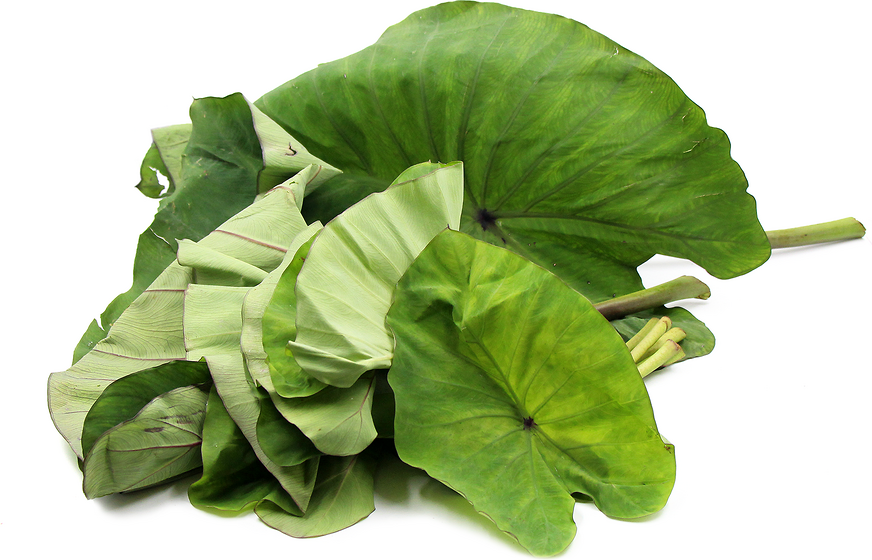


Taro Leaves
Estimated Inventory, 20 lbs : 0
This item was last sold on : 05/10/25
Description/Taste
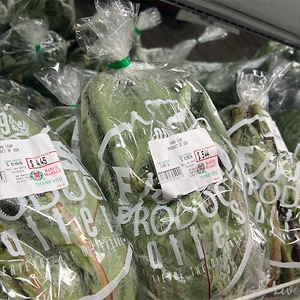
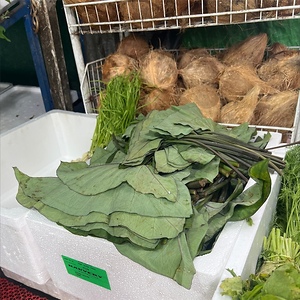
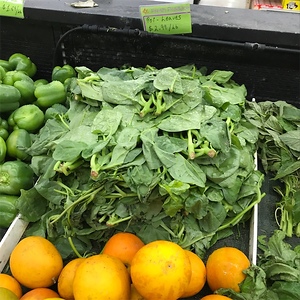
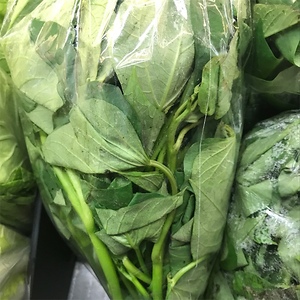
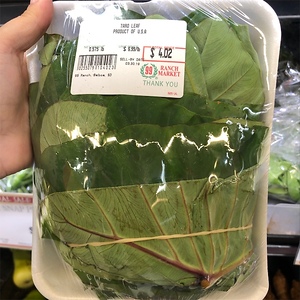
Taro leaves are generally medium to large, varying in size and shape, depending on the variety, and can grow as large as 0.9 meters in length. The leaves have a recognizable heart-like shape with two curved edges tapering to a distinct point. Some cultures refer to the leaves as having an elephant, arrow, or shield-like shape. The dark green leaves are broad, flat, pliable, and smooth. On the leaf’s underside, the surface is light green and displays raised, prominent branching veining that connects to the stem. The stalk is attached to the center of the leaf and extends underground to a starchy, brown corm that is edible once cooked. Taro leaves will range in coloring from solid green to variegated red, purple, and green hues, depending on the variety. Taro leaves are not edible raw and are poisonous if ingested uncooked. Cooked Taro leaves have a soft, tender, and subtly crisp consistency and a mild, nutty, earthy, and slightly metallic flavor.
Seasons/Availability
Taro leaves are available year-round.
Current Facts
Taro leaves, botanically classified as Colocasia esculenta, are the greens of perennial plants belonging to the Araceae family. There are many different types of Taro plants grown worldwide in the modern day with varying appearances, flavors, and textures, but historically, Taro was native to Southeast and Southern Asia, where the plants grew in dense clumps naturally near water and in hot, humid regions. Taro eventually spread worldwide as a domesticated crop, grown as a food source. The underground corms are the most utilized portion of the plant, with Taro leaves being a secondary crop. Taro leaves grow on stems that can extend over three meters in height, and the leaves are easily recognizable with their distinct heart-like shape. Taro is known as Arbi, Arvi, Kosu, and Kochu in India, Gabi in the Philippines, Kalo and Lu’au in Hawaii, Callaloo and Dasheen in the Caribbean, Amadumbe, Madumbis, and Mufhongwe in Africa, Kaladi in Malaysia, Kohai Mon in Vietnam, and Yutou or Yunai in China. Taro leaves are favored for their mild taste and are traditionally cooked as a nutritious green in various savory dishes worldwide.
Nutritional Value
Taro leaves are a source of fiber to regulate the digestive tract, vitamin C to boost the immune system, potassium to balance fluid levels within the body, and vitamin A to maintain healthy organ functioning. The leaves also provide iron to develop the protein hemoglobin for oxygen transport through the bloodstream, calcium to build strong bones and teeth, magnesium to control nerve functions, and other nutrients, including copper, manganese, phosphorus, zinc, folate, and riboflavin. Raw Taro leaves contain high amounts of oxalates, which are naturally occurring toxic compounds. Oxalates can cause itchiness and rashes on the skin and make the throat and digestive tract inflamed. They can also cause worse symptoms, depending on the amount of raw leaves ingested. It is never advised to consume raw Taro leaves, and they should be considered poisonous. Cooking dissipates oxalates in the leaves, making them suitable for consumption, and it is said that boiling is the best method.
Applications
Taro leaves are poisonous raw and must be cooked prior to consumption. Gloves should also be worn when preparing the leaves to avoid skin irritation, as raw leaves contain oxalates that may cause itchiness and rashes. Oxalates are deactivated when cooked, so the leaves are safe to eat once prepared. Cooked Taro leaves have a mild, spinach-like taste with subtly nutty and metallic notes. The leaves are primarily steamed or boiled and are prevalent in African, Asian, Caribbean, and Polynesian cuisines. In Hawaii, Taro leaves are used in lau lau, a dish comprised of meats wrapped in the leaves and steamed in an underground oven known as an imu. Lau lau is often served at luaus, Hawaiian feasts, and the Hawaiian name for Taro, Lu’au, was said to have inspired the name for the festive celebration. In Fiji, Taro leaves are added to stews and various soups, and in the Philippines, the leaves are used in laing, a spicy, creamy stew-like dish made with Taro leaves, coconut milk, shrimp or port, and aromatics. Laing is typically served over steamed rice. Taro leaves are also utilized throughout India in curries, stews, and vegetable and meat dishes. Alu wadi is an Indian recipe with a spice-filled paste rolled in a Taro leaf and steamed. The leaves are also simply boiled and served with other greens as a side dish, fried into fritters, or rolled, battered, and fried or steamed to make patode. In Africa, Taro leaves are eaten in soups and curries, or the greens are cooked and served similarly to spinach. Taro leaves add coloring and flavoring to palaver sauce for stews, or they are fried into puri patta, savory chile-spiced pancakes. In the Caribbean, Taro leaves are called callaloo and are made into a stew of the same name. Taro leaves pair well with coconut milk, citrus juice, potatoes, tomatoes, chickpeas, legumes, tamarind, spices such as coriander, ginger, cilantro, and turmeric, chile peppers, and meats such as beef, pork, poultry, and fish. Taro leaves are highly perishable and should be immediately used for the best quality and flavor. The leaves can also be wrapped in a damp paper towel and stored in a sealed bag in the refrigerator for 2 to 3 days.
Ethnic/Cultural Info
Taro leaves are prepared in anishi, a traditional and famous dish of the Ao tribe in Nagaland, a northeastern state in India. The Ao tribe is a people group primarily in the Mokokchung District of Nagaland, and the name anishi is derived from the Ao word Nuoshi, with “Nuo” meaning “yam leaf” and “shi” meaning “fermented.” Historically, the tribe has relied on foraging wild plants and community farming as their main food sources, and these practices are still honored today. Taro plants are a significant food source in Nagaland, and the leaves and corms are extensively used. It is common to see Taro plants growing along roadways, in corners of villages, in home gardens, in the forest near water, and on farms. Several indigenous varieties of Taro are found throughout the state, with the two most popular for making anishi known as Nüha and Jungken Nü in local dialects. Taro leaves are harvested from May through September, and the mature leaves are washed, dried, wrapped in banana leaves, and stuffed into containers to ferment. The leaves are pounded with a wooden mortar and pestle after about one week, and by this time, the leaves have turned yellow, transforming into a thick paste. The paste is often combined with ginger, salt, and chile peppers for enhanced flavoring, and small patties are formed. The patties are placed on a net tray and stored over the fire, where they are kept until they eventually dry. Once dried, anishi can last for over two years when properly stored, and no preservatives are added. Anishi is popularly boiled into a soup with smoke-dried pork, creating a savory, smokey, spicy, and sour dish cooked with chile peppers, potatoes, tomatoes, and other vegetables. The dried and fermented leaf cakes are one of the most publicized dishes of Nagaland, but despite its popularity, anishi is not commercially produced on a broad scale. Anishi is mostly a family-made recipe and is only sold in small quantities through local markets and village stalls.
Geography/History
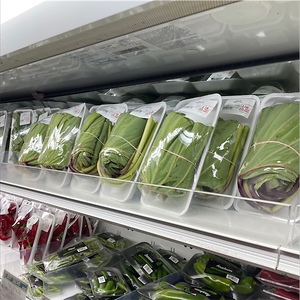
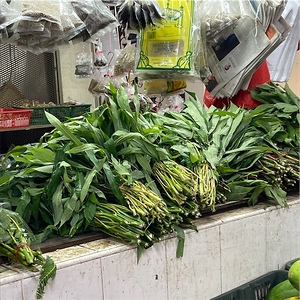
Colocasia esculenta is native to Southern and Southeast Asia, with sites of origin across India and Nepal, east to Vietnam, the Philippines, and south to Malaysia and Indonesia. The species is considered one of the oldest cultivated plants worldwide and was thought to have been domesticated as early as 5,000 BCE. Taro thrives in tropical, subtropical, to temperate regions and is typically found along rivers, bodies of water, and moist soils. In Asia, Taro was grown in flooded fields and is said to have been the crop that helped create rice paddy cultivation. Taro was eventually introduced into Polynesia through animals spreading seeds and migrating people. The species was revered in Polynesia, especially in Hawaii, and was interwoven into Native Hawaiian creation myths as a life-giving plant. Over time, Taro plants were sown in Egypt, the Middle East, the Mediterranean, and Africa. The species was carried to the Americas and the Caribbean beginning in the 16th century through the African slave trade and was planted on a small scale as a food source. Today, Taro leaves are a secondary crop to the corms, but the plant is grown worldwide in home and commercial gardens, especially throughout Asia, Polynesia, the Caribbean, and Africa. The leaves are foraged from plants as needed for culinary use, or vendors sell small bundles of the leaves in markets for convenience.
Recipe Ideas
Recipes that include Taro Leaves. One
 is easiest, three is harder.
Latest in season fruits and vegetables posted from the Specialty Produce App