



Seville Oranges
Estimated Inventory, 40 lbs : 0
This item was last sold on : 08/24/24
Description/Taste
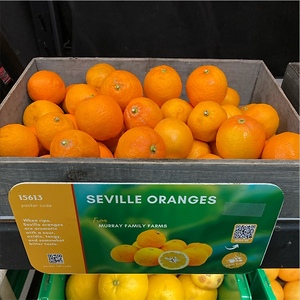
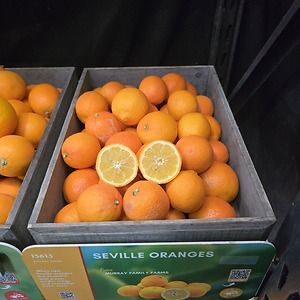
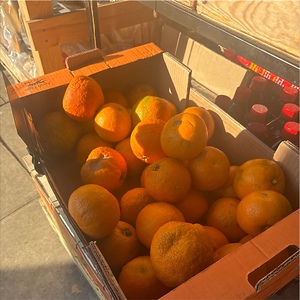
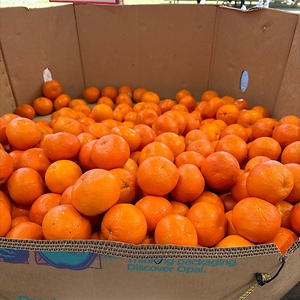
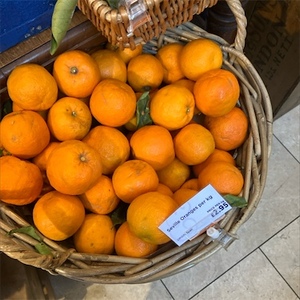
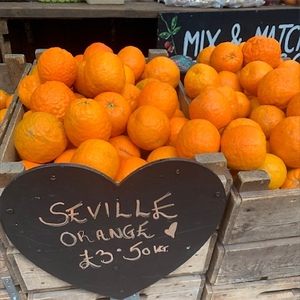
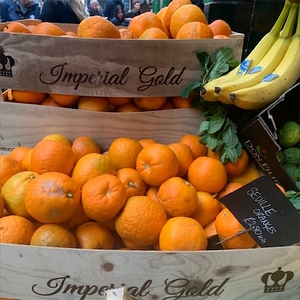
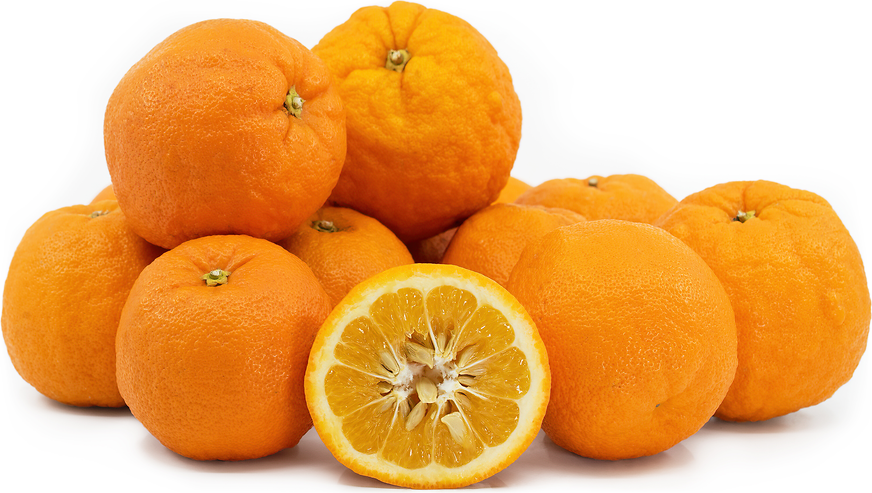
Seville oranges are small to medium in size, averaging 7-8 centimeters in diameter, and are round to oblate in shape. The thick, yellow-orange rind is rough with a dimpled texture, exhibiting some prominent knobs and bumps. The rind also contains many oil glands that secret fragrant essential oils that are floral with a light bitter note. Underneath the rind, the white pith clings to the flesh and is spongy and bitter. The flesh ranges in color from yellow to deep orange and is soft, juicy, filled with many cream-colored seeds, and is divided into 10-11 segments by thin white membranes. When ripe, Seville oranges are aromatic with a sour, acidic, tangy, and somewhat bitter taste.
Seasons/Availability
Seville oranges are available in the winter through early spring.
Current Facts
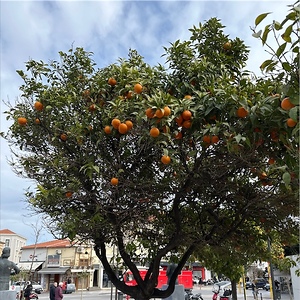
Seville oranges, botanically classified as Citrus aurantium, are a bitter or sour variety that grows on evergreen trees and is a member of the Rutaceae or citrus family. A cross between a pomelo and a mandarin, Seville oranges earned their name from Seville, Spain, where they were introduced from Asia during the 12th century and became a symbol for the city. There are more than 14,000 bitter orange trees that line the streets of Seville, planted as urban landscape, and these trees provide greenery year-round and shade for the warm summer months. Though the Spanish city is lined with the orange trees, Seville oranges are predominately exported from Spain to England to make orange marmalade, and due to the sour nature of the oranges, they are also preferably used in cooked rather than fresh preparations.
Nutritional Value
Seville oranges are a good source of vitamin C, dietary fiber, and thiamine. They also contain potassium, phosphorus, vitamin A, calcium, and some antioxidant and anti-inflammatory properties.
Applications
Seville oranges are best suited for juicing and zesting as their bitter and sour flesh is unpalatable when used raw. The juice and rind are used for both sweet and savory applications, and the juice can be mixed into syrups, cocktails, vinaigrettes, aioli, sauces, marinades, or as a finishing touch on fish and white meats. The zest can be used to flavor sugars, salts, stews, cooked vegetables, and baked goods such as muffins, cakes, and bread. Seville oranges can also be used as a substitute for key limes or lemons in custards, tarts, or pies. The bitter rind and seeds are ideal for making candied orange peel and traditional marmalade, jams, and jellies as the seeds are high in pectin and naturally thicken the preserves. Seville oranges pair well with meats such as chicken, duck, pork, beef, veal, and white fish, garlic, onion, bay leaves, cilantro, oregano, thyme, cumin, serrano peppers, strawberries, broccoli, gin, whiskey, chocolate, and lemon juice. The fruits will keep up to one week when stored at room temperature and 2-4 weeks when stored in the refrigerator. Seville oranges can also be frozen whole and stored in the freezer for up to one year.
Ethnic/Cultural Info
Seville oranges are famously used for orange marmalade, which is a preserve made from the orange’s peel and juice, boiled with water and sugar until the fruit becomes broken down into a thick, soft consistency. In England, there is an annual festival held each March in Cumbria to commemorate the orange preserve. Known as the National Marmalade Festival, the one-day celebration has live music, food vendors, cooking demonstrations, and taste-testing booths of different orange marmalade recipes. The festival also hosts the marmalade awards, which is a competition with various categories that was established in 2005 to sample and judge orange marmalade recipes sent in from around the world. These awards were created to re-inspire the art of making orange marmalade and to encourage creativity in utilizing the spread on items beyond toast such as in sauces, desserts, baked goods, and on roasted meats.
Geography/History
Bitter oranges are native to southeastern Asia and have been growing wild since ancient times. The fruits were then introduced to Arabia in the 9th century and to regions in Europe in the 10th century via trade routes. The oranges were first recorded in Sicily just after the turn of the 11th century, and for the following five hundred years, they were the only orange variety grown in Europe. Bitter oranges were first cultivated in the 12th century in Seville, Spain, where they gained the name Seville oranges. From Spain, the Seville oranges were spread by Spanish explorers to Brazil, Mexico, Scotland, and England during the late 15th and early 16th centuries. Seville oranges are still primarily grown in Spain and are also found at farmer's markets and specialty grocers in regions of Europe, the United States, Mexico, South America, Asia, and Northern Africa.
Recipe Ideas
Recipes that include Seville Oranges. One
 is easiest, three is harder.
Latest in season fruits and vegetables posted from the Specialty Produce App