This website uses cookies, pixels, and other tracking technologies to personalize content, analyze how our site and apps are used, and create aggregated statistics.
We disclose data about site and app users to third parties so we can target our ads to you on other websites, and those third parties may use that data for their own purposes.
For more information on how we collect, use, and disclose this information, please review our
Privacy Policy.
Continued use of this site means you consent to our Privacy Policy.
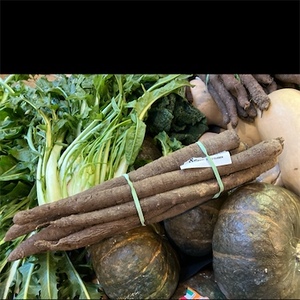
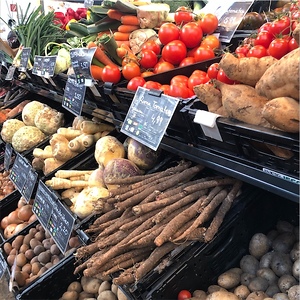
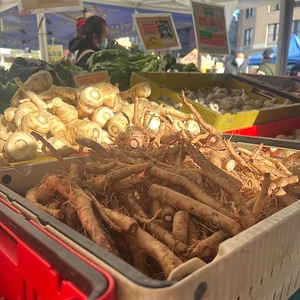
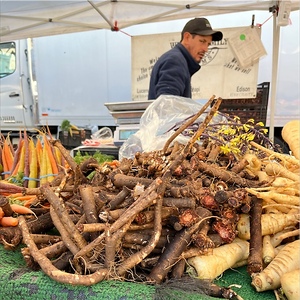
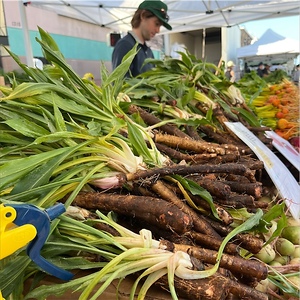
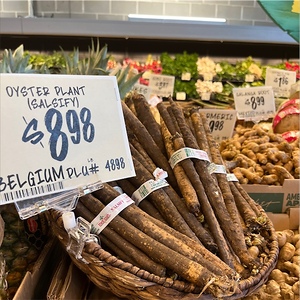
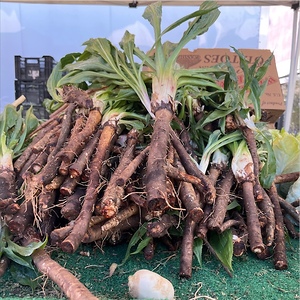
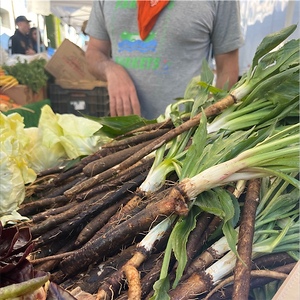
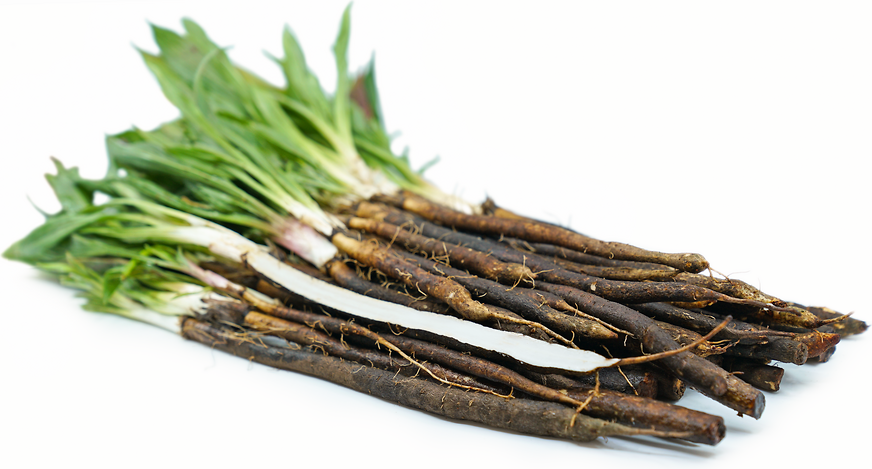
Salsify root is small to medium in size and is long and slender, tapering slightly to a small point opposite the stem end, similar in shape to a parsnip. There are two different plants known as Salsify, with the White Salsify being long and hairy with brown to tan skin, and the smoother, Black Salsify having dark brown, nearly black skin with a more uniform shape and a few hairs or side roots. The flesh beneath the thick skin for both is cream-colored, dense, and firm. Even though they slightly differ in texture with the Black Salsify being less fibrous, both White and Black Salsify are very mild and subtly-flavored with hints of licorice, umami, artichoke.
Seasons/Availability
Salsify root is available year-round, with a peak season in the late fall through early spring.
Current Facts
Salsify belongs to the Asteraceae family along with dandelions and daisies and was originally cultivated for both its root and greens. Growing over one hundred centimeters in height, two different plants are referred to as Salsify. Black Salsify is scientifically classified as Scorzonera hispanica and is commonly known as Spanish Salsify, Black Oyster, Serpent root, Scozonera, and Viper’s grass. White Salsify, botanically classified as Tragopogon porrifolius, is known as Billy Goat’s Beard, Oyster plant, Jerusalem star, and Purple Salsify for the lilac flowers that bloom on the plant in the spring. Salsify has been used in European cultures since the Ancient Greeks and Romans and was popular in Victorian England for its versatility in the kitchen during the sparse winter months. Today it has largely been forgotten due to changing market demand, but there has been a resurgence from specialty grocers and home gardeners to bring the root back into mainstream cooking.
Nutritional Value
Salsify contains potassium, dietary fiber, vitamin C, some B vitamins, iron, and copper.
Applications
Salsify is best suited for cooked applications such as boiling, roasting, sautéing, steaming, frying, and baking. Before cooking, the skin should be peeled and to preserve the color of the white flesh, the root can be submerged in water with lemon juice or vinegar. Both types of Salsify are most often steamed, pureed, and added to soups or stews as a thickener or served as a puree with chicken or other meat dishes. They are also commonly sautéed with butter to create a rich and creamy side dish. Salsify is extremely versatile and can be sliced and made into a gluten-free pasta, grated and roasted into cakes, coated in egg-flour batter and fried, or sliced into coins for gratins. Young Salsify can also be eaten raw, sliced thinly in salads or chopped finely to add texture to a dish. Salsify greens are also edible and are sautéed and consumed like a vegetable. Salsify pairs well with meat such as deer, beef, poultry, and fish, garlic, onion, celery, parsley, thyme, bay leaves, white wine, lemon, and butter. Salsify will keep up to one week when stored in a sealed container in the refrigerator.
Ethnic/Cultural Info
Though Salsify is not as popular as it once was in Victorian Europe, there has been a movement to reintroduce the root to commercial markets. Companies in Europe such as Albert Bartlett are bringing Salsify into select markets to raise awareness and encourage root consumption. With the resurgence of traditional vegetables, consumers are valuing unique produce with historical significance and are using these items to add depth and creativity to the dining experience. Salsify is also being used in high-end restaurants and is appearing on food blogs to further promote the consumption of the forgotten root.
Geography/History
White Salsify is native to the Eastern Mediterranean and was first cultivated in Italy and France. It was then brought to North America where it became popular in the 18th century. Black Salsify is native to a wider region of Europe and Asia and was first cultivated in Spain. Today, many of the older European varieties are no longer cultivated, but the seeds can be purchased and grown by home gardeners. The Salsify that is grown is somewhat rare and can be found at specialty grocers and farmers markets in the United States, Asia, and Europe.
Markthalle Neun
Eisenbahnstraße 42/43 Berlin 10997
Salsify root has two main types, White and Black Salsify, differing in appearance and texture. White Salsify features brown to tan skin with a hairy exterior, while Black Salsify has smoother, nearly black skin with few hairs. Both types have cream-colored, firm flesh beneath their skin and offer a mild flavor with subtle hints of licorice, umami, and artichoke. Black Salsify is less fibrous compared to White Salsify.
Salsify: This versatile root vegetable is excellent for cooking methods like boiling, roasting, sautéing, steaming, frying, and baking. To preserve its white flesh, submerge it in lemon juice or vinegar water after peeling. Salsify works wonderfully in soups, stews, and purees, and can also be sliced into gluten-free pasta, fried, or sautéed with butter. Even its greens are edible and can be prepared as a vegetable. It pairs well with meats, herbs, and buttery flavors.
Markthalle Neun
Eisenbahnstraße 42/43 Berlin 10997
Salsify is a member of the Asteraceae family, sharing its classification with dandelions and daisies. Two main types exist: Black Salsify (Scorzonera hispanica), also called Black Oyster or Viper’s grass, and White Salsify (Tragopogon porrifolius), known for its lilac flowers and nicknamed Billy Goat’s Beard. Once favored in Europe and Victorian England for winter cooking, Salsify is now enjoying renewed interest among specialty grocers and gardeners despite years of obscurity.
Salsify root is available at Union Square Green Market grown by Norwich Meadow Farms…..White Salsify is native to the Eastern Mediterranean, while Black Salsify originates from a wider region across Europe and Asia. Although many older European varieties of Salsify are no longer cultivated, their seeds remain available for home gardeners. Modern cultivation of Salsify is relatively rare, with the root often found at specialty grocers and farmers markets in the United States, Asia, and Europe.
Alex Weiser
511 Hill st. #205 Santa Monica Ca 90405
13109300903 [email protected]
Salsify: This root vegetable, once popular in Victorian Europe, is making a slow comeback thanks to efforts by companies like Albert Bartlett in Europe. It's gaining attention for its historical significance and unique flavor, appealing to consumers who value creative dining experiences. High-end restaurants and food blogs are spotlighting salsify, further promoting its revival in modern cuisine.
Alex Weiser
511 Hill st. #205 Santa Monica Ca 90405
13109300903 [email protected]
Salsify root has two varieties, White and Black, each boasting unique appearances and flavors. The White Salsify features hairy, brown to tan skin that conceals cream-colored flesh, while the smoother Black Salsify has dark brown, nearly black skin and is less fibrous. Both varieties offer a mild flavor profile with subtle hints of licorice, umami, and artichoke, making them versatile for culinary uses.
Central Market
Austin, Texas
Salsify: This root vegetable is highly versatile in the kitchen and works well in both cooked and raw applications. It can be boiled, roasted, sautéed, steamed, fried, or baked. For added flavor, it pairs beautifully with meats like beef, poultry, or fish and ingredients like garlic, onion, and lemon. Salsify greens are also edible and can be sautéed. To store, keep it in a sealed container in the refrigerator for up to one week.
Alex Weiser
511 Hill st. #205 Santa Monica Ca 90405
13109300903 [email protected]
Salsify is a member of the Asteraceae family, which includes dandelions and daisies, and was first grown for its root and greens. The two main varieties are Black Salsify (Scorzonera hispanica) and White Salsify (Tragopogon porrifolius). Historically significant in Ancient Greece, Rome, and Victorian England, it is experiencing a revival among specialty grocers and gardeners today. Nutritionally, it provides potassium, fiber, vitamin C, B vitamins, iron, and copper.
Salsify Root from Weiser Family Farms…Salsify Root: White Salsify originated in the Eastern Mediterranean, first cultivated in Italy and France before reaching North America in the 18th century, where it gained popularity. Black Salsify, native to Europe and Asia, was first grown in Spain. While older European varieties are uncommon today, seeds remain available for home gardeners. Specialty grocers and farmers markets in the U.S., Asia, and Europe often sell rare Salsify.
Alex Weiser
511 Hill st. #205 Santa Monica Ca 90405
13109300903 [email protected]
Salsify: Once beloved in Victorian Europe, salsify is experiencing a revival in select markets thanks to companies like Albert Bartlett. Consumers and chefs are turning to this unique root for its historical charm and culinary versatility. High-end restaurants and food blogs spotlight salsify as part of the broader movement to embrace traditional vegetables, enriching modern dining with creative, rooted flavors.






 is easiest, three is harder.