


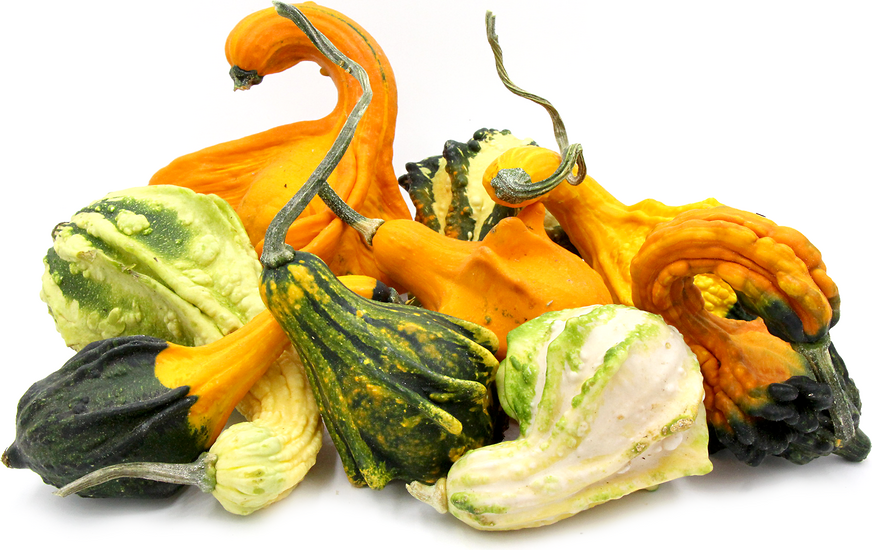


Ornamental Gourds
Estimated Inventory, 40 ct : 0
This item was last sold on : 11/07/24
Description/Taste
Ornamental Gourds range from small in size, approximately five centimeters in length, to large in size, approximately thirty centimeters in length, and are oblong, pear-shaped, curved, bulbous, or cylindrical in shape. They come in an array of colors including shades of green, orange, yellow, blue, cream, tan, brown, and multi-colored, and they often have stripes, spots, or mottling. The gourd’s surface may also be smooth or covered in warts and horns. Ornamental Gourds are not edible as they have very little flesh and are grown mainly for show. The flesh they do contain is rather tasteless and may even be bitter.
Seasons/Availability
Ornamental Gourds are available in the fall.
Current Facts
There are two main varieties of Ornamental Gourds including the soft shell gourd, botanically classified as Cucurbita pepo, and the hard shell gourd, botanically classified as Lagenaria siceraria. Both varieties belong to the Cucurbitaceae family along with squash and pumpkins, and they are annuals that grow on sprawling vines that can reach 5-15 meters in length. Soft shell gourds are the most common type to be used for table centerpieces and fall decorations. There are several different varieties of soft shell gourds including crown of thorns, pear, egg, spoon, and warties. Hard shell gourds are popularly dried and cured, and used for constructing instruments, birdhouses, bowls, and art pieces.
Nutritional Value
When used for ornamental and decorative purposes, Ornamental Gourds are not consumed.
Applications
Ornamental Gourds are favored for fall decorative purposes such as a centerpiece or mantel display. Soft shell gourds can be displayed with pumpkins, ornamental corn, wheat stalks, ivy, and autumn leaves, or they can be coated with shellac to enhance colors and add a preservative sheen. Hard shell gourds can be carved or burned with a design using special tools to create works of art. They can also be drilled, etched, and sawed to build boat floats, masks, jewelry, and musical instruments.
Ethnic/Cultural Info
Hard shell gourds were used by many ancient cultures as containers and utensils. The gourds would undergo a curing process which involves drying out the interior and scraping off the skin to create a hollow, lasting container. When dried and prepared, the gourds were used to eat and drink or to build birdhouses in the villages. There are many varieties of hard shell gourds, and in addition to decorative purposes, Ornamental Gourds were also commonly used in the Americas as a darning egg for mending and repairing socks.
Geography/History
Ornamental Gourds are native to the New World, and botanical evidence theorizes that cultivated squashes and pumpkins belonging to Cucurbita pepo were domesticated first in Oaxaca, Mexico approximately 8,000-10,000 years ago. They were then spread to the rest of the world via explorers, expeditions, and trade routes, and today Ornamental Gourds can be found at farmers markets, home gardens, and specialty grocers in Europe, Asia, Australia, Africa, and the Americas.