



Nagami Kumquats
Estimated Inventory, lb : 0
Description/Taste
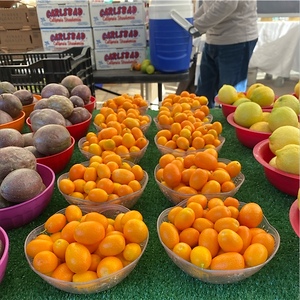
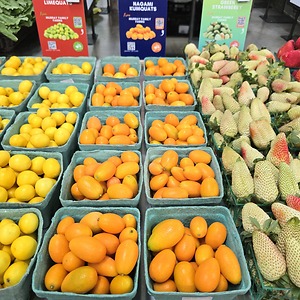
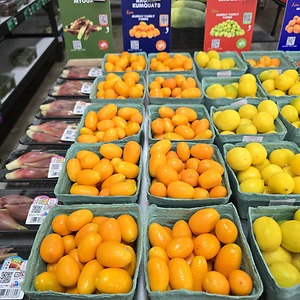
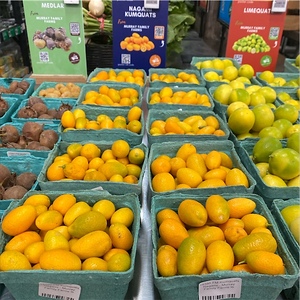
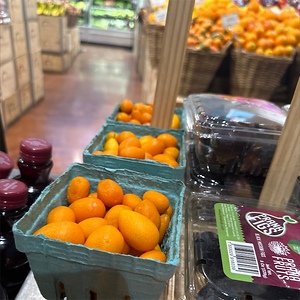
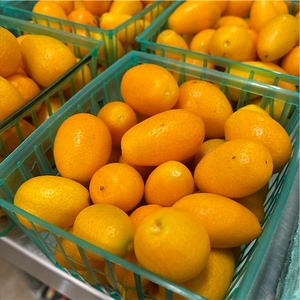
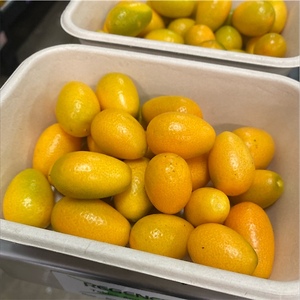
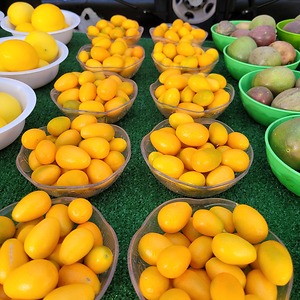
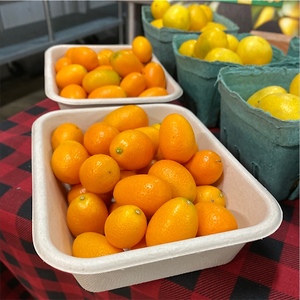
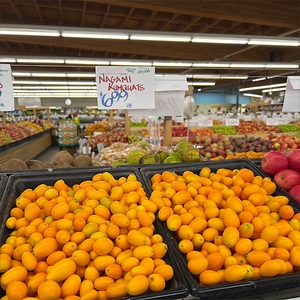
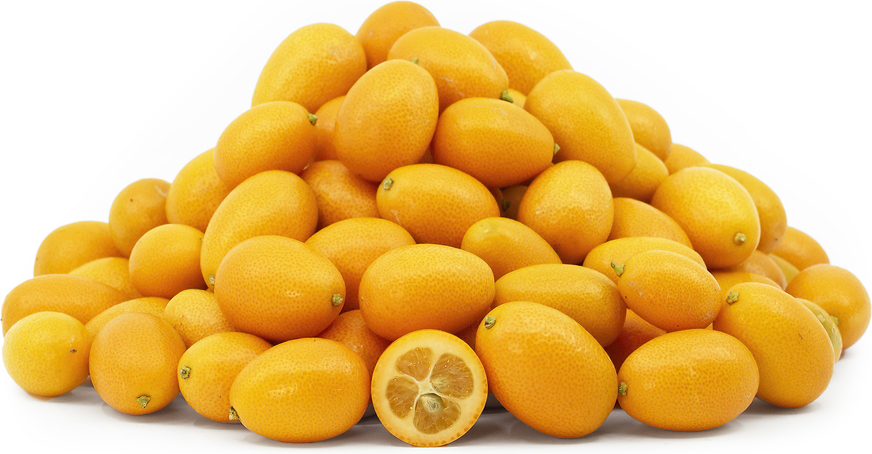
Nagami kumquats are small fruits, averaging 2 to 5 centimeters in length, and are oval, oblong, to obovate in shape. The skin matures from green to orange when ripe and is smooth with prominent oil glands, creating a light, pebbled texture. Underneath the skin, there is a thick, light orange rind tightly clinging to the flesh, and the flesh is divided into 4 to 5 segments by thin membranes. The dark orange flesh is also semi-aqueous, soft, and tender, encasing 5 to 6 small, cream-colored seeds. Nagami kumquats are highly aromatic, releasing fragrant essential oils from the surface, and the entire fruit is edible, including the skin, flesh, and seeds. When ripe, the skin of Nagami kumquats contains a sweet taste while the flesh is acidic, developing an overall complex, spicy, and sweet-tart flavor.
Seasons/Availability
Nagami kumquats are available in the late winter through spring.
Current Facts
Nagami kumquats, botanically classified as Fortunella margarita, are small fruits that grow in clusters on a dwarf, evergreen tree reaching up to two meters in height, belonging to the Rutaceae or citrus family. The sweet-tart, oval fruits are native to Asia and have been favored as an ornamental and culinary variety for hundreds of years. Nagami kumquats are a compact cultivar with the ability to be grown in small spaces and containers. The trees also bear fruit in their first year, are drought-tolerant, and disease resistant. In the United States, Nagami kumquats are the most popular home garden and commercial variety, accounting for over ninety percent of the kumquats grown in California, Florida, and Texas.
Nutritional Value
Nagami kumquats are an excellent source of fiber to stimulate the digestive tract and vitamin C, an antioxidant that strengthens the immune system, reduces inflammation, and boosts collagen production within the skin. The fruits are also a source of manganese to maintain a healthy metabolism, calcium to protect bones and teeth, vitamin A to support organ functioning, and contain lower amounts of copper, vitamin E, magnesium, zinc, and iron.
Applications
Nagami kumquats have a sweet and acidic nature, well-suited for both sweet and savory preparations. The entire fruit is edible, including the peel, seeds, and flesh, but the seeds are typically discarded. Nagami kumquats can be consumed fresh, out-of-hand, sliced and tossed into green salads, used as a topping over avocado toast, sprinkled with chile and lime powder as a tangy snack, or cut and infused into sparkling waters and cocktails. The fruits are also frequently cooked into jellies, marmalades, and jams, baked into cakes, or boiled with sugar, vinegar, and spices to create a sweet and bright topping for ice cream, tarts, and other desserts. Beyond sweet and fresh preparations, Nagami kumquats can be roasted into savory dishes, dried as a crunchy salad ingredient, or sliced and tossed into stir-fries. The fruits can cut the richness of fat, allowing for complementary pairings, including cream, bacon, avocado, and meats such as duck, pork, and poultry. Nagami kumquats also pair well with nuts, seafood such as scallops, fish, and crab, chiles, bitter greens such as frisee or endive, vanilla, white chocolate, cardamom, cherries, cranberries, blood oranges, pears, and dates. Whole Nagami kumquats can be kept at room temperature for 1 to 4 days or stored in an airtight container for 1 to 2 weeks in the refrigerator.
Ethnic/Cultural Info
In China, Nagami kumquats are one of several kumquat varieties used as gifts and decorations during the Chinese or Lunar New Year. The annual festival typically occurs in the late winter, determined by the Chinese phases of the moon, and is one of the largest celebrations throughout Hong Kong and China. During the Lunar New Year, citrus, specifically oranges and kumquats, are highly valued for their bright coloring. The name kumquat is derived from the Cantonese words “kam kwat,” translating to mean “golden orange.” Gold is a color representative of money, wealth, and luxury, and using the brightly colored fruits as decoration during the festival is believed to bring good luck for the upcoming year. Large orange trees are often planted in heavy pots and are placed beside entryways to homes, skyscrapers, office buildings, and restaurants as auspicious decorations. Kumquats are utilized as a compact, miniature alternative to orange trees for families living in high-rises that cannot transport large orange trees up multiple floors. The small kumquat tree can be easily carried up through elevators, and the trees are placed beside doors or are displayed in houses to welcome luck into the home. Kumquat trees are also frequently used as gifts to friends and family, wishing the receiver a year of happiness and prosperity. The trees are typically covered in fruits as the Lunar New Year coincides with peak citrus season, and the fruits are left on the tree as a decoration until the conclusion of the festivities.
Geography/History
Kumquats are native to China and were first documented in the 12th century through written texts. The dwarf trees were later introduced to Japan and other areas of Southeast Asia sometime before the early 18th century and were cultivated commercially for culinary and ornamental purposes. The exact history of Nagami kumquats and the variety’s parentage is unknown, but the cultivar was brought to Europe from China by plant explorer Robert Fortune for the Royal Horticultural Society in the 19th century. Nagami kumquats were also planted in North America as an edible landscape tree until a rise in Asian populations created a culinary market for the fruits. Today Nagami kumquats are the main variety grown in the United States in California, Florida, and Texas. The fruit trees are also grown commercially and in home gardens in subtropical to tropical regions of Asia, Southeast Asia, Europe, Africa, Australia, Central America, and South America. When in season, the fruits are sold through local markets and specialty grocers.
Recipe Ideas
Recipes that include Nagami Kumquats. One
 is easiest, three is harder.
| White on Rice Couple |
|
Kumquat Marmalade |
| A Thought for Food |
|
Cucumber, Avocado and Kumquat Salad |

Latest in season fruits and vegetables posted from the Specialty Produce App