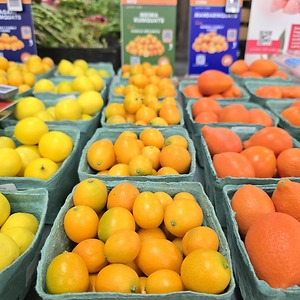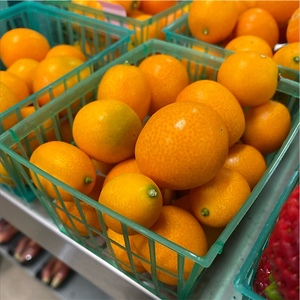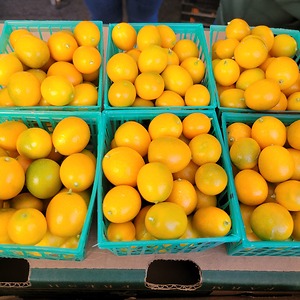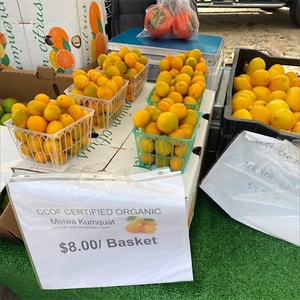


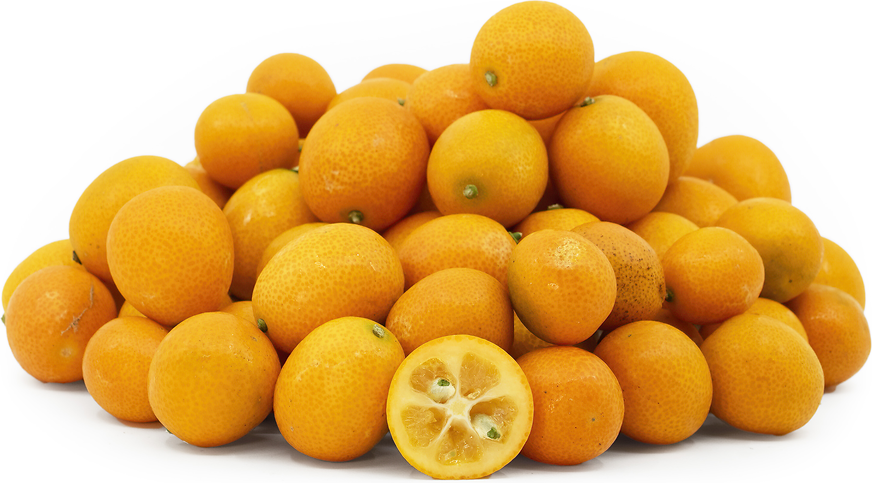


Meiwa Kumquats
Estimated Inventory, lb : 0
This item was last sold on : 04/16/25
Description/Taste
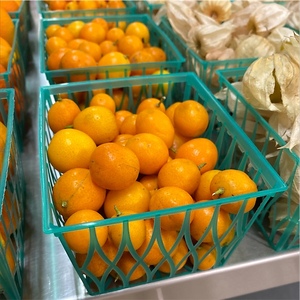
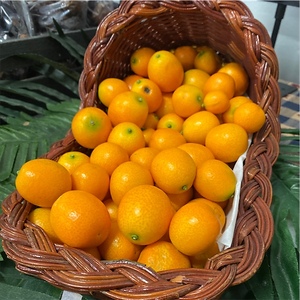
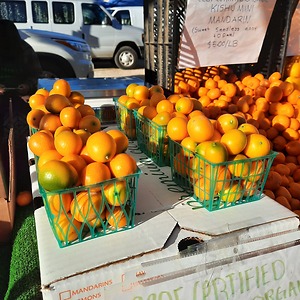
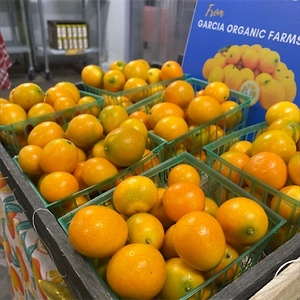
Meiwa kumquats are a larger varietal, averaging 3 to 4 centimeters in diameter, and have a round to oval, plump, curved shape. The kumquat’s peel is thick, smooth, and taut, showcasing vibrant shades of orange and yellow, covered in prominent oil glands giving the surface a speckled appearance. Underneath the peel, there are small portions of flesh divided into 6 to 7 segments by thin, white membranes. The pale orange flesh is tender, semi-aqueous, and pulpy, either being found seedless or containing a few cream-colored seeds. Meiwa kumquats contain volatile oils in the fruit’s peel, releasing a bright, citrus-like fragrance when sliced or rolled between the palms of the hand. The kumquat’s peel is sweet, and the flesh is acidic, creating a balanced but zesty, sweet-tart taste when the fruit is consumed in its entirety.
Seasons/Availability
Meiwa kumquats are available in the winter through spring.
Current Facts
Meiwa kumquats, botanically classified as Fortunella crassifolia, are a sweet and tangy variety belonging to the Rutaceae family. The hybrid fruits grow on evergreen trees that range from 1 to 4 meters in height and were developed in China from a natural cross between round and oval kumquat varieties. Meiwa kumquats are also known as Sweet kumquats, Neiha kinkan, and Sweet kinkan and are considered to be one of the sweetest varieties mainly grown for fresh eating. The fruits are produced commercially on a small scale in China and Japan and are also a common home garden variety, planted in pots near doorways as a decorative element. In the United States, Meiwa kumquats have become a boutique variety for citrus enthusiasts, utilized in fresh, cooked, or preserved preparations.
Nutritional Value
Meiwa kumquats are an excellent source of fiber to regulate the digestive tract and vitamin C to strengthen the immune system and reduce inflammation. The fruits also contain manganese, vitamin A to maintain healthy organ functioning, calcium to protect bones and teeth, and provide lower amounts of iron, zinc, potassium, vitamin E, and copper. Inside the sweet peel, essential oils such as limonene and flavonoids offer antioxidant and anti-inflammatory properties.
Applications
Meiwa kumquats have a sweet-tart flavor well suited for sweet and savory preparations. The fruits are entirely edible, including the peel, flesh, and seeds, though some consumers choose to discard the seeds, mainly due to preference. To experience the balanced flavor that the variety is known for, Meiwa kumquats should be consumed whole to savor the sweetness of the peel with the acidity of the flesh. Meiwa kumquats can be eaten as a stand-alone snack or fresh dessert, or they can be tossed into salads, chopped into salsa, mixed into ceviche, or sliced and layered over avocado toast. The kumquats can also be used as an edible garnish over cakes and tarts, sliced and stirred into drinks as a festive mix, or blended as flavoring into cocktails and other beverages. In addition to fresh preparations, Meiwa kumquats contribute sweet and tangy flavors to cooked dishes, often simmered into marmalades, jellies, and jams. The fruits can also be cooked into compotes and spread over scones and toast, layered as a dessert filling, or incorporated into cakes, ice cream, and bread. In China and Japan, Meiwa kumquats are popularly candied, consumed as a sweet treat or accompaniment to roasted meats, salads, or desserts. Meiwa kumquats pair well with spices such as cinnamon, ginger, cloves, and anise, meats including pork, duck, and poultry, seafood, vanilla, chocolate, and fruits such as cranberries, pears, and blood oranges. Whole, unwashed Meiwa kumquats will keep up to one week at room temperature and 1 to 4 weeks when stored in the refrigerator in a plastic bag.
Ethnic/Cultural Info
Meiwa kumquats received their name from the Meiwa Era, a period in Japan spanning 1764 to 1771 when Meiwa kumquats were first brought to Japan from China. The sweet-tart fruits were rumored to have arrived in Japan through a shipwreck. According to Japanese botanist and mycologist Chozaburo Tanaka, sometimes spelled Tyozaburo Tanaka, Meiwa kumquats were introduced through a Chinese merchant vessel sailing from Ningbo in northeastern China. One of the ship’s sailors washed ashore near Shimizu port in the city of Shizuoka, Japan, and the sailor was found carrying preserved kumquats in his pocket. These kumquats had seeds that were later planted in a private garden and produced a compact, evergreen tree with sweeter, larger, and rounder kumquats. The fruits were named Meiwa, and it was rumored that the original tree was still alive and growing in the early 20th century.
Geography/History
Meiwa kumquats are native to China and have been cultivated for centuries as a home garden cultivar. The variety is a natural hybrid of Nagami and Marumi kumquats and was selected for their large, round size and sweeter, subtly tart flavor. Meiwa kumquats were brought to Japan from China during the Meiwa period sometime between 1764 and 1771 and were introduced to the United States in 1910. Commercial cultivation is modest for Meiwa kumquats compared to more well-known oval kumquat varieties, but the cultivar is increasing in popularity as a fresh-eating variety. Today Meiwa kumquats are grown as a home garden fruit and commercially produced on a small scale in China, specifically the Chekiang Province, in Japan, notably in the Fukuoka Prefecture and in the southwestern United States. When in season, the fruits can be found through local markets, specialty distributors, and select online distributors.
Recipe Ideas
Recipes that include Meiwa Kumquats. One
 is easiest, three is harder.
Latest in season fruits and vegetables posted from the Specialty Produce App