



Mandarinquats
Estimated Inventory, lb : 0
Description/Taste
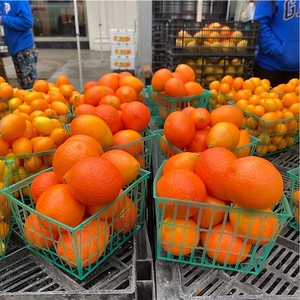
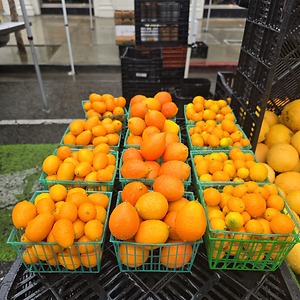
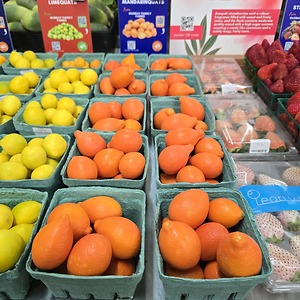
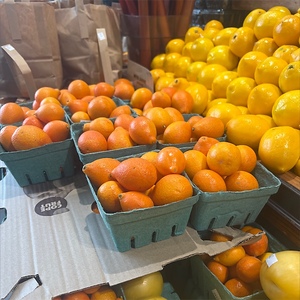
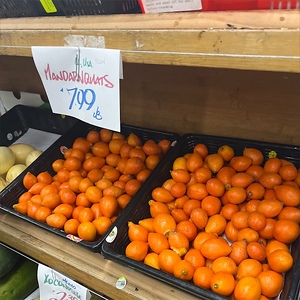
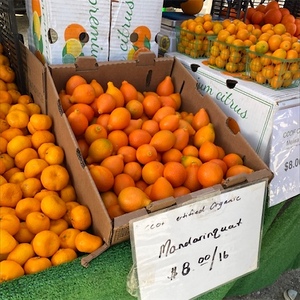
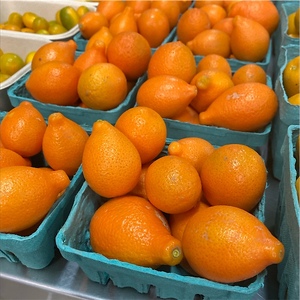
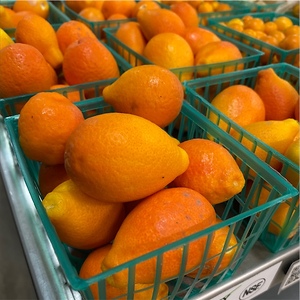
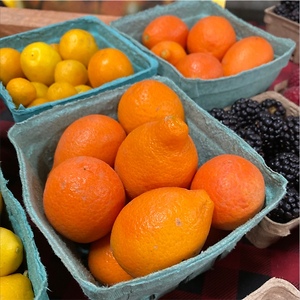
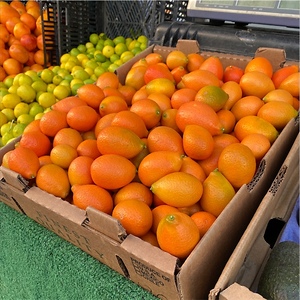
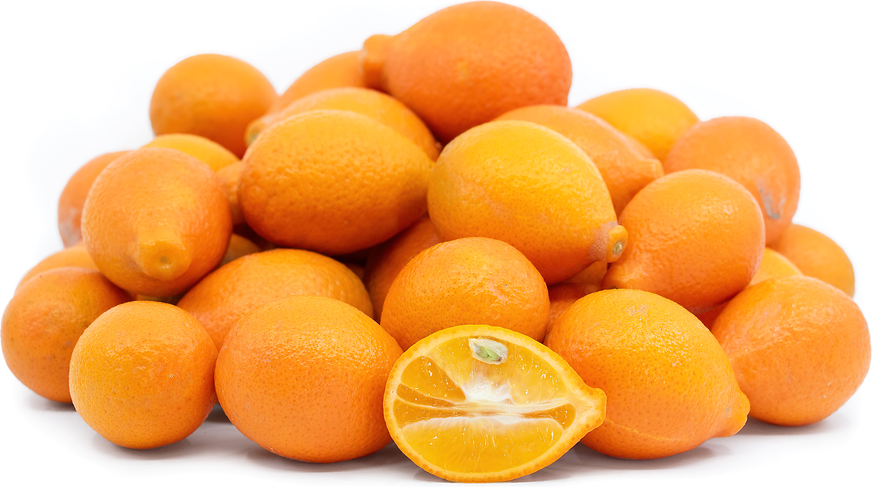
Mandarinquats are small to medium in size, averaging 2-4 centimeters in diameter and five centimeters in length, and have an elongated and rounded, tear-drop shape with a tapered neck. The thin rind is dark orange at maturity with a roughly pebbled appearance and is fragrant, glossy, and entirely edible. The bright orange flesh is tender, soft, juicy, contains 3-10 small oblong seeds, and is divided into 6-7 segments by thin membranes. When consumed whole, Mandarinquats initially have a sweet flavor with a crunchy bite that transforms into a tangy, tart flavor with a juicy, soft texture.
Seasons/Availability
Mandarinquats are available for a short season in the winter through early spring.
Current Facts
Mandarinquats are botanically a hybrid between a mandarin and a kumquat, and the variety belongs to the Rutaceae or citrus family. Mandarinquats are also known as the Indio Mandarinquat in reference to Indio, California, where the first trees were grown. Mandarinquats are grown commercially on a small scale in Southern California and are favored by both chefs and home cooks for their ability to be consumed whole and for their sweet-tart, crunchy flavor.
Nutritional Value
Mandarinquats are an excellent source of vitamin C and dietary fiber. They also contain beta-carotene, lutein, and zeaxanthin.
Applications
Mandarinquats are best suited for both raw and cooked applications such as boiling and preserving. The fruits may be eaten whole, like other kumquat hybrids. Rubbing the fruit between palms will bring out the oils in the skin, which offsets the tartness of the flesh when consumed whole. Mandarinquats can also be sliced into rounds and added to salads, cooked in a simple syrup and garnished over meats such as roasted duck, mixed into baked goods like tarts, cakes, cookies, cinnamon rolls, and bread, or whole slices of the rind can be caramelized or candied for a sweet flavor. The juice and zest can be incorporated into marinades, syrups, cocktails, marmalades, jams, purees, and vinaigrettes. Mandarinquats pair well with mascarpone cheese, toasted almonds, fennel, chicory, fresh herbs, balsamic vinegar, vanilla, sesame oil, pork, and chicken. The fruits will keep up to two days at room temperature and up to two weeks when stored in the refrigerator.
Ethnic/Cultural Info
Mandarinquats are a localized variety that has increased in popularity in the United States. Favored for its novel size and completely edible nature, Mandarinquats are gaining awareness in the health food market for its nutritious peel and many culinary uses. Within the rind, there are essential oils including d-limonene which gives the fruit its fragrant scent and can help detox parts of the body to protect overall health. One of the most popular ways Mandarinquats are consumed in the United States today are sliced and served over toast with mascarpone cheese or avocado.
Geography/History
Mandarinquats were created in Indo, California by Dr. John Carpenter, at the United States Date and Citrus Station sometime before 1972. The larger kumquat variety is the result of a cross between an heirloom nagami kumquat from Florida and a dancy mandarin. Mandarinquats were given to commercial growers in 1989 under the name Indio Mandarinquat and were originally released for ornamental use, later gaining popularity as a commercial variety. Today the fruits can be found at farmers markets and specialty grocers across the United States.
Recipe Ideas
Recipes that include Mandarinquats. One
 is easiest, three is harder.
Latest in season fruits and vegetables posted from the Specialty Produce App