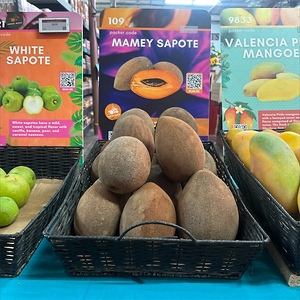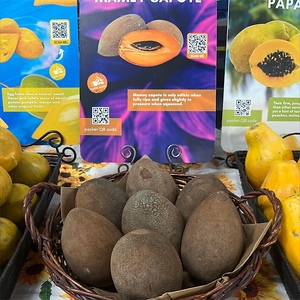


Mamey Sapote
Estimated Inventory, lb : 0
This item was last sold on : 05/02/25
Description/Taste
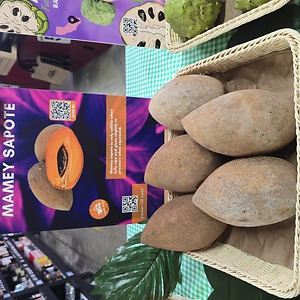
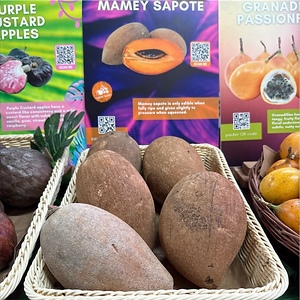
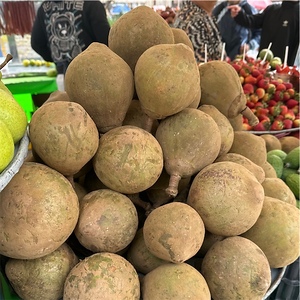
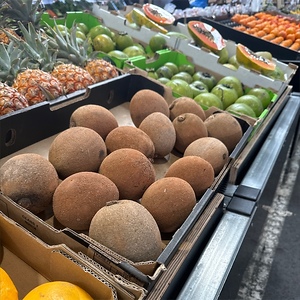
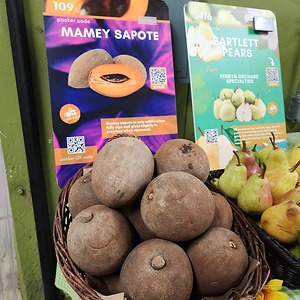
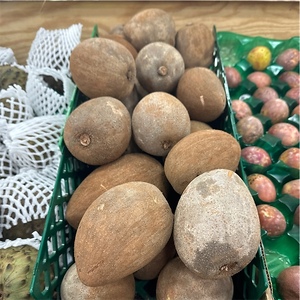
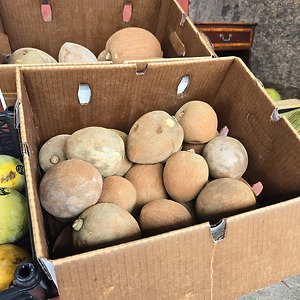
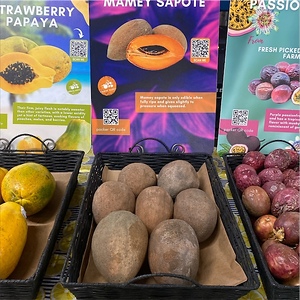
Mamey sapote is a medium to large fruit, averaging 8 to 25 centimeters in length and 6 to 10 centimeters in diameter, and has a round, oval, to oblong shape, sometimes with tapered, pointed ends. The skin is thick, semi-rough, and light to dark brown with a textured, scruffy, and sandpaper feel. Underneath the skin, the flesh ranges in color from orange, red, to salmon and is soft, creamy, and dense with a fine, smooth consistency and faint squash-like scent. Within the center of the flesh, there are also 1 to 4 elliptical seeds with a glossy, black-brown hue. The seeds are toxic and inedible when raw, but they can be treated through an extensive process to remove the toxins for culinary use. Mamey sapote is only edible when fully ripe and gives slightly to pressure when squeezed. The flesh bears a complex sweet and savory flavor, containing subtle notes of vanilla, nutmeg, apricots, and root beer mixed with honeyed pumpkin, squash, and sweet potato nuances.
Seasons/Availability
Mamey sapote is available in the spring through fall.
Current Facts
Mamey sapote, botanically classified as Pouteria sapota, is an ancient pre-Hispanic fruit belonging to the Sapotaceae family. The oblong to round fruits are found in tropical regions throughout Mexico, the Caribbean, and Central and South America and have been utilized as a food source for thousands of years. Mamey sapote is also known as Red Mamey, Zapote Colorado, and Mammee, and there are at least 13 known varieties, with only a few selected for and generally labeled as Mamey in local markets. It is important to note that there is another fruit belonging to Mammea americana that is also referred to as Mamey, but this fruit is a distinct species. Mamey sapote grows on slow-growing trees that can reach 15 to 45 meters in height. Once the trees have reached their fruit-bearing stage, Mamey sapote fruits can also take over two years to grow. The species does not grow true to seed, so the majority of the trees for commercial cultivation are developed from grafting for faster cultivation. In the modern-day, Mamey sapote fruits are widely sold in local markets and are favored for fresh eating and as a flavoring for beverages and desserts.
Nutritional Value
Mamey sapote is an excellent source of fiber to stimulate the digestive tract and vitamin C to strengthen the immune system, protect against free radical damage, and reduce inflammation. The fruits are also a good source of potassium to balance fluid levels in the body and contain other nutrients, including vitamin E, magnesium, copper, iron, phosphorus, and riboflavin.
Applications
Mamey sapote is best suited for fresh preparations and as a flavoring for beverages and desserts. The fruits can be cut similarly to an avocado and eaten straight, out-of-hand, discarding the skin and seeds. Mamey sapote can also be sliced and tossed into green and fruit salads, incorporated into paletas or frozen fruit bars, churned into ice cream, or blended into smoothies. In Mexico, Mamey sapote is popularly mixed into batidos or licuados, which are cold milkshakes made from fruit, milk, ice, nutmeg, and vanilla. Beyond beverages, the fruits can be cooked into glazes, sauces, jams, and marmalades, or they can be used as a flavoring in desserts, including cakes, tarts, pies, flan, pudding, mousse, and muffins. Mamey sapote pairs well with spices such as cinnamon, vanilla, cloves, nutmeg, and ginger, honey, agave, coconut milk, heavy cream, mint, and meats including poultry, pork, and turkey. Unripe Mamey sapote should be kept at room temperature for 4 to 7 days. Once ripe, the fruits should be immediately consumed for the best quality and flavor, but the flesh can be removed from the skin and stored in a plastic bag in the refrigerator for 1 to 3 weeks. Mamey sapote can also be frozen for extended use.
Ethnic/Cultural Info
Mamey sapote seeds are toxic when raw due to their cyanide content, but in Mexico, the seeds are treated, removing the toxins, and are utilized as a traditional culinary ingredient. The seeds are boiled in a mixture of water and ash for multiple days over a wood fire, cleaned, and cooked again with herbs to remove the toxins. Once the boiling is complete, the seeds are cut into thin pieces and strung into strands, known as necklaces, smoked and dried in the sun. Treated seeds are known as pixtle, which is derived from Nahuatl, meaning “seed or bone.” Pixtle necklaces are sold in local markets and are utilized to make a variety of traditional recipes, including enchiladas de Pixtle, which is a unique recipe using blackberries and the treated seed to make a sweet and savory dish. The treated seeds are also used in pixtamales, where the seeds are ground into a paste and used as a tamale filling. Pixtamales are a favored dish served during Dia De Los Muertos. In addition to culinary dishes, Mamey sapote seeds are incorporated into tejate, an ancient beverage consumed by Aztec rulers, known as “the drink of the gods.” Historians believe the drink has been prepared for over 4,000 years, and the recipe has mostly remained unchanged, utilizing corn, cacao beans, Rosita cacao, and Mamey sapote seeds. Tejate is challenging to prepare, and many crafters keep their recipes a secret to protect their preparations. In the present day, the drink is still sold in local markets throughout Mexico and is also served at festivals, fairs, and celebrations.
Geography/History
Mamey sapote is native to Mexico and Central America and has been growing wild since ancient times. The fruits were used as a culinary and medicinal ingredient in the early Mayan and Aztec civilizations and are one of the few fruits that are considered a part of the pre-Hispanic era that is still widely consumed in the modern day. Many different varieties of Mamey sapote have been created over time, and the fruit trees have also become naturalized throughout South America and the Caribbean. Legend has it that the fruits were the primary source of sustenance for Hernan Cortez and his army in 1519 as they were traveling over 700 miles from Mexico City to Honduras. Mamey sapote was also introduced into Florida in 1887, believed to have been brought from Cuba. Today Mamey sapote is cultivated and growing wild throughout Mexico, Central and South America, and the Caribbean. The fruits are also produced on a small scale in Australia, Florida, Indonesia, Malaysia, and the Philippines and are sold fresh through local vendors. The flesh of the fruit is also often frozen and sold through specialty grocers and Hispanic markets worldwide.
Featured Restaurants
Restaurants currently purchasing this product as an ingredient for their menu.
| Pamplemousse Grill | Solana Beach CA | 858-792-9090 |
| Kitchens For Good | San Diego CA | 619-450-4040 |
| Donation 3 | San Diego | 619-295-3172 |
Recipe Ideas
Recipes that include Mamey Sapote. One
 is easiest, three is harder.
Latest in season fruits and vegetables posted from the Specialty Produce App