


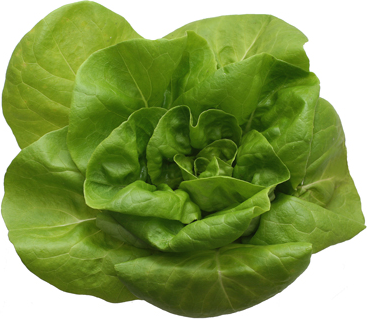


Limestone
Estimated Inventory, 12 ct : 0
Description/Taste
Limestone lettuce is small in size, averaging only fifteen centimeters in diameter, and is tightly compact at its base fanning out to loose, broad leaves at the top of the head. The leaves at the base are succulent and white to pale yellow, while the upper loosely crinkled edges and outer leaves are glossy, waxy, and dark green. Limestone lettuce is known for its smooth, rich, and buttery texture with a sweet flavor and slight mineral finish, with the white inner leaves being more tender and sweeter than the crisp outer leaves.
Seasons/Availability
Limestone lettuce is available year-round.
Current Facts
Limestone lettuce, botanically classified as Lactuca sativa, is a variety of butter lettuce that is a member of the Asteraceae or sunflower family. Also known as Kentucky Limestone and Kentucky Bibb, Limestone lettuce rose to fame in the mid-twentieth century for its sweet flavor and home-grown roots in limestone soils in Kentucky. Though it has decreased in popularity as new varieties have been introduced to the market, Limestone lettuce is most commonly used fresh in salads to showcase its buttery texture.
Nutritional Value
Limestone lettuce contains vitamins A, C, and K, magnesium, some calcium, and potassium.
Applications
Limestone lettuce is best suited for raw applications as its buttery texture and sweet flavor is showcased when used fresh in salads. Limestone lettuce can readily be used in place of bibb and other butter lettuce varieties in recipes. Little manipulation is needed, commonly sliced or torn, and its crinkled and quilted leaves soak up flavors, cuts fat, and holds sauces, vinaigrettes, and juices. The leaves can also be used fresh as a bowl for lobster ceviche, as a bed for meatloaf, or as a wrap for minced chicken, pork, or beef. Limestone lettuce pairs well with artisan cheeses, fresh herbs, shallots, cherry or grape tomatoes, carrots, strawberries, sweet fruit dressings, and nuts. The leaves will keep up to one week when stored in the crisper drawer of the refrigerator.
Ethnic/Cultural Info
Limestone lettuce is listed on Slow Food’s Ark of Taste, which is a website used to bring awareness and preservation to declining varieties, due to a decrease in popularity as newer varieties from larger corporations are increasing in the commercial marketplace. Limestone lettuce gained national recognition in the 1920s for its sweet, velvety texture, but the heads have a short shelf life and were unable to withstand long shipping times causing them to fall out of favor with mass production. Today Limestone lettuce has seen a slight resurgence being grown hydroponically, but the flavor is largely lost due to the lack of the mineral-rich soil.
Geography/History
Limestone lettuce is an American heirloom variety developed by John Bibb 1865 and is a special variety of butter lettuce grown in Kentucky's alkaline rich, red earthen clay soil where limestone is inherently found. As the variety was grown, the local townspeople began using the variety and favoring it for its sweet flavor. In the 1920s the lettuce received national recognition by word of mouth and reached peak popularity around the 1960s. Though its namesake is due to the soil of the Kentucky region, Limestone lettuce has been adopted outside of Kentucky in similar soil types in temperate regions within North America. Today Limestone lettuce can be found in home gardens, local farmers markets, and specialty grocers in North America.
Recipe Ideas
Recipes that include Limestone. One
 is easiest, three is harder.