



Gold Acorn Squash
Estimated Inventory, 35 lbs : 0
This item was last sold on : 04/26/25
Description/Taste
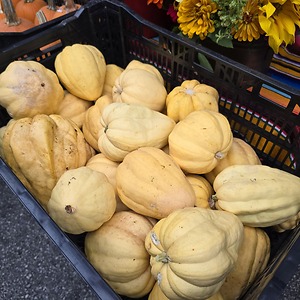
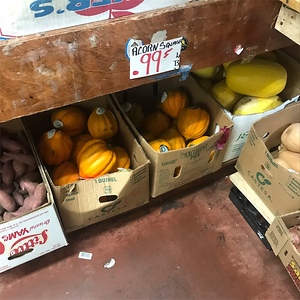
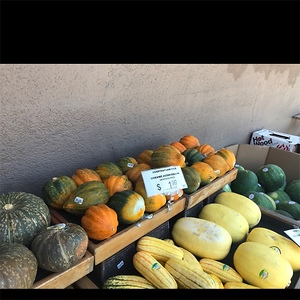
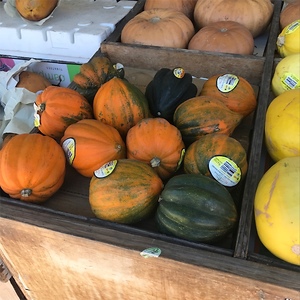
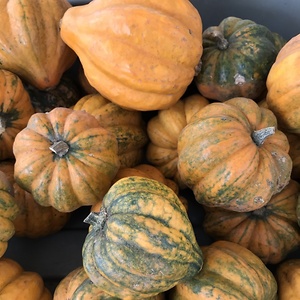
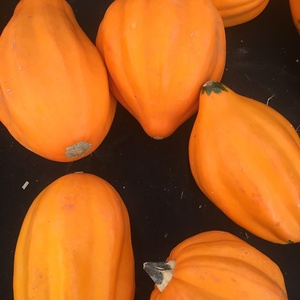
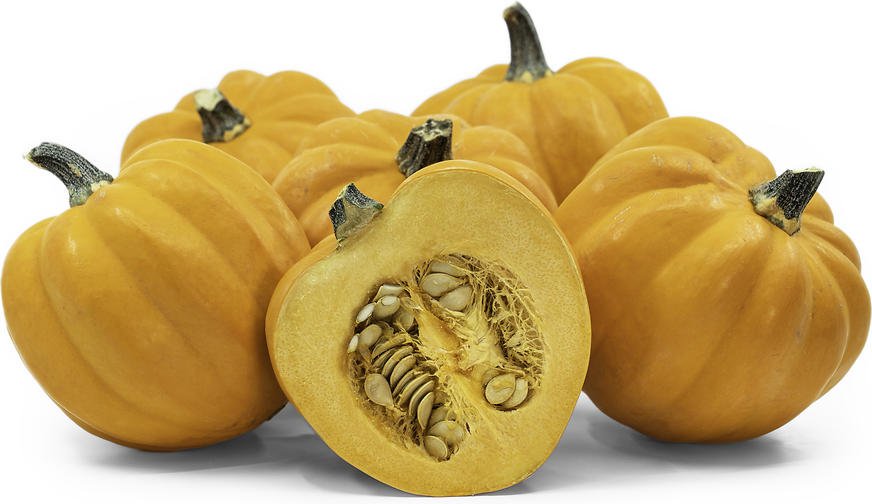
Gold acorn squash is small to medium in size, averaging 12-20 centimeters in length and 10-12 centimeters in diameter, and is ovoid in shape with a tapered point at the bottom and a small green, prickly stem. The orange to yellow skin is smooth and firm with a few thick, ridges running the length of the squash. The yellow flesh is moist, spongy and has a hollow center with a slippery webbing of pulp that encases many flat, beige seeds. When cooked, Gold acorn squash is tender and has a sweet, nutty flavor.
Seasons/Availability
Gold acorn squash is available in the fall through winter.
Current Facts
Gold acorn squash, botanically classified as Cucurbita pepo, is a fast-growing winter squash that grows on a compact bush plant and is a member of the Cucurbitaceae family along with zucchini and crookneck summer squashes. Gold acorn squash is a relatively new variety of acorn squash, and numerous varieties can be found such as Table Queen, Danish squash, and Jersey gold squash. Gold acorn squash is one of the first winter squashes to come into season and is known for its sweet, nutty taste and double harvest. Gold acorn squashes also can be harvested at a young stage as summer squash or left to mature and harvested as winter squash.
Nutritional Value
Gold acorn squash contains vitamins A, C and B, potassium, minerals, dietary fiber, and beta-carotene.
Applications
Gold acorn squash is best suited for cooked applications such as roasting, baking, sautéing, steaming, grilling, stuffing, and broiling. When in its immature stage, it can be consumed raw, sliced, or served similarly to other summer squashes. When mature, it can be cooked, halved, and stuffed with a variety of sweet or savory fillings, sliced into rounds or wedges and roasted until tender, pureed and baked into pies or mixed into soups, placed in lasagna, or roasted and sliced into salads. When cooked, the thin skin can be consumed though it is most often discarded. Gold acorn squash can also be added into curries, risotto, pasta, muffins, and cakes. Its sweet flavor pairs well with butter, honey, maple syrup, pomegranate, cilantro, sage, rosemary, mint, lime, ginger, shallots, walnuts, sesame seeds, kale, quinoa, wild rice, bacon, meats such as lamb, roasted pork, and chicken, parmesan cheese, ricotta cheese, and warm spices such as cinnamon, cumin, and nutmeg. Gold acorn squash will keep up to a month when stored in a cool and dry place.
Ethnic/Cultural Info
In 1982 the Jersey golden, a variety of Gold acorn squash, was developed by renowned plant breeder Dr. Oved Shifriss and awarded the All-American Selections bronze medal. The improved variety of Gold acorn is celebrated for its high protein content and three times the beta-carotene content of traditional acorn squash. Additionally, this new variety produces a double harvest with fruits being ready for harvest at fifty days as a tender, immature squash then again when fully mature forty days later.
Geography/History
Acorn squash is native to Central Mexico and the Eastern United States and was first domesticated by Native Americans around 8,000 BCE. Acorn squash was a popular food crop with the Native Americans and in time made its way to Europe with the explorers returning from the new world. The earliest record of a Gold acorn squash in the commercial marketplace dates back to the 1950's with the table queen and gill’s golden pippin developed by Gill Brothers Seed Co. of Portland Oregon. There was also a golden yellow-orange variety that is now thought to be extinct which has a more elongated shape and was known as fordhook introduced by W. Atlee Burpee & Co. in 1890. The Jersey golden acorn was then developed in 1982, and today Gold acorn squash can be found in specialty grocers and farmers markets in North America and Europe.
Featured Restaurants
Restaurants currently purchasing this product as an ingredient for their menu.
| Webbcreationfood LLC | San Diego CA | 619-829-9194 |
Recipe Ideas
Recipes that include Gold Acorn Squash. One
 is easiest, three is harder.
Latest in season fruits and vegetables posted from the Specialty Produce App