



Florida Avocados
Estimated Inventory, 10 ct : 0
Description/Taste
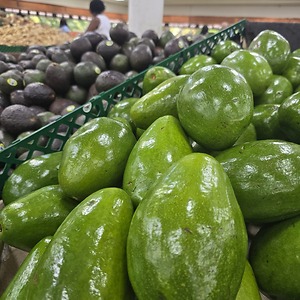
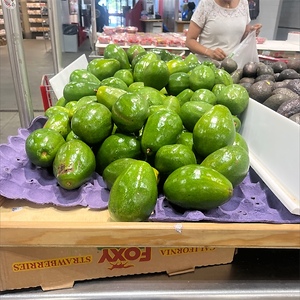
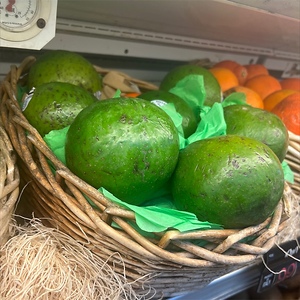
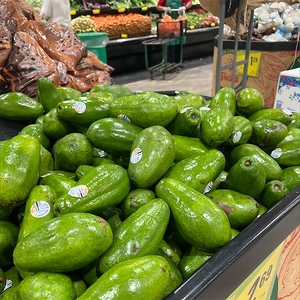
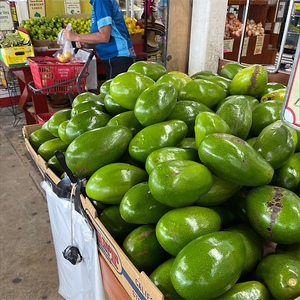
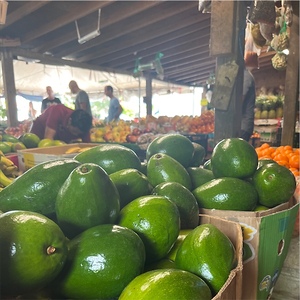
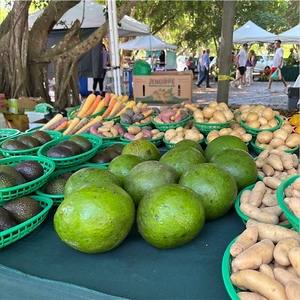
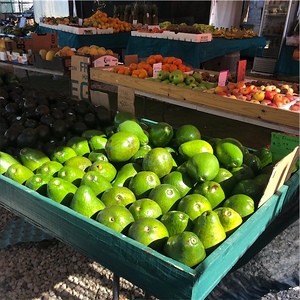
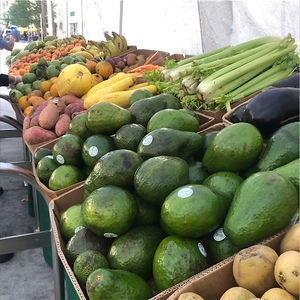
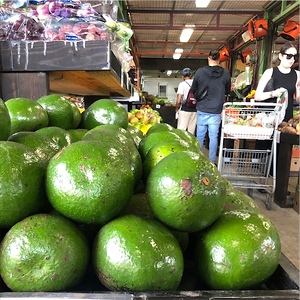
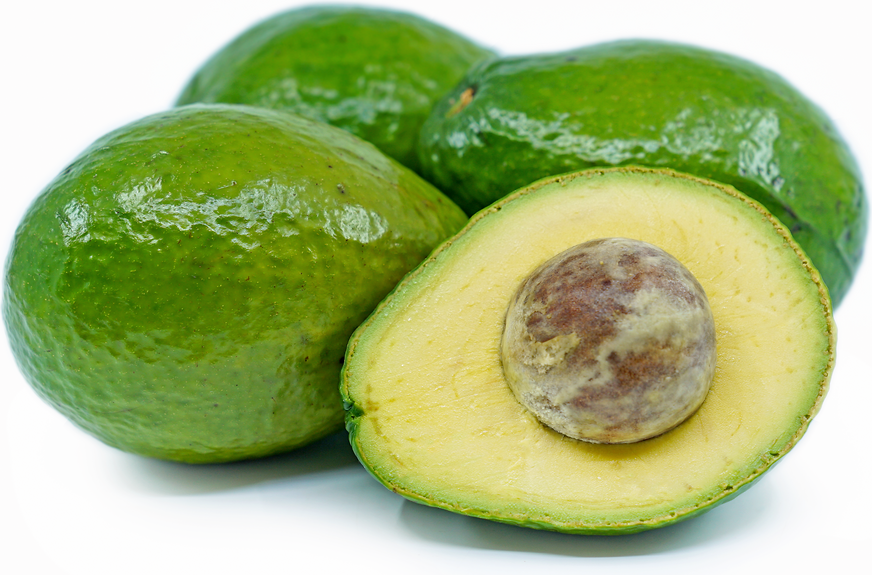
Florida avocados vary in size from small to large, generally found on the larger end, and some varieties can weigh 1 to 2 pounds and extend over thirty centimeters in length. The fruits appear in pyriform, round, oval, or oblong shapes, and the skin is traditionally bright green, glossy, and smooth. Early and mid-season varieties typically have thinner skin, while late-season cultivars bear thicker, rougher skins. Florida avocados remain green, even when ripe, and do not experience a color change like other commercial varieties such as Hass. The peel is also occasionally covered in mottled patches of brown markings and streaks. Underneath the peel, the yellow-green flesh is firm, dense, and slightly fibrous, encasing a large round to tear-drop-shaped brown seed. The flesh holds its shape when sliced but has a characteristically high moisture content, breaking down easily when mashed. Florida avocados are edible raw and should be consumed ripe. Depending on the variety, the flesh will be mild, subtly sweet, buttery, or nutty.
Seasons/Availability
Florida avocados are available from May through March. Each variety will have a different ripening time, categorized into early varieties found in May through August, mid-season varieties in September through October, and late varieties from November through March.
Current Facts
Florida avocados, botanically classified as Persea americana, are a category of many varieties of avocados belonging to the Lauraceae family. Avocados are one of the top crops produced in Florida, and there are over 50 varieties of avocados generally labeled under the Florida avocado name. Experts believe there are approximately 25 major varieties and 25 minor varieties sold fresh in markets across the United States, and the majority of these varieties are grown in the Central or Southern regions of the state. Florida avocados are primarily derived from the West Indian, Guatemalan, and hybrids of the two races. Most early-season varieties belong to the West Indian race, while mid-season and late varieties are Guatemalan-West Indian hybrids or Guatemalan types. Popular varieties of Florida avocados include Pollock, Russell, Choquette, Monroe, Donnie, Hardee, Dupuis, Lula, and Bernecker. Florida avocados generally grow on trees reaching 9 to 19 meters in height and are distinct from Mexican varieties, such as Hass, as their skin remains green when ripe. Hass avocados account for over 90% of the American avocado market, reserving Florida avocados as more of a niche market for consumers desiring a variety with a firmer texture. Florida avocados are edible raw or cooked and can be used in a wide array of savory or sweet culinary dishes.
Nutritional Value
Florida avocados will vary slightly in nutritional value, depending on the variety, and in general, are a source of potassium to balance fluid levels within the body, fiber to regulate the digestive tract, and vitamin C to boost the immune system. Avocados also provide vitamin E to protect the cells against the damage caused by free radicals, magnesium to control nerve functions, folate to produce red blood cells, and other nutrients, including vitamin B6, vitamin K, and omega-3 fatty acids.
Applications
Florida avocados range in flavor from mild to subtly nutty, suited for raw and cooked preparations. The varieties typically have firmer flesh with a lower oil content, allowing them to be sliced. The slices hold their shape well and are favored for tossing over salads, serving over tacos, chopping into salsa, or layering into sandwiches. Florida avocados can also be used as an edible topping over soups, grain bowls, and egg-based breakfast dishes. In addition to slicing, fresh Florida avocados can be blended into dressings, dips, and sauces, added into smoothies, or pureed and mixed into batters for brownies, cookies, and cakes. The avocados can also be used in mousse, served over roasted meats, or breaded and fried. Mashing Florida avocados is less common as they sometimes produce a water consistency, making them less favorable for guacamole than oil-rich varieties such as Hass. Florida avocados pair well with corn, tomatoes, squash, herbs such as cilantro, parsley, and mint, aromatics including garlic, ginger, chile peppers, and onions, seafood, and meats such as pork, beef, poultry, and turkey. Keep avocados at room temperature for 3 to 8 days to allow the fruits to ripen. It is important to note that Florida avocados will not change color during ripening and remain green throughout their lifecycle. Once exhibiting a soft give when gently pressed, Florida avocados should be immediately consumed for the best quality and flavor. Placing ripe avocados in the fridge may allow the fruits to be stored for a day or two. Sliced avocados should be covered in lemon or lime juice and wrapped in plastic to slow the browning of the exposed flesh.
Ethnic/Cultural Info
Florida avocados are sometimes marketed as “lite” avocados. This branding was meant to distinguish the green-skinned varieties of Florida from the famous Hass variety. “Lite” is a term to convey to the consumer that Florida avocados have different nutritional properties from California-grown avocados. It is said some Florida avocados have fewer calories, a lower oil content, and a higher water content. Brooks Tropicals, one of the largest avocado growers in Florida, first marketed Florida avocados under the marketing name “SlimCado.” The company has been growing SlimCados for over 95 years, and the name was given to attract health-conscious consumers. The name SlimCado has allowed Florida avocados to expand outside of being generally labeled as “green-skinned cultivars.” The Brooks Tropicals website mentions that the SlimCado can be “3 to 4 times larger than Hass avocados,” and the avocados are unique from Hass as they can only be grown in tropical climates versus the dry climate required for Hass.
Geography/History
Florida avocados are descendants of West Indian, Guatemalan, and hybrid varieties native to regions of Southern Mexico and Central America. Avocado trees thrived in tropical lowlands, and as civilizations spread throughout these areas, the species also expanded, growing along pathways, trails, forests, and nearby villages, eventually spreading into the Insular Caribbean. Indigenous people groups from the Caribbean are thought to have planted avocado trees in Florida, and the first recorded mention of avocados in Florida was in 1833. Over time, breeders and scientists introduced many avocado varieties into South Florida. The Florida avocado industry has experienced periods of expansion and destruction due to weather, disease, and the economy, and one of the most devastating occurrences was the laurel wilt disease, first detected in Florida in 2002. The fungus is spread by ambrosia beetles that inoculate the trees by burrowing into the trunk. This causes the trees to try to contain the fungus, often killing themselves in the process. Laurel wilt disease has led Floridian breeders to search for more disease-resistant varieties to replace susceptible cultivars within the commercial market. Today, Florida avocados are primarily grown in Central and South Florida, notably in Miami-Dade and Collier Counties. Florida avocados represent a small portion of the American avocado market, being sold domestically in Florida and shipped across the United States, especially to Northeastern markets. The varieties are also likely to be exported to Canada, the Bahamas, the Cayman Islands, and other parts of the Caribbean.
Recipe Ideas
Recipes that include Florida Avocados. One
 is easiest, three is harder.
Podcast

Latest in season fruits and vegetables posted from the Specialty Produce App