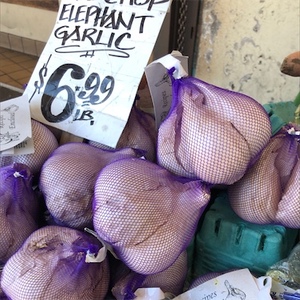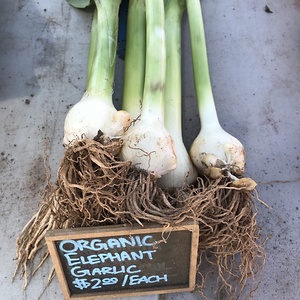


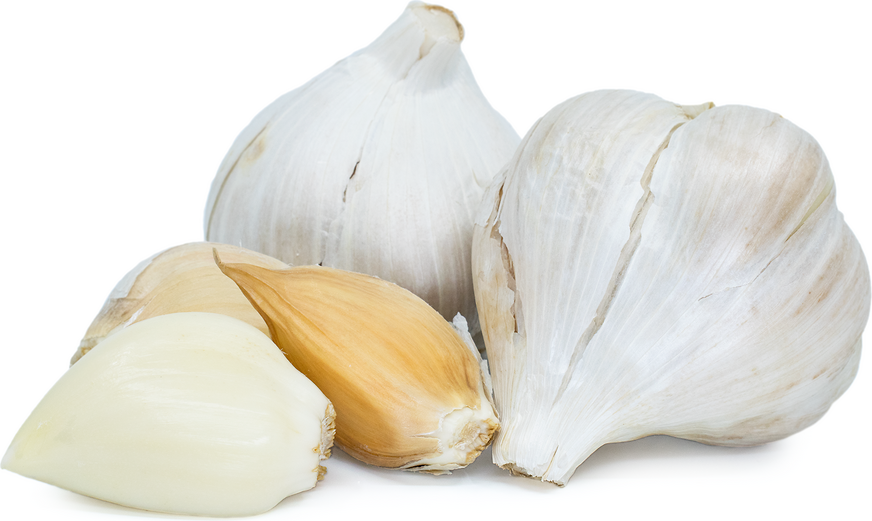


Elephant Garlic
Estimated Inventory, 18 ct : 0.23
This item was last sold on : 05/05/25
Description/Taste
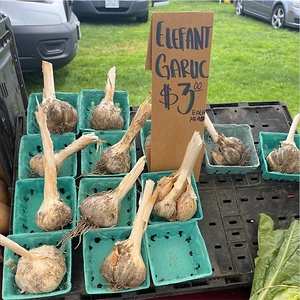
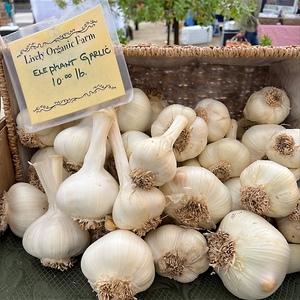
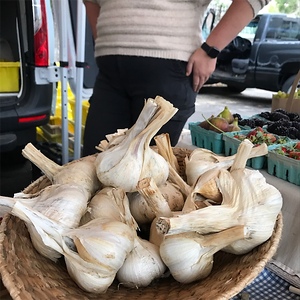
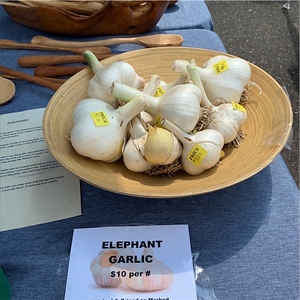
Elephant garlic is very large, approximately 10 centimeters in diameter, and averages five cloves per bulb. This softball-sized bulb can weigh as much as one pound, and the bulb wrapper is white to yellow and paper thin. The cloves are milder and sweeter than true garlic varieties and have a yellow hue. Elephant garlic is often thought to have the flavor of onion and leeks mixed with soft notes of garlic.
Seasons/Availability
Elephant garlic is available year-round.
Current Facts
Elephant garlic, botanically classified as Allium ampeloprasum, is not garlic but is a type of leek. Also known as Giant garlic and French garlic, it gets its name from the fact that it looks like a giant clove of common garlic. Unlike true garlic varieties, which are harvested both young and mature and utilized for their scapes and flowers, Elephant garlic is only used for its mature bulbs. In its first year of cultivation, Elephant garlic will only produce one large clove, this is known as "Single Clove Elephant garlic." Only in its second year of growth will Elephant garlic produce multiple cloves.
Nutritional Value
Elephant garlic bulbs are an excellent source of vitamins E, C, and A. Similar to conventional garlic, Elephant garlic also contains allicin, which has been known for its antibacterial properties.
Applications
Elephant garlic can be used raw or in cooked applications as it is often treated as a vegetable versus an herb because it is so mild in flavor. Roasting, baking or grilling will enhance its flavor, and its large size makes it perfect for slicing and deep frying to make garlic chips. It can also be roasted whole and used as a spread on bread. Elephant garlic's mild flavor also makes it ideal to be used raw in salads. Crushing, chopping, pressing or pureeing Elephant garlic releases its essential oils and provides a more assertive flavor than slicing or leaving whole. Use Elephant garlic in any application that you would use true garlic varieties with the knowledge that it will have less pungency. Elephant garlic pairs well with pasta, poultry, parsnips, potatoes, broccoli, and asparagus. Un-cut Elephant garlic will keep for a couple of months when stored in a cool, dry, and dark place away from humidity.
Ethnic/Cultural Info
When Elephant garlic was first discovered growing in 1941 in the United States, garlic was still considered by many to be a food item for the lower classes because of the potent odor it left on breath and skin. As garlic slowly grew in popularity as more consumers used it for flavor and medicinal properties, Nicholas Gardens, the farm who was the first to grow and distribute Elephant garlic on a commercial level, seized this opportunity and began to market the large bulbs. Consumers were enticed by the large size of the wild leek, and due to the mass marketing, Elephant garlic is now a unique item to showcase in the United States.
Geography/History
Elephant garlic is believed to be native to China and was brought to the United States by local immigrants from Czechoslovakia and Northern Yugoslavia. Nicholas Garden nursery, located in the Willamette Valley of Oregon, noticed the enormous garlic that was being grown by the immigrants and saw the market potential for such a unique shape and flavored allium. Elephant garlic was introduced to the commercial and gardening market in 1941. After ten years of commercial growing, the garlic's name was changed from Giant to Elephant, and Nicholas Garden placed newspaper ads to promote it and began selling it throughout the United States and Canada. Elephant garlic seeds are sold around the world and are currently found in Europe, South America, South Africa, Australia, and Russia.
Featured Restaurants
Restaurants currently purchasing this product as an ingredient for their menu.
| Nobu | San Diego CA | 619-814-4124 |
Recipe Ideas
Recipes that include Elephant Garlic. One
 is easiest, three is harder.
Latest in season fruits and vegetables posted from the Specialty Produce App
View Full Share Market®