


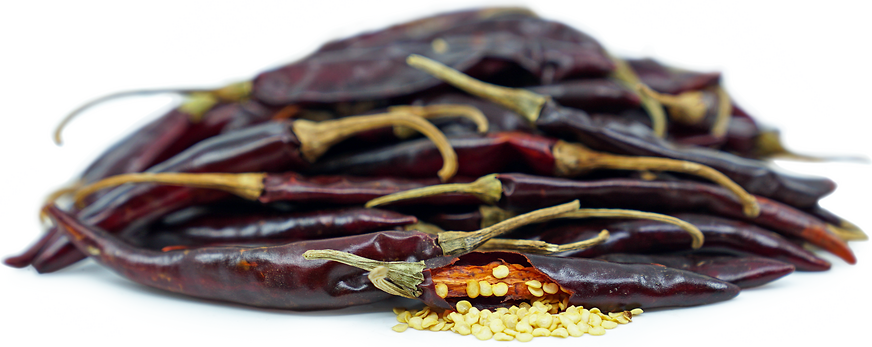


Dried Pulla Chile Peppers
Estimated Inventory, 5 lbs : 3.80
This item was last sold on : 07/02/25
Description/Taste
Dried Pulla chile peppers are a smaller varietal, averaging between 7 and 10 centimeters in length, and have a slender, slightly curved, and flattened shape tapering to a point. The pepper’s skin is semi-thin, glossy, wrinkled, and dark red to purple. Underneath the surface, the flesh is thin and brittle, sometimes showcasing a translucent appearance, and encases a central hollow cavity filled with many round and small, pale yellow seeds. Dried Pulla chile peppers emit a fruity aroma and have a sweet, fruity taste with licorice and cherry undertones. The chile peppers also contain a medium spice level, creating a sharp and sweet heat.
Seasons/Availability
Dried Pulla chile peppers are available year-round.
Current Facts
Dried Pulla chile peppers, botanically classified as Capsicum annuum, are a Mexican pepper variety belonging to the Solanaceae or nightshade family. The peppers are known by the same name fresh or dried and grow on plants that can reach over one meter in height. Pulla chile peppers are most popularly dried and are left to mature on the plant to develop a full, rich flavor. The peppers are also known as Puya chile peppers and Jinta chile peppers, containing a moderate heat ranging from 5,000 to 8,000 SHU on the Scoville scale. Historically, Dried Pulla chile peppers have been used in Mexico as a flavor enhancer. The pepper’s fruity taste and medium spice level provide a complex, unique flavoring for a wide variety of savory and sweet preparations. It is important to note that Dried Pulla chile peppers resemble dried guajillo chile peppers and are often used as substitutes for one another in recipes, but Pulla chile peppers will contribute a more substantial, intense heat.
Nutritional Value
Dried Pulla chile peppers are an excellent source of vitamins A and C to strengthen the immune system, protect the cells against free radical damage, and reduce inflammation. The dried peppers are also a good source of fiber to regulate the digestive tract, B vitamins to contribute to overall energy levels and contain lower amounts of iron and magnesium.
Applications
Dried Pulla chile peppers are highly valued for their fruity flavor and moderate heat, slightly hotter than a jalapeno, and are well suited for a variety of fresh and cooked preparations. The peppers can be rehydrated or added directly into a recipe in flake or powder form. To rehydrate, the peppers should be toasted to develop a savory, smokey flavor and then soaked in water for 10 to 20 minutes. Once reconstituted, the peppers can be blended, pureed, or mashed into sauces such as mole or mixed into salsas, casseroles, soups, or stews. It is important to note that the soaking water does absorb flavoring from the pepper and can be used in broths as an added flavor layer. Pulla chile peppers also add a sharp spice note to dips, chutneys, and marinades. Dried Pulla chile peppers can be ground and sprinkled over roasted vegetables, shaken over pizza and pasta, or layered into burritos, tacos, and enchiladas. In addition to savory recipes, Dried Pulla chile peppers can be incorporated into desserts for added flavor and heat. They can also be combined into stir-fries and Chinese-style meat and vegetable dishes. Dried Pulla chile peppers pair well with meats such as veal, poultry, beef, pork, and fish, chocolate, vanilla, fruits such as strawberries, blueberries, and raspberries, bell peppers, corn, cilantro, coriander, legumes, and rice. Whole Dried Pulla chile peppers will keep 1 to 2 years when stored in a sealed container in a cool, dry, and dark place away from direct sunlight.
Ethnic/Cultural Info
Cuisine in the state of Michoacán, Mexico, was added to the Representative List of Intangible Cultural Heritage by the United Nations Educational, Scientific, and Cultural Organization, or UNESCO. Michoacán was recognized for its work in preserving ancestral recipes, practices, and customs through community-wide cultivation, harvesting, and cooking of traditional ingredients. Pulla chile peppers are widely cultivated throughout Michoacán and are famously used in Pulla de Michoacán chile salsa, comprised of guajillo and Pulla peppers combined with tomatoes, tomatillos, garlic, and salt. The spicy condiment provides a fruity heat and is used as a table salsa, spooned over roasted meats, vegetables, and soups. The salsa is also popularly served with echepos, or corn tamales, or poured over cooked rice with cotija cheese.
Geography/History
Pulla chile peppers are native to the Central Valley of Mexico and have been growing wild since ancient times. The exact origins of the variety are unknown, but some experts theorize that they may have been a descendant of the guajillo chile. Today Pulla chile peppers are still cultivated in Mexico’s Central Valley and are also grown in several other states, including Jalisco and Michoacán, where the peppers are sold through local markets. Outside of Mexico, Dried Pulla chile peppers are produced in Peru and China and are grown in home gardens of pepper enthusiasts in the United States. Dried Pulla chile peppers are available through online retailers, specialty distributors, and Mexican and Latin grocers.
Featured Restaurants
Restaurants currently purchasing this product as an ingredient for their menu.
| Lafayette Hotel - Quixote | San Diego CA | 619-296-2101 |
Recipe Ideas
Recipes that include Dried Pulla Chile Peppers. One
 is easiest, three is harder.
| Keep It Simple Foods |
|
White Bean and Onion Soup with Pulla Chili Oil Croutons |
| Weird Combinations |
|
Southwest inspired homemade empanadas |