


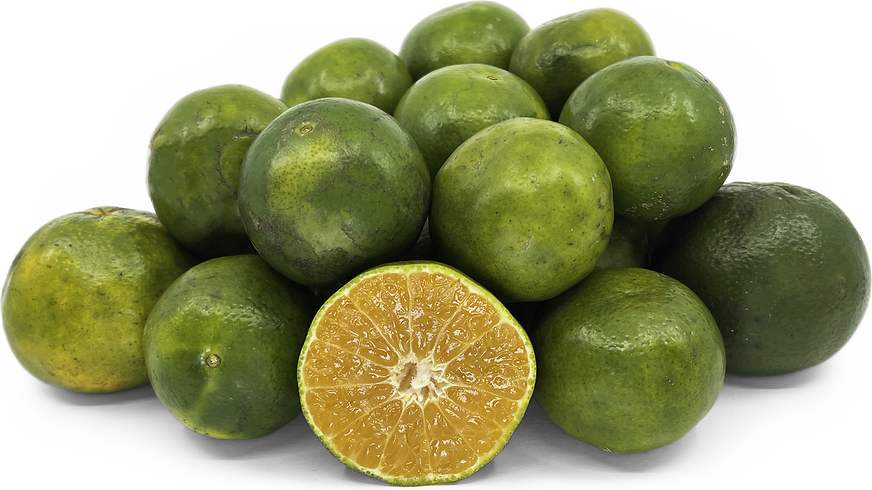


Dalandan Oranges
Estimated Inventory, lb : 0
Description/Taste
Dalandan oranges are small to medium in size, averaging 5-9 centimeters in diameter, and are round to obovate in shape. The shiny, green rind may be blushed with patches of orange and is firm, thin, pebbled with small oil glands, aromatic, and easily peeled. The flesh is soft and juicy, containing a few green seeds, and is divided into 10-11 segments by thin white membranes. Dalandan oranges have a sour, tart flavor mixed with a light sweetness that develops with maturity.
Seasons/Availability
Dalandan oranges are available in the winter in tropical climates.
Current Facts
Dalandan oranges, botanically classified as Citrus aurantium, are a late-season sour orange variety that grows on a small, erect tree and belongs to the Rutaceae or citrus family. Also known as Kahel in Tagalog and Green mandarin in Central America, Dalandan is a Tagalog word that was derived from the Spanish word naranja or orange. Dalandan oranges are one of the most popular oranges in the Philippines and are used by chefs and home cooks to flavor baked goods, cocktails, and marinades for sweet and savory dishes.
Nutritional Value
Dalandan oranges are an excellent source of vitamin C and also contain vitamin A, potassium, phosphorus, magnesium, iron, calcium, and flavonoids that have anti-inflammatory properties.
Applications
Dalandan oranges are best suited for raw applications and are predominately consumed fresh, out-of-hand or juiced. The fruit can be segmented and incorporated into fruit bowls or tossed into green salads and grain bowls. The juice can be mixed into shakes, smoothies, or served as a stand-alone fruit juice, and it can be stirred into butter to create a sweet-savory sauce for fish. The juice can also be used to flavor baked goods such as cupcakes, tarts, and pies, or blended into mousse, meringue, marmalade, curd, and sorbet. Dalandan oranges pair well with fish such as salmon, poultry, and pork, fruits such as pomelos, guavas, yuzu, mango, and lychee, leafy greens, and herbs such as mint, cilantro, and basil. The fruit will keep for 1-2 weeks when stored in the refrigerator.
Ethnic/Cultural Info
Dalandan oranges are widely found across the Philippines and are often dipped in salt or chile powder to help neutralize the sour flavor. They are also commonly juiced and used to help calm nausea, aid in digestion, act as an appetite suppressant, and lessen gas pains. Known as the Filipino orange, the flavor of the Dalandan has become so popular in the Philippines that it has been utilized to make many commercial goods. There is a Dalandan flavored soda, named “You’ve Dalandan It Again” by Nutri-Asia, Mentos released a “Dalandan fresh” candy flavor, and Destileria Limtuaco & Co., the oldest distillery in the Philippines, created a Dalandan infused vodka in September of 2015.
Geography/History
The Dalandan orange is native to southeastern Asia and has been growing since ancient times. It was then brought to the Americas by explorers in the 16th century and has adapted to warm, tropical climates. Today, Dalandan oranges are available in local markets and at specialty grocers the Philippines, South America, and Central America.
Recipe Ideas
Recipes that include Dalandan Oranges. One
 is easiest, three is harder.
| Lifestyle Inquirer |
|
Dalandan + Guava Juice |
| Two Ladies and a Spoon |
|
Dalandan Sorbet |
| Lifestyle Inquirer |
|
Dalandan Shake |