



Crosne
Estimated Inventory, lb : 0
Description/Taste
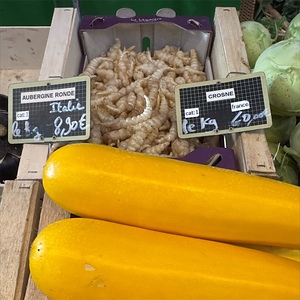
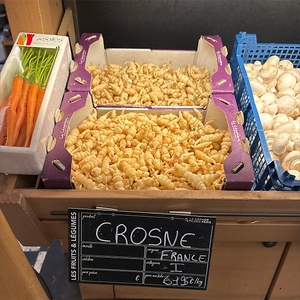
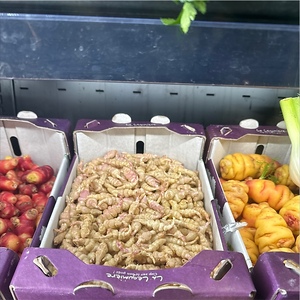
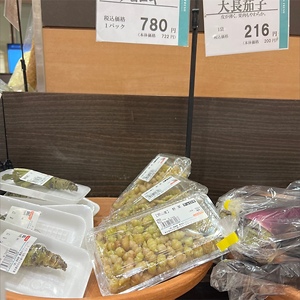
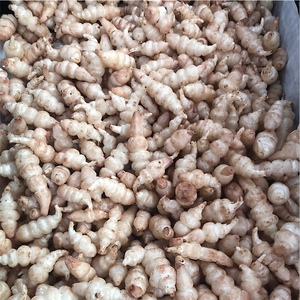
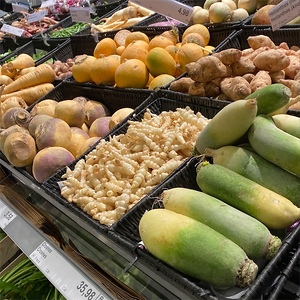
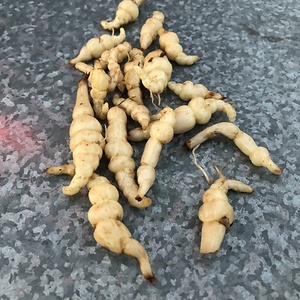
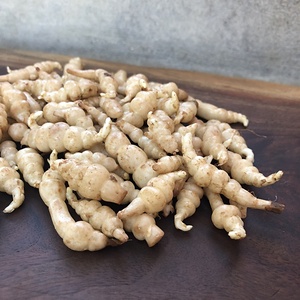
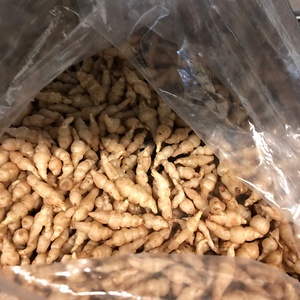
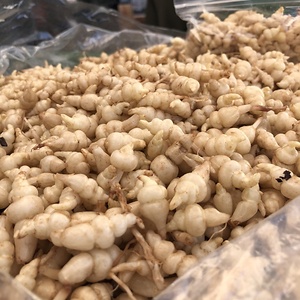
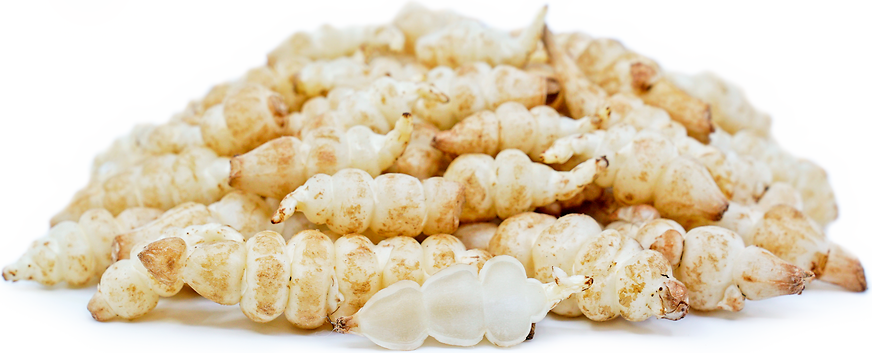
Crosnes are small rhizomes, averaging 5 to 8 centimeters in length and 1 to 2 centimeters in diameter, and have a distinctly bulbous, tapered shape. Consumers often liken the rhizome’s shape to that of a grub or caterpillar, as it has several connected nodules forming a bubbled, bumpy appearance, tapering on each end. The rhizome’s surface is firm, semi-smooth, taut, and thin, showcasing beige, ivory, and light tan hues. It is important to note that the skin will discolor and become darker brown or yellow with age or exposure to the air. Underneath the surface, the flesh is dense, somewhat translucent, starchy, and aqueous with a snappy, watery crunch. Crosnes are said to have a consistency reminiscent of water chestnuts or jicama. The rhizomes are edible raw or cooked and have a sweet, earthy, neutral, and subtly nutty taste. The flavor of Crosnes will vary based on growing conditions and the types of soil used for cultivation, such as rich, dark soil compared to sandy soils.
Seasons/Availability
Crosnes are available in the early winter through mid-spring, with a peak season between November and January, sometimes extending into March.
Current Facts
Crosnes, botanically classified as Stachys affinis, are small, edible rhizomes belonging to the Lamiaceae family. The rhizomes develop underground from a system of sprawling roots that connect to an upright, leafy green herbaceous plant reaching 30 to 45 centimeters in height. The species, in general, is native to East Asia and was introduced worldwide as a culinary ingredient. Crosnes is the French name for the rhizome, and the species is also known as Chinese artichokes, Japanese artichokes, Knot Root, and Artichoke Betony in English markets. In Japan, the rhizomes are referred to as Chorogi, Chorojoki, Chorojoshi, and Chiyoroki, while in China, there are many regional names such as Kuosaishikan, Gan Lu Zi, and Ganroko. Crosnes take 5 to 8 months to mature underground and are a labor-intensive crop mostly dug up by hand to protect the rhizome’s delicate nature. Annual yields are small for each cultivated plant, leading the species to be a rare culinary ingredient. Crosnes are a premium and versatile food sought by chefs and consumers for their neutral flavoring, crunchy consistency, and distinct shape.
Nutritional Value
Crosnes are a source of antioxidants to protect the body's overall health, and vitamins C and K strengthen the immune system and aid in faster wound healing. The rhizomes also provide fiber to stimulate digestion, potassium to replenish and balance fluid levels, iron to develop the protein hemoglobin for oxygen transport through the bloodstream, and magnesium to maintain daily nerve operations. Other nutrients include calcium and phosphorus to support bones and teeth, copper to produce red blood cells, manganese to form connective tissues, and folate to aid the body in repairing and creating new cells. In Traditional Chinese Medicine, Crosnes are used in various treatments for colds and infections and are believed to have antibacterial and anti-inflammatory properties.
Applications
Crosnes has a mild, sweet, and subtly nutty taste suited for fresh and cooked culinary preparations. The edible rhizomes must be washed with water or scrubbed clean using coarse salt in a cloth before use and can be eaten whole with the skin intact or peeled, depending on preference. Crosnes are popularly consumed raw and are eaten similarly to carrots. They are also sliced and tossed into salads, chopped into dips, or layered into wraps and sandwiches. In addition to raw dishes, Crosnes are often combined with other root vegetables and cooked, incorporated into gratins, or pan-fried as a simple side. The rhizomes are also simmered into soups, stews, and curries, added to roasts, or cut and cooked into omelets, pasta, or potato dishes. In France, Crosnes are famously sauteed in butter and herbs. They are also mixed into various pork dishes to complement the meat’s rich flavoring or cooked in sauces. Crosnes are notably used in traditional New Year’s recipes in Japan. These dishes are collectively called osechi cuisine and are symbolic of good wishes for the year to come. Crosnes are a blessing for “health and longevity” and are commonly pickled in red shiso leaf or plum vinegar to develop a bright red hue. The pickled rhizomes are served with black beans in a dish to welcome “health and being able to work attentively for a long time.” Crosnes are also stir-fried, added to salads, or fried into tempura dishes throughout East Asia. Crosnes pair well with aromatics such as shallots, garlic, ginger, and onions, herbs including parsley, chives, and fennel, cinnamon, apples, pears, and nuts such as almonds, walnuts, and hazelnuts. Whole, unwashed Crosnes have a short shelf life and tend to dry out and discolor quickly. The rhizomes should be wrapped in newspaper or paper towels and stored in a plastic bag in the refrigerator’s crisper drawer for 3 to 7 days.
Ethnic/Cultural Info
Crosne is the primary name used in France for Stachys affinis and was taken from a village in northern France that was once home to around 500 inhabitants. The village has now become a commune in the Essonnee department, home to around 9,000 inhabitants, and is a suburb of Paris, southeast of the city center. Crosne was the first site of planting and cultivation of Stachys affinis in France, and its introduction is credited to Auguste Paillieux and Désiré Bois, both former residents of the village. Auguste Paillieux was a successful French industrialist who retired in 1871 and settled in Crosne to study new plant species and gardening. During his time in Crosne, Paillieux met Désiré Bois, a horticulturist and botanist, and the two quickly became lifelong friends and worked together to introduce Stachys affinis to France. Bois kept detailed records of the species introduction, and in these records, he noted that he and Paillieux found the species listed in books about the plants of China in 1882. After Paillieux and Bois successfully planted, evaluated, and cultivated Stachys affinis, they selected Crosne for commercial branding to increase consumer appeal. Paillieux initially considered Stachys, a name taken from their Latin classification, but decided that it would be too challenging of a moniker for the everyday public. He chose Crosne to honor the species’ early history in France. In the modern day, two streets are named after Auguste Paillieux and Désiré Bois in Crosne to commemorate their work and efforts in introducing the starchy rhizomes.
Geography/History
Crosnes is part of Stachys affinis, a species native to central and northern China and Mongolia. The species has been growing wild in its native region since ancient times and was selected for cultivation in China by the 13th century. Much of the species' early history is unknown, but Stachys affinis eventually spread to other regions of East Asia, including Korea and Japan. Stachys affinis was thought to have been planted in Japan sometime during the Edo Period, spanning from 1603 to 1867 CE, and since its introduction, the species has expanded across the country in cultivation and use. Stachys affinis was also carried to Europe in the late 19th century. French horticulturists Auguste Paillieux and Désiré Bois contacted the minister of Beijing, Mr. Bourée, about the species, and in the spring of 1882, he had Dr. Bret-Schneider, a doctor of the Russian legation in Beijing, send a box of the rhizomes to Paillieux and Bois. When the box arrived, most of the rhizomes had rotted, and only a few were still viable. These rhizomes were planted in Paillieux’s garden and eventually became established plants producing annual harvests. Paillieux spent several years cultivating the rhizomes, and in 1886, he partnered with Vilmorin and Andrieu seed catalogs to begin selling the rhizomes for cultivation under the name Crosnes. Paillieux also spread the word of the new culinary crop throughout France through educational leaflets to attract consumer attention. The most notable form of promotion was when French chef Paul Brébant adopted the rhizomes into his Japanese salad recipe. By 1889, Crosnes were being sold throughout markets in Paris and were also being exported to Germany, England, and Belgium. Crosnes continued to be a popular culinary ingredient throughout Europe until the late 20th century but eventually faded from cultivation due to disease and labor-intensive production. The species was later revived and has again become a favored specialty ingredient. Today, Crosnes are primarily grown in East Asia, Europe, and the United States. In France, the species is cultivated in the Loire Valley and areas of Paris, Brittany, Burgundy, and Picardy and seasonally sold through fresh markets and wholesalers.
Recipe Ideas
Recipes that include Crosne. One
 is easiest, three is harder.
Latest in season fruits and vegetables posted from the Specialty Produce App