



Carnival Squash
Estimated Inventory, 35 lbs : 0
This item was last sold on : 12/20/24
Description/Taste
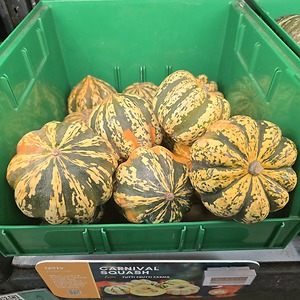
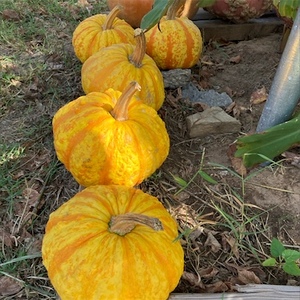
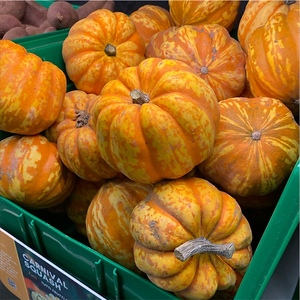
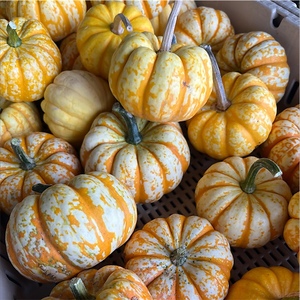
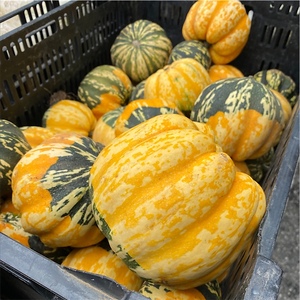
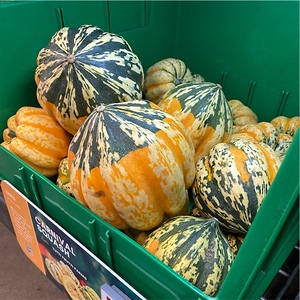
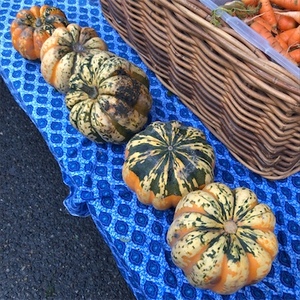
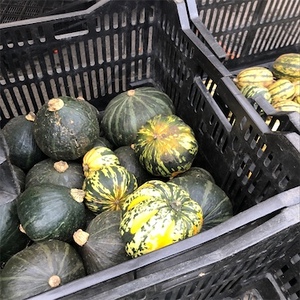
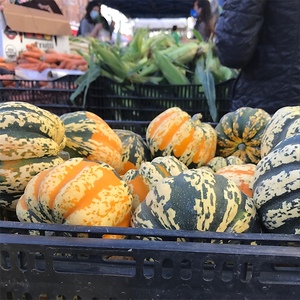
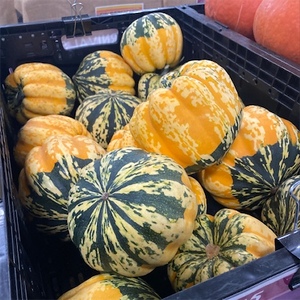
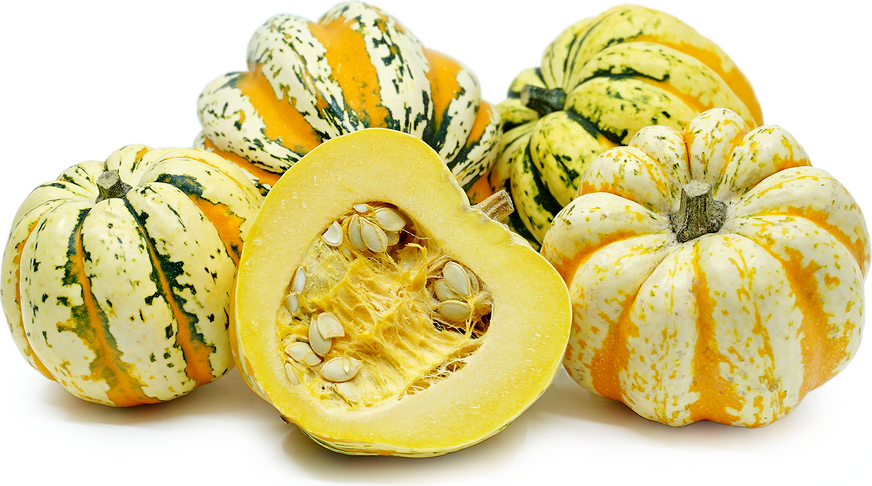
Carnival squash is small to medium in size, averaging 12-17 centimeters in diameter, and is round and squat with deeply furrowed ridges and a rough, light brown stem. The thick skin has a cream-colored base with variegated spots and striped hues of white, orange, yellow, and green, depending on its level of maturity. The flesh is firm, dry, coarse, and pale orange in color with a large and fibrous seed cavity with stringy pulp and many flat, beige seeds. When cooked, Carnival squash is soft and tender with a fragrant aroma and is slightly nutty, buttery, and sweet with nuances of maple syrup, similar to butternut squash.
Seasons/Availability
Carnival squash is available in the fall and winter.
Current Facts
Carnival squash, botanically classified as Cucurbita pepo, grows on a small bush or vine that can thrive in compact spaces and is a member of the Cucurbitaceae family along with pumpkins and gourds. Carnival squash is a relatively new variety, being a hybrid of the sweet dumpling and acorn squash and is sought after for its uniquely patterned and colored exterior. The color variance in the rind is the result of seasonal temperature variations with warmer temperatures producing squash with slightly more pronounced green stripes. Carnival squash is most popularly used as decoration, but it can also be consumed in a wide variety of culinary applications and is used as a substitute for butternut or acorn squash in recipes.
Nutritional Value
Carnival squash contains potassium, vitamins A and C, calcium, magnesium, folate, omega-3 fatty acids, and omega-6 fatty acids.
Applications
Carnival squash is best suited for cooked applications such as steaming, boiling, roasting, and sautéing, and it can be used in the same applications as other orange-flesh winter squashes such as butternut, acorn, and kabocha. Carnival squash can be roasted whole, cut in half or into pieces, and blended to become soup, sauce, added to stews, risottos, curries, or pasta dishes. The squash can also be utilized as an edible vessel as its size often lends itself to healthy, individual serving portions and the seeds can be roasted as a snack. Carnival squash is best highlighted when prepared with the addition of butter and spices such as ginger, garlic, cinnamon, nutmeg, and pepper. It pairs well with pork, lamb, sausage, other roasted winter vegetables, maple syrup, toasted walnuts and pecans, sage, apples, pepitas, red chard, and aged cheeses such as pecorino. It will keep up to a month when stored uncut in a cool and dark place. Sliced pieces can be wrapped in plastic and stored in the refrigerator up to five days.
Ethnic/Cultural Info
Carnival squash was developed by plant breeder Ted Superak of Harris Seeds in North America and was created with the intent to improve upon the sweet dumpling squash. A newer squash to the commercial marketplace, the Carnival has seen an increase in popularity in the United States as a result of food and lifestyle bloggers discovering it, photographing it, and utilizing it as a decorative piece and culinary ingredient during the holiday season.
Geography/History
The Carnival squash is a descendant of squashes native to Mexico and was developed and introduced to the market in 1991 by plant breeder Ted Supernak of Harris Seeds in North America. Today Carnival squash is available at specialty grocers and farmers markets in North America, South America, Asia, Europe, and Australia.
Recipe Ideas
Recipes that include Carnival Squash. One
 is easiest, three is harder.
Latest in season fruits and vegetables posted from the Specialty Produce App