



Canary Melons
Estimated Inventory, 18 lbs : 0
Description/Taste
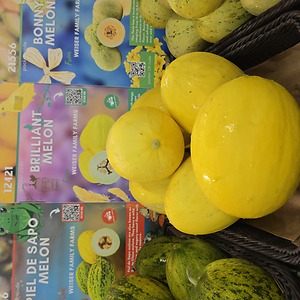
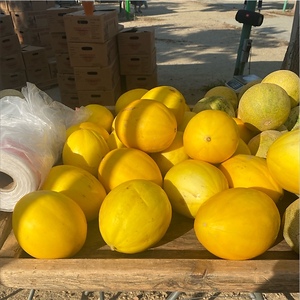
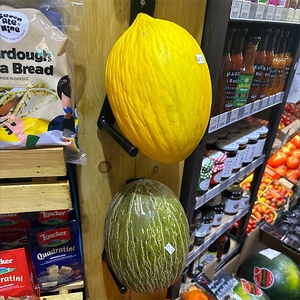
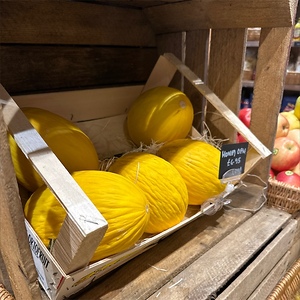
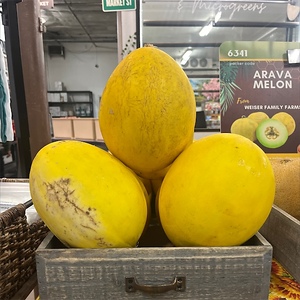
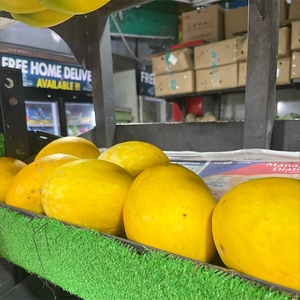
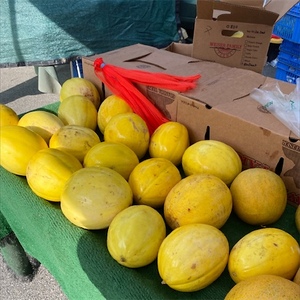
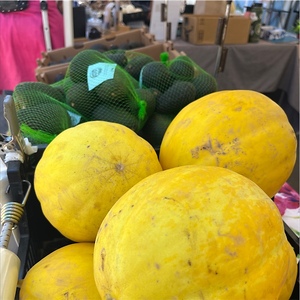
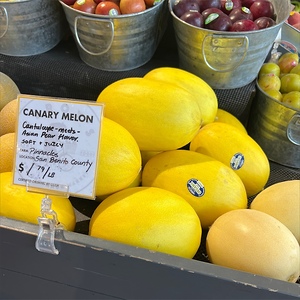
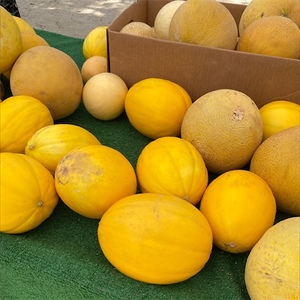
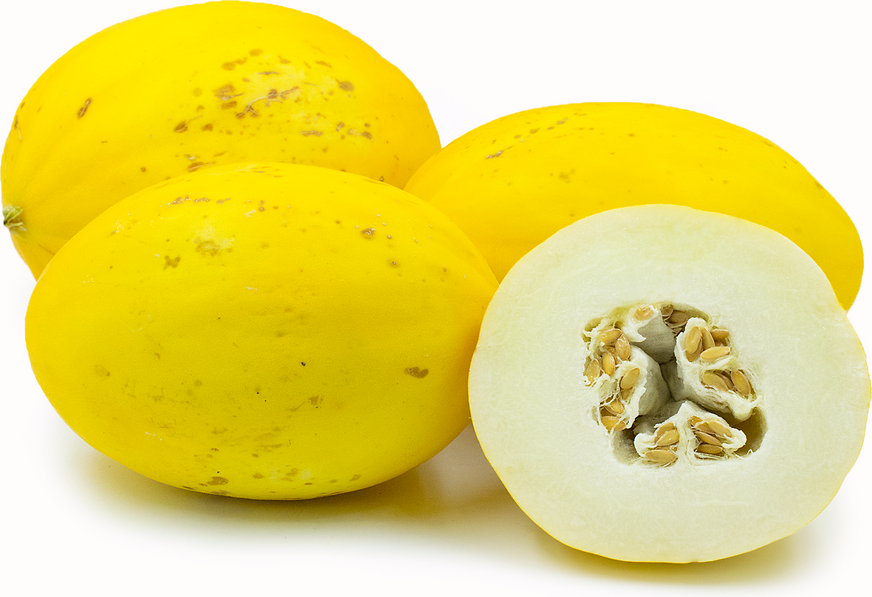
Canary melons are small to medium fruits, averaging 10 to 13 centimeters in diameter, and have an elongated, oval shape, slightly tapering on both ends, similar in appearance to an American football. The melon’s rind is tough, hard, thick, and semi-smooth, sometimes speckled with brown markings. As the melon ripens, the flesh will develop a slightly waxy texture, the surface may become lightly corrugated, and the coloring will deepen into a vibrant bright yellow with orange undertones. Underneath the rind, the flesh ranges in color from ivory to white with pale green hues and is juicy, soft, tender, and succulent. The flesh also contains a central cavity filled with many tan oval seeds encased in stringy white fibers. The seeds are very hard and are typically discarded before consumption. Canary melons should feel heavy for their size when ripe and emit a subtle, tropical aroma with pineapple and banana nuances. The melons also contain around 13.9 Brix, a measurement of the sugar content within the flesh, creating a distinctly mild, sweet, and tangy flavor.
Seasons/Availability
Canary melons are generally available in the summer through mid-fall. The variety is grown in both hemispheres and can be exported long distances, allowing the melons to appear sporadically throughout the year in various fresh markets.
Current Facts
Canary melons, botanically classified as Cucumis melo, are a sweet variety of muskmelon belonging to the Cucurbitaceae family. The specialty melons grow on vines that can reach three meters in length, and the fruits tend to mature in approximately 80 to 90 days. Canary melons are highly favored for their juicy, sweet flesh and are a type of winter melon, meaning their hard rind allows the melon to have a long post-vine shelf-life, stored for extended periods, and shipped to markets worldwide. Canary melons are also named after the canary bird, as the rind matches the bird’s signature, bright yellow coloring. The melons are known by several names, including Spanish melon, Juan Canary, Jaune des Canaries, Amarillo melon, Spanish Melon, and San Juan Canary Melon. Canary melons lack the musky aroma commonly associated with muskmelons and are primarily grown worldwide for fresh eating.
Nutritional Value
Canary melons are an excellent source of fiber to regulate the digestive tract and the antioxidant vitamin C to strengthen the immune system, reduce inflammation, and protect the cells against environmental toxins known as free radicals. The melons are also a good source of vitamin A to maintain healthy organ functioning, potassium to balance fluid levels within the body and contain lower amounts of manganese, iron, calcium, and phosphorus.
Applications
Canary melons have a complex, sweet and tangy flavor well suited for chilled, fresh preparations. The specialty fruits contain a less musky scent than other muskmelon varieties, allowing the flesh not to overpower a dish and complement a wide variety of ingredients. The melons can be sliced in half, the seeds discarded, and consumed straight, out of hand. The flesh can also be cut and displayed on appetizer plates, chopped and added to green and fruit salads, diced into salsa, or sprinkled with citrus juice, salt, or ginger as a tangy snack. In addition to fresh slices, Canary melons can be blended into smoothies, juiced into fruit punches, cocktails, and mocktails, incorporated into chilled soups, or combined with herbs as a flavorful side dish. The melons can also be cooked into jam, used as a filling in baked goods, or blended frozen into granitas, popsicles, and sherbet. Canary melons pair well with honey, ginger, citrus, cucumbers, herbs such as basil, cilantro, and mint, fennel, cheeses including ricotta, mascarpone, and halloumi, apples, berries, kiwis, and oranges. Whole, uncut Canary melons will keep for a couple of days at room temperature and 10 to 14 days when stored in the refrigerator. Once sliced, the melon pieces will keep 2 to 3 days when stored in a sealed container in the fridge.
Ethnic/Cultural Info
Canary melons are a popular variety in Asia for their soft, juicy flesh and mildly sweet flavor. The melons are viewed as a cooling food to combat the sweltering summer humidity and are believed to reduce heat and dampness, a term used to describe several types of imbalances in the body. Melons are also believed to cleanse the body by increasing diuresis while clearing heat, and the water content in the melon provides an essential source of hydration to replenish the fluids lost from sweating. Canary melons are especially favored in South Korea and Japan, where the melons are neatly sold in colorful piles as a fresh eating variety. The melons are traditionally served at the end of meals as the flesh provides a light, sweet, and healthy dessert. During the summer in Japan, melons are also incorporated into seasonal treats at restaurants, cafes, and bakeries. The melons can be used to flavor whipped cream, frostings, cakes, and parfaits, or they can be blended into sorbet, frozen into popsicles, or cubed fresh and served with ice cream.
Geography/History
Canary melons are believed to be a type of muskmelon, which were first discovered growing in Persia and the surrounding region. Muskmelons were transported from Persia to Egypt in ancient times, and the oldest known record of the melons was traced to around 2400 BCE in Egypt, depicted in a drawing of funerary offerings. The melons were introduced into the Mediterranean, cultivated in Ancient Greece and Rome, and were later brought to Spain sometime before the 15th century. They were also carried to the New World with Spanish explorers in the 16th century. The origins of Canary melons are mostly unknown, as the variety is considered a specialty fruit, not widely cultivated for commercial markets due to its difficult growing nature. Today Canary melons are produced worldwide and are found in the Middle East, Europe, Northern Africa, Asia, North America, and South America. In the United States, Canary melons are grown primarily in the San Joaquin Valley, a highly productive and diverse agricultural region in Central California. The melons are also cultivated in Southern California and Arizona. When in season, Canary melons are sold through local markets, distributors, and select grocers. The variety is also sold through online seed catalogs for home garden cultivation.
Recipe Ideas
Recipes that include Canary Melons. One
 is easiest, three is harder.
| Tarladalal |
|
Melon Jam |

Latest in season fruits and vegetables posted from the Specialty Produce App