



Black Sapote
Estimated Inventory, lb : 0
This item was last sold on : 03/07/25
Description/Taste
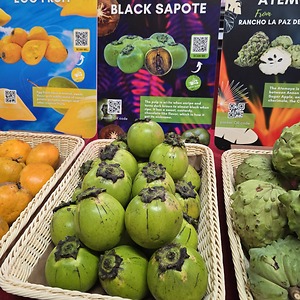
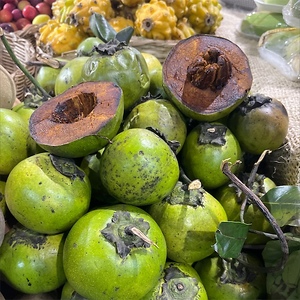
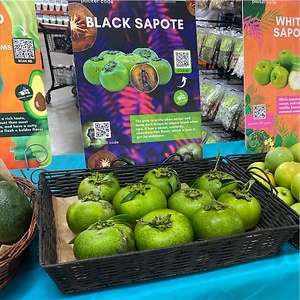
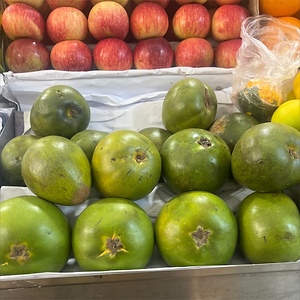
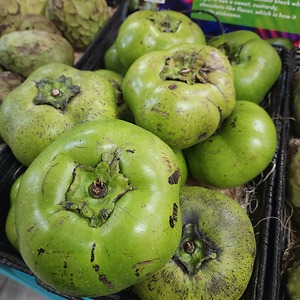
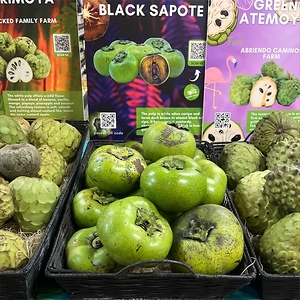
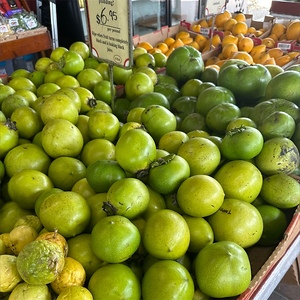
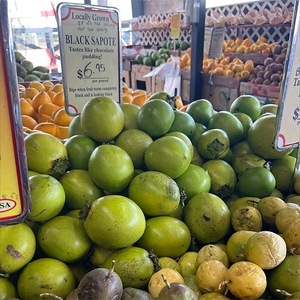
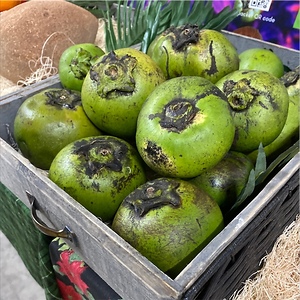
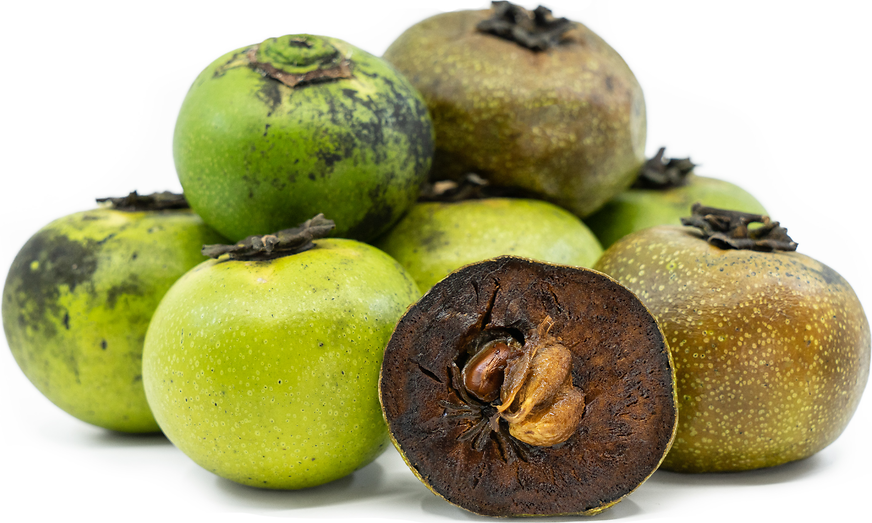
Black sapotes are round, compact fruits that look similar to a persimmon in shape and size. They range from 5 to 15 centimeters in diameter and have a lime-green hue with a spiky dark green stem. Their skin is smooth and shiny, dotted with tiny, bubble-like dots across their surface. As Black sapotes ripen, dark smudges and spots appear on their skin. The fruit becomes wrinkled, giving it a bruised appearance at peak ripeness. Black sapote flesh is dark brown and has a burnt, caramelized look that takes on the texture of a date or overripe papaya when ready to eat. Within this flesh are 6 to 12 smooth, flat brown seeds that measure 1 to 3 centimeters wide and should be removed before consumption. Black sapotes have a dynamic flavor that combines a sweet, chocolate-like custard taste with notes of prune, date, honey, caramel, and molasses.
Seasons/Availability
Black sapotes may be available from late summer to early spring.
Current Facts
Black sapotes are botanically known as Diospyros digyna and are from the Ebenaceae family, which includes many tropical species. They are widely known as the chocolate pudding fruit because of their flavor, consistency, and color. Other names for the fruit include Black Persimmon, Black Soap apple, Sapote Negro, Zapote Prieto, and Matasano de Mico. Sapote is an indigenous word in Central America that translates to sweet and soft fruit. Black sapotes are not related to the Mamey or White sapote cultivars but are closely linked to persimmons, a fruit that appears to be their orange counterpart. There are many different cultivars, including the Bernicker, Reineke, Mossman, Cocktail, Maher, and Superb Black sapote. Their distinctly sweet flavor makes them primarily suitable for culinary uses, particularly in desserts.
Nutritional Value
Black sapote is rich in vitamin C, strengthening the immune system, aiding in collagen formation, and combatting free radical cell damage. The presence of vitamin A in this fruit is essential for maintaining good vision and promoting healthy skin. The calcium found in Black sapotes contributes to strong bones and teeth, while its fiber encourages digestion, promotes satiety, and helps regulate blood sugar levels. Black sapotes contain iron that supports oxygen transport in the blood and can help prevent anemia, while their phosphorus content improves energy production. The potassium in Black sapotes plays a crucial role in maintaining proper muscle function, regulating blood pressure, and promoting heart health.
Applications
Black sapotes are known for their chocolate-like flavor and are typically used for desserts like mousse, ice cream, and pie filling. Their dark flesh can be scooped out and eaten raw but is preferably sweetened and added to beverages, ice creams, cakes, and shakes. Black sapotes pair well with oranges and lemons and their pulp can be mixed with milk and nutmeg for pudding or blended with pineapple juice for a refreshing drink. Black sapotes are used in the cuisines of tropical regions all over the world. In the Philippines, they are skinned and deseeded and their pulp is served with citrus juice or used for pastry fillings. In Mexico, the pulp is mixed with brandy and topped with whipped cream. Black sapotes pair well with other tropical fruits like pineapples, coconut, papayas, dragonfruit, and passion fruit. They can be stored on the counter until ripe and then refrigerated for up to three days.
Ethnic/Cultural Info
Black sapote trees have a long history of cultivation in Mexico, having been domesticated for over 2,000 years. Revered by ancient civilizations, its fruit was highly prized for its rich, unique flavor and nutritional value. The Nahua people of Central Mexico and the Maya communities of Southeastern Mexico were known to cultivate and consume Black sapotes regularly, integrating them into their diets and cultural traditions. In addition to their use in these communities, the fruit was a staple among the Aztecs and other Indigenous peoples of Central America, who spread its cultivation throughout the region.
Geography/History
Black sapotes are native to the southern region of Mexico and can be found growing in the wild in both Mexico and Central America. This fruit is believed to have been brought from Mexico to Spain by Spanish colonizers in the late 17th century and then introduced to the Philippines in the late 18th century. Today, Black sapotes can be found in Hawaii, Florida, Cuba, Puerto Rico, Central America, tropical areas of Asia, Australia, and the island of Mauritius off the coast of Africa. They grow in tropical and subtropical climates, where they are often cultivated in gardens or sold at farmers' markets. Black sapotes are relatively obscure fruits with a short window of availability, making them rare to find in regions far from where they are grown.
Recipe Ideas
Recipes that include Black Sapote. One
 is easiest, three is harder.
Latest in season fruits and vegetables posted from the Specialty Produce App