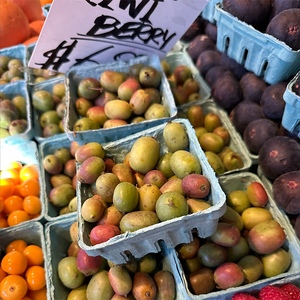




Baby Kiwi
Estimated Inventory, 12 ct : 0
Description/Taste
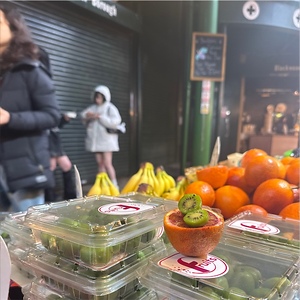
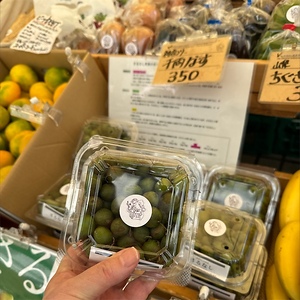
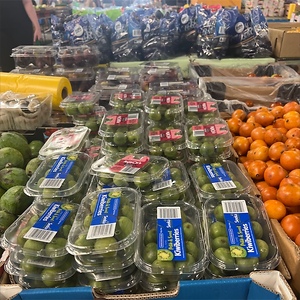
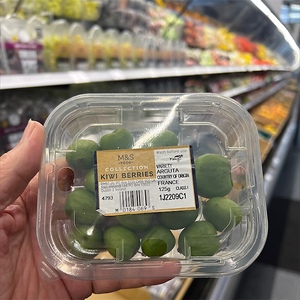
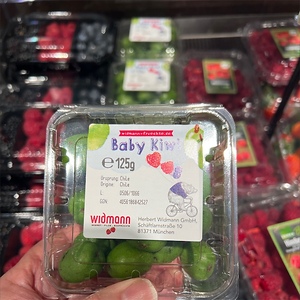
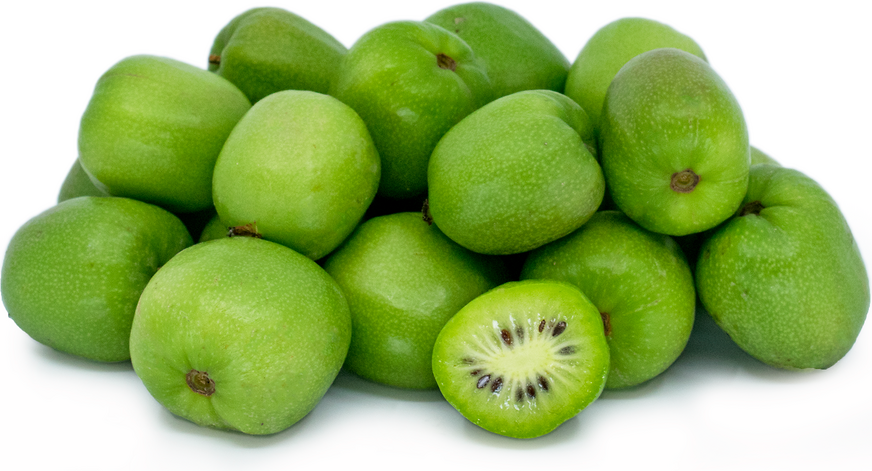
Baby kiwis are small, hairless fruits similar in size to grapes and kumquats. They range from about 2.5 to 10 centimeters long with a spherical to cylindrical shape. These fruits have razor-thin, fuzz-free skin that feels smooth and leathery to the touch. This lime-colored skin is spotted with faint light green dots speckled across its surface. Inside, their flesh transitions from lime to light green as it reaches the center of the fruit. This flesh is studded with a circular formation of black, edible micro seeds and has a succulent and tender texture. Baby kiwis have a distinctly tropical and tart taste that’s sweeter than larger kiwi varieties and has notes of citrus.
Seasons/Availability
Baby kiwis are available from mid-summer through mid-fall.
Current Facts
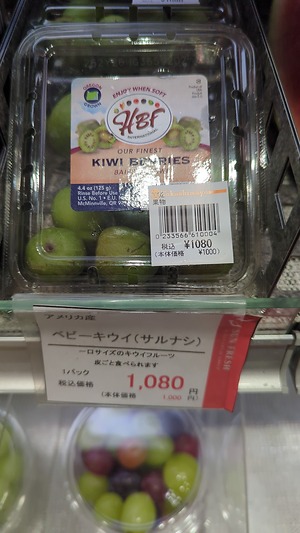
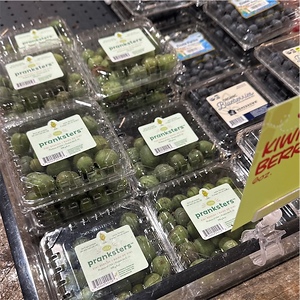
Baby kiwis are botanically classified as Actinidia arguta and belong to the Actinidiaceae family, which includes over 50 species, such as larger kiwis and Chinese gooseberries. Within this family, fruit varieties feature a range of flesh colors, including green, orange, and yellow. Baby kiwis are often referred to as Kiwi berries because of their small, berry-like size. They are valued for their ornamental appeal, resembling grapes as they thrive on vines, and are also well-suited for growing on trellises, arbors, fences, and patio overheads. The primary use of Baby kiwis is culinary, as they offer a convenient, hairless alternative to larger kiwis and can be eaten without peeling.
Nutritional Value
Baby kiwis are an excellent source of vitamin C, which supports immune function, promotes skin health, and acts as a powerful antioxidant. Potassium in Baby kiwis helps regulate blood pressure and supports proper heart and muscle function. Their high fiber content aids digestion, helps maintain healthy cholesterol levels, and supports gut health. They provide calcium for strong bones and teeth, along with iron, which is essential for red blood cell production and oxygen transport. With significant amounts of vitamins A and E, Baby kiwis also support vision, skin health, and protect cells from oxidative damage.
Applications
Baby kiwis can be used in all the same recipes and applications as larger-sized kiwis. They are most often served fresh and can be eaten out of hand or chopped into fruit salads with bananas, grapes, blueberries, blackberries, strawberries, and apples. Baby kiwis can be tossed onto green salads, yogurt parfaits, fruit skewers, cocktails, smoothies, and charcuterie boards. They do well as a topping for sweets like fruit tarts, cakes, ice cream, mousse, cold pies, pancakes, waffles, and jams. Baby kiwis are complemented by the flavors of feta cheese, camembert cheese, mozzarella, goat cheese, peppers, tomatoes, avocados, mint, basil, lemon, lime, honey, vanilla, farro, stewed meats, chutneys, and honey. Baby kiwis are delicate fruit and can deteriorate quickly after harvesting. They should be stored in a sealed bag in the refrigerator for one to two weeks.
Ethnic/Cultural Info
The kiwi species is not native to New Zealand, despite the fact that the term kiwi refers to people from that country. They were brought there by the principal of Wanganui Girls’ College in China and were initially called the Chinese gooseberry because New Zealanders thought they tasted like gooseberries. When New Zealand started exporting these fruits to the United States during the Cold War, the name was almost changed to melonettes but wasn't because melons were being penalized with import tariffs at that time. This is when the name kiwi was settled on in honor of the country they originated from.
Geography/History
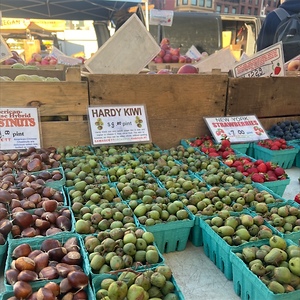
Baby kiwis are native to Northern China, Korea, Siberia, and Japan, along with the larger-sized kiwi. The kiwi species once grew on wild trees and bushes in the mountains of Southwestern China. They were introduced into Europe and New Zealand in the early 1900s, the latter of which soon dominated the commercial kiwi-growing landscape for the majority of the 20th Century. Baby kiwis were brought to the United States in the late 1800s but a commercial variety wasn’t found until the 1990s at the Hurst's Berry Farm in Sheridan, Oregon. Baby kiwis are subtropical plants with the ability to survive where larger kiwis cannot, withstanding subzero temperatures during non-fruiting periods. The largest commercial growing regions for Baby kiwis are in California, Oregon, and New Zealand where they can be found at specialty stores, co-ops, and farmers’ markets.
Recipe Ideas
Recipes that include Baby Kiwi. One
 is easiest, three is harder.
Latest in season fruits and vegetables posted from the Specialty Produce App