This website uses cookies, pixels, and other tracking technologies to personalize content, analyze how our site and apps are used, and create aggregated statistics.
We disclose data about site and app users to third parties so we can target our ads to you on other websites, and those third parties may use that data for their own purposes.
For more information on how we collect, use, and disclose this information, please review our
Privacy Policy.
Continued use of this site means you consent to our Privacy Policy.
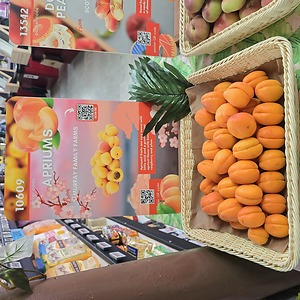
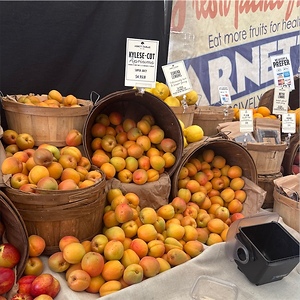
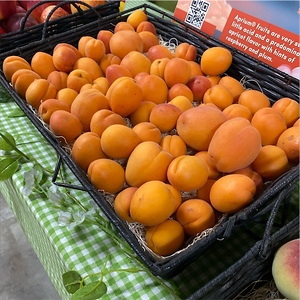
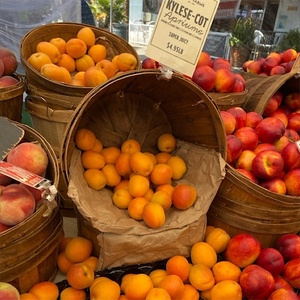
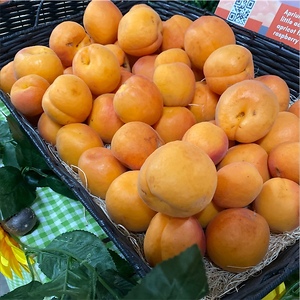
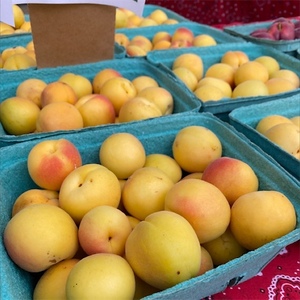
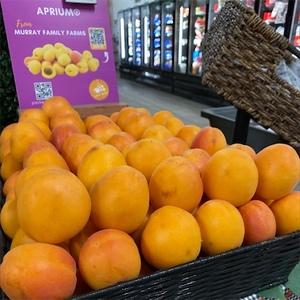
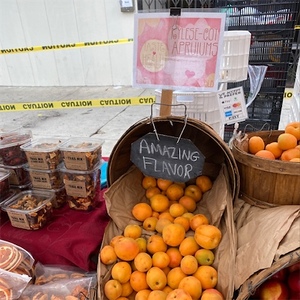
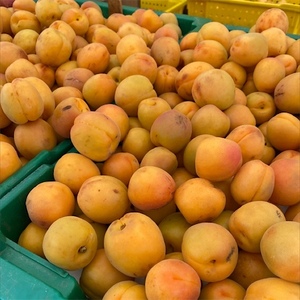
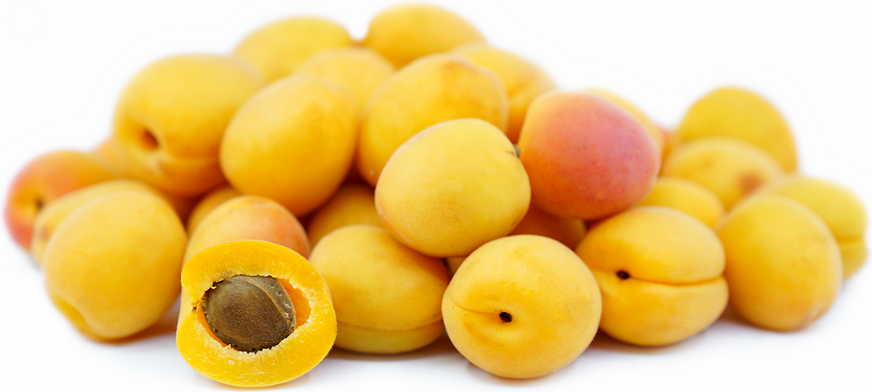
Apriums® are small, round fruits that measure about 5 to 6 centimeters in diameter and have a characteristic apricot shape with a defined suture running from the stem to tip. They have a vibrant yellow-orange hue that may develop red-blushed tones. Their smooth skin is covered in a light coat of fuzz and offers a firm texture. Apriums® flesh is juicy and firm, possessing the same golden hue as their skin. This flesh doesn’t adhere to the central seed, which is dark brown, round, and makes up a significant portion of the inside of the fruit. Apriums® are very sweet with little acid. They have a predominantly apricot flavor with hints of raspberry and plum.
Seasons/Availability
Apriums® are available from late spring to summer.
Current Facts
Apriums® are botanically classified as Prunus armeniaca x Prunus salicina and belong to the Rosaceae family along with other stone fruits like apricots, cherries, peaches, and nectarines. These hybrid fruits are often called Aprium® apricots because they are made up of about 75% apricot and only 25% plum. The tree that produces these fruits bears another hybrid called the Pluot®, which is conversely 75% plum and 25% apricot. This occurs because when plum pollen is used for pollination, the resulting fruit will have predominantly plum characteristics. If apricot pollen is used, the fruit will carry primarily apricot qualities. There are many different Aprium® cultivars including Flavorella, Bella Sweet, Honey Gold, Purple Rose, Cot-n-Candy, Leah Cot, Summer Delight, and Poppy Red, many of which develop at different points throughout the season.
Nutritional Value
Apriums® have many of the same nutritional benefits as apricots. They are a good source of vitamin A, supporting eye health, immune system function, and skin integrity as well as providing essential nutrients for cell growth and tissue repair. They also contain vitamin C, a nutrient that shields cells from free radical damage, enhancing immune response, and promoting collagen production for healthy skin, bones, and connective tissues. Apriums® have lutein and zeaxanthin, both carotenoids concentrated in the eyes that help protect against damage from blue light and may reduce the risk of age-related macular degeneration. These antioxidants combat oxidative stress, protecting cells from damage caused by free radicals and contributing to long-term eye health and skin vitality, making them a beneficial choice for overall wellness.
Applications
Apriums® are ideal for eating raw but can also be cooked, stewed, frozen, or preserved. They can serve as a substitute in any recipe calling for apricots. Apriums® are frequently incorporated into green salads, fruit bowls, salsas, and charcuterie boards alongside soft cheeses, nuts, and crackers. These fruits may be cooked down or macerated for jams, sauces, sorbets, ice creams, or smoothies. Apriums® can be incorporated into barbecue sauces for chicken, diced into an apricot and wild rice stuffing for pork roast, chopped into a turkey salad sandwich with celery and cashews, or slow-cooked with herbs and spices to complement meats. Complimentary pairings include other stone fruits, honey, egg custards, lavender, citrus, strong spices, nuts, soft cheeses, and vanilla. Ripen Apriums® at room temperature and then refrigerate for up to five days.
Ethnic/Cultural Info
Much of the commercial plum production and hybridization in North America can be attributed to Luther Burbank. He introduced over 100 plum cultivars, including the popular Santa Rosa, a complex hybrid of several plum species. He was also the first to cross plums with apricots, creating plumcots. Decades later, Floyd Zaiger of Zaiger Genetics advanced hybridization. Zaiger was a fruit farmer and hybridizer from Modesto, California who devoted much of his life to creating stone fruit hybrids. Out of the hundreds he bred in his lifetime, only a few went on to become hybrids that are still eaten today. Some of the most impressive are Apriums®, Pluots®, Nectaplums, Peacotums, and Pluerries.
Geography/History
Apriums® were developed in the late 1980s by Floyd Zaiger of Zaiger Genetics in Modesto, California. These fruits thrive in warm climates with dry summers and mild winters. They were created using a complex, multi-generational process that took up to fifteen years and involved numerous crossings to properly produce. After Zaiger’s initial success, growers across the country began creating their own unique crosses. Several orchards in California's Central Valley now offer proprietary cultivars that are popular among home growers, with varied harvest dates suitable for both commercial and family farms. Today, Aprium® fruits are mostly found at farmers' markets and specialty grocers in the United States.
SPECIALTY PRODUCE
1929 Hancock St San Diego 92110
View on Instagram
(619) 295-3172 [email protected]
Apriums® are small, round fruits about 5 to 6 centimeters in diameter, showcasing a yellow-orange hue with possible red blushes. Their skin, covered with light fuzz, is firm, while the flesh inside matches the skin's golden tone. Apriums® are juicy, sweet, and offer gentle hints of raspberry and plum alongside their dominant apricot flavor. The flesh does not cling to the dark brown seed inside—an essential feature of their design.
Arnett Farms
4019 W. Muscat Ave.
Fresno CA 93706 [email protected]
Apriums® can complement a variety of dishes, from charcuterie boards with soft cheeses and nuts to adding sweetness to barbecue sauces for chicken. They can be transformed into jams, sorbets, or smoothies and pair well with flavors like lavender, citrus, egg custards, and honey. To maximize freshness, ripen them at room temperature and refrigerate for up to five days once ready to eat.
Specialty Produce
1929 Hancock St Suite 150 San Diego CA 92110
View on Instagram
(619) 295-3172 [email protected]
Apriums from Murray Family Farms. Apriums® are botanically classified as Prunus armeniaca x Prunus salicina, part of the Rosaceae family with other stone fruits like apricots and peaches. These hybrids are approximately 75% apricot and 25% plum, earning them the nickname "Aprium® apricots." They are rich in vitamin A for eye health and immune function, vitamin C for cellular protection, and antioxidants like lutein and zeaxanthin, which support long-term eye health and reduce oxidative stress.
Arnett Farms
Apriums® were developed in the late 1980s by Floyd Zaiger of Zaiger Genetics, based in Modesto, California. Their creation involved a complex process spanning up to fifteen years, including many crossings to achieve the ideal fruit. Thriving in warm climates with dry summers, Apriums® are now cultivated by various growers, especially in California’s Central Valley. They are primarily sold at farmers' markets and specialty grocers across the United States.
Specialty Produce
1929 Hancock St Suite 150 San Diego CA 92110
View on Instagram
(619) 295-3172 [email protected]
Apriums from Murray Family Farms. Luther Burbank's pioneering work in hybridization laid the groundwork for stone fruit hybrids by introducing over 100 plum cultivars and creating plumcots through the first apricot-plum crosses. Building on this, Floyd Zaiger of Zaiger Genetics in Modesto, California, developed modern hybrids like Apriums®, Pluots®, and Nectaplums. These fruits represent the culmination of decades of dedication to perfecting unique flavors and textures in stone fruit.
Weiser Family Farms
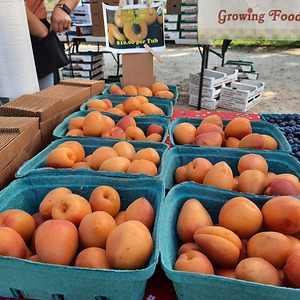
Apriums from Murray Family Farms. Apriums are small fruits with vibrant yellow-orange skin that may blush red and are covered in a light fuzz. They measure about 5 to 6 centimeters in diameter and have juicy, golden flesh that doesn’t cling to their central brown seed. Their flavor combines a sweet apricot essence with subtle hints of raspberry and plum, offering a delightful balance of sweetness and low acidity.
Specialty Produce
1929 Hancock St Suit 150, San Diego, CA 92110
View on Instagram
6192953172 [email protected]
Apriums from Murray Family Farms. Apriums® are a versatile fruit that can be enjoyed raw or used in various recipes, including jams, sauces, smoothies, and even barbecue sauces for chicken. They pair well with soft cheeses, nuts, and spices, making them great for charcuterie boards or salads. To maximize freshness, ripen them at room temperature first and then refrigerate for up to five days.
Murray Farms
Apriums from Murray Family Farms. Apriums® are a unique hybrid fruit belonging to the Rosaceae family, made up of 75% apricot and 25% plum. Their tree also produces a related hybrid called Pluots®, which reverse the ratio to be 75% plum and 25% apricot. These hybrids result from specific pollination methods—plum pollen creates plum-dominant traits, while apricot pollen develops apricot-dominant fruits. Cultivars include Flavorella and Cot-n-Candy among others.
Arnett Farms
420 W. Shaw Ave.
Fresno CA 93704
Apriums® were developed in the late 1980s by Floyd Zaiger of Zaiger Genetics in Modesto, California. They thrive in warm climates with dry summers and mild winters. Created through a fifteen-year, multi-generational crossing process, these fruits are popular among home growers and are mainly sold at farmers' markets and specialty grocers in the United States.
Burkart Organics
Luther Burbank played a pivotal role in North American plum production, introducing over 100 plum cultivars. Among them is the beloved Santa Rosa, a hybrid of multiple plum species. Burbank was also the first to create plum-apricot hybrids, known as plumcots. Decades later, Floyd Zaiger of Modesto, California, built on his work, developing stone fruit hybrids like Apriums®, Pluots®, Nectaplums, Peacotums, and Pluerries, though only a few became widely consumed.






 is easiest, three is harder.