



Apricots
Estimated Inventory, 120 ct : 0
Description/Taste
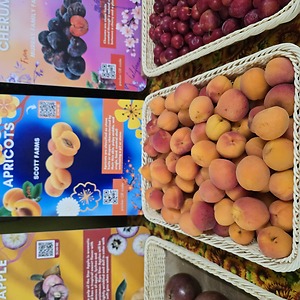
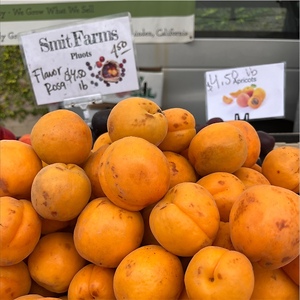
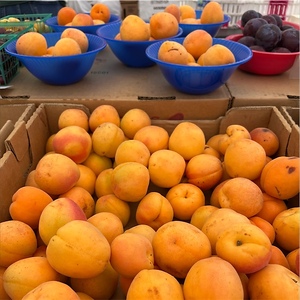
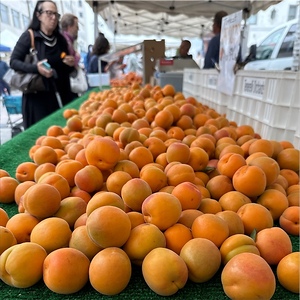
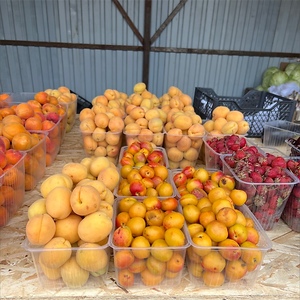
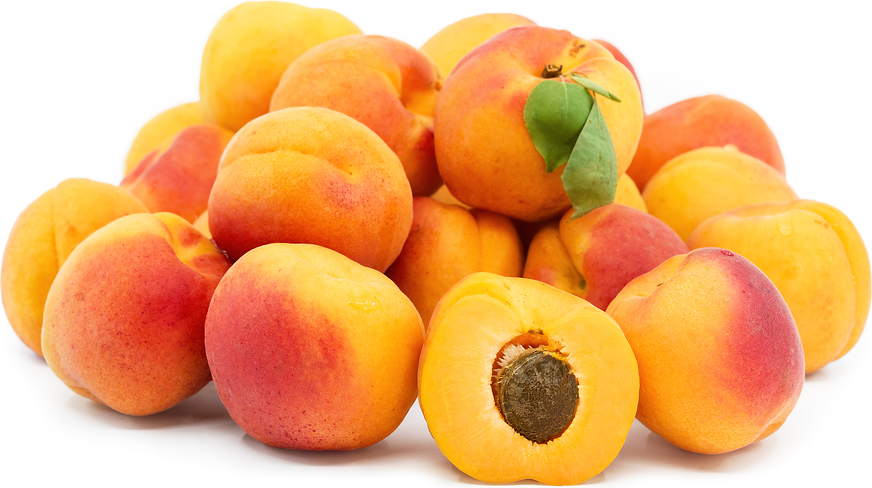
Apricots are small, round fruits that flourish on trees. They can take on a slightly oblong or irregular shape, usually measuring 3 to 4 centimeters wide. Apricots may be pale yellow, gold, or burnt orange and have a rosy red-orange blush that covers varying amounts of their skin. This thin skin is smooth and velvety with a seam-like groove that goes from the top to the bottom of the Apricot and divides them into symmetrical halves. The fruit is easily peeled to reveal a juicy and tender flesh with a golden yellow hue that becomes slightly lighter towards the center of the fruit. This flesh has a firm texture that becomes softer and easier to bite into as the fruit matures. In the center of the flesh is a single, hard, central shell enclosing a pit or stone. The fruit has a sweet yet tart flavor that tastes somewhere between a peach and a plum.
Seasons/Availability
Apricots are available from late spring to summer.
Current Facts
Apricots are botanically known as Prunus armeniaca and are members of the rose family, closely related to plums, peaches, cherries, and almonds. Their botanical name is a reference to Armenia, where the ancient Greeks believed the Apricot came from. Popular cultivars include Blenheim, Sungold, Autumn Royal, Moorpark, and Royal Rosa. The Apricot is also a parent fruit for successful hybrids, such as an Apricot-plum cross called pluots as well as apriums and plumcots. Apricots come from all over the world, including those of European and Western origin, as well as Central Asian and Eastern varieties.
Nutritional Value
Apricots are rich in vitamin A and beta-carotenes, supporting healthy vision, particularly in low-light conditions. These nutrients also promote radiant skin by encouraging cell regeneration. The vitamin C in this fruit boosts the immune system, aids in collagen production for skin and joint health, and protects against oxidative stress, while also enhancing iron absorption, which is vital for red blood cell production and preventing anemia. The potassium content in Apricots helps regulate blood pressure, supports heart health, and maintains proper muscle and nerve function. Additionally, the calcium in Apricots strengthens bones and teeth, further supporting muscle function and cardiovascular stability.
Applications
Apricots are incorporated into both raw and cooked applications. They may be roasted, grilled, baked, broiled, poached, frozen, cooked into jams, or puréed for sauces and dressings. Apricots are frequently preserved through canning and drying due to their highly perishable nature. They're popularly selected for baked goods like cakes, pies, tarts, crumbles, cheesecakes, and breads. When cooked or carmelized, the fruit compliments proteins like roasted chicken, lamb, duck, ham, and meatballs. Apricots may be diced into salsas, salads, quinoa bowls, yogurt, and stuffings. They are popularly incorporated into liqueurs like brandy. Apricots pair well with other stone fruits, including cherries, plums, and almonds, as well as with hazelnuts, pistachios, coconut, vanilla beans, honey, white chocolate, egg custards, soft cheeses, lemon and orange zest, rocket, ginger, leeks, thyme, basil, chickpeas, squash, and sweet white wines. The pits of some Eastern Apricot varieties have a flavor and appearance similar to an almond that must be roasted before consumption. Store Apricots on the counter at room temperature until ripe and soft to the touch. They should then be eaten or stored in the refrigerator and eaten within a week. For longer storage, they can be blanched, sliced, and frozen for up to 3 months.
Ethnic/Cultural Info
In many cultures, Apricots have been used in fertility rituals, and their blossoms were often featured in wedding ceremonies. The Apricot harvest traditionally signified the end of winter and the arrival of spring, further strengthening their association with rebirth and renewal. Apricots also held symbolic significance in both Greek and Roman folklore. When Aphrodite, the Greek goddess of love and beauty, was born, she rose from the sea on a massive scallop shell encircled by Apricot trees. In Roman mythology, Aphrodite is known as Venus and was believed to eat Apricots to enhance her allure. Apricot trees were often planted near temples in her honor.
Geography/History
Apricots originated in China and Central Asia around 2000 BCE. They have been cultivated in China, Armenia, and India since antiquity. Trade routes like the Silk Road helped Apricots spread from Asia into Europe, and eventually the New World. They arrived in Europe through Armenia, giving the fruit its scientific name, Prunus armenaica. Alexander the Great is credited with introducing Apricots to Greece, while King Henry VIII’s gardener brought them to England from Italy. Apricots eventually made their way to Virginia through English settlers in the early 1700s, while Spanish missionaries introduced them to the American West Coast in the 18th century. Wild Apricots may be found in forests, grasslands, and mountainous regions of Central Asia. Most varieties are cultivated in private gardens or grown in commercial orchards. They flourish in temperate climates with dry summers and cool winters. Apricots are grown on every continent except Antarctica. They are particularly popular in Iran, Algeria, Uzbekistan, Turkey, Italy, China, Armenia, and the central coast of California where they can be found at larger grocery stores as well as street markets and home gardens.
Recipe Ideas
Recipes that include Apricots. One
 is easiest, three is harder.
Podcasts

Latest in season fruits and vegetables posted from the Specialty Produce App
View Full Share Market®