



Fava Beans
Estimated Inventory, 28 lbs : 3.46
This item was last sold on : 06/29/25
Description/Taste
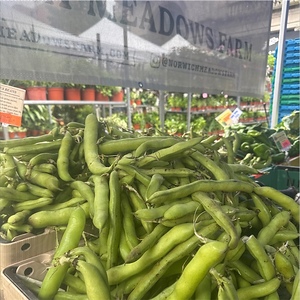
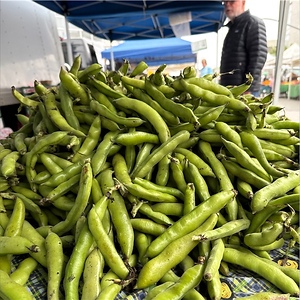
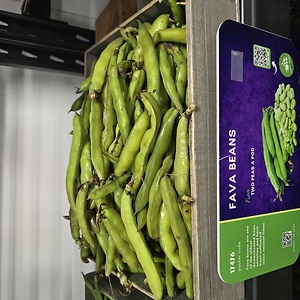
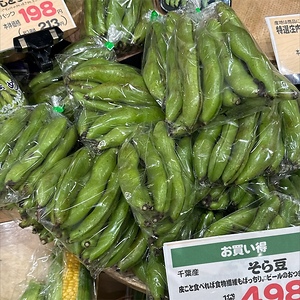
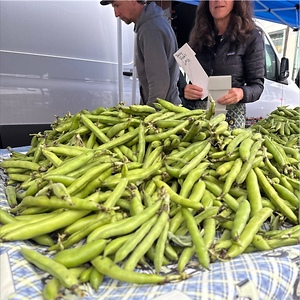
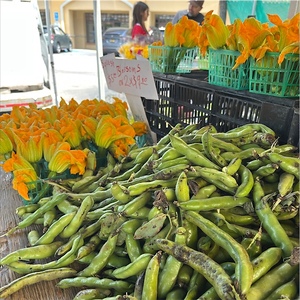
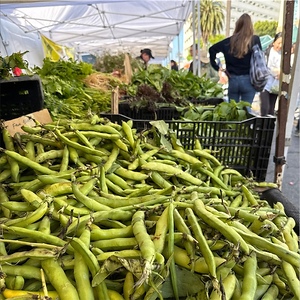
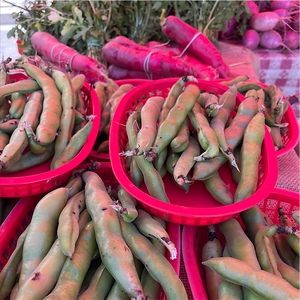
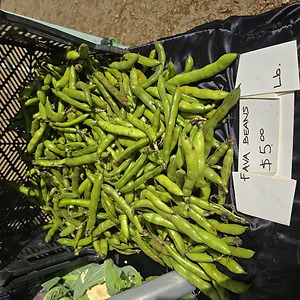
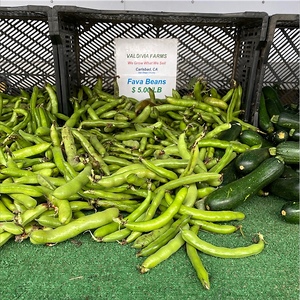
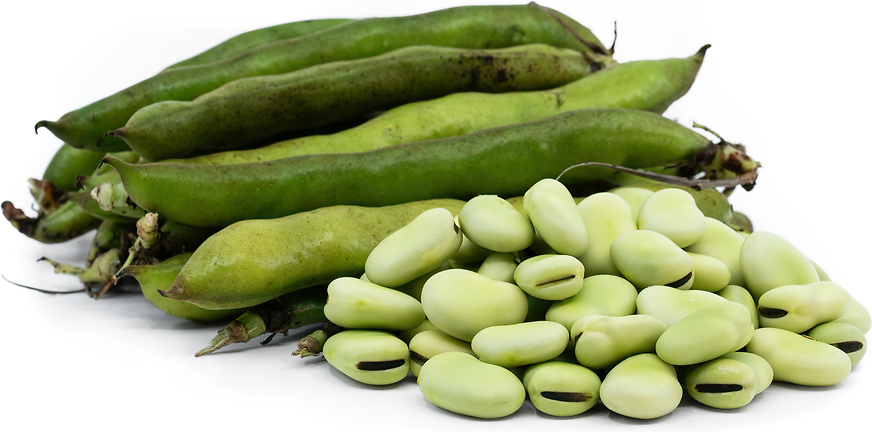
Fava beans develop in thick, elongated pods, averaging 15 to 25 centimeters in length and 2 to 3 centimeters in diameter. The pods are generally bright green, bumpy, and fibrous with a leathery texture, sometimes covered in a downy coating. Fava bean pods are inedible, and when opened, they reveal a cottony interior encapsulating 2 to 8 large, plump, and flat green beans. The oval, curved beans average 5 to 10 millimeters in diameter and are encased in a white, waxy, and semi-translucent skin. This protective coating is edible but has a fibrous, chewy consistency with a slightly bitter, vegetal flavor. Fava beans have a tender to starchy texture depending on the bean's maturity and develop a soft, buttery feel when cooked. The beans contain sweet, earthy, green, and nutty flavors mixed with a delicate grassy bitterness.
Seasons/Availability
Fresh Fava beans are available for a short season in the spring, while dried Fava beans are available year-round.
Current Facts
Fava beans, botanically classified as Vicia faba, are an ancient legume belonging to the Fabaceae family. The plump, thick bean pods grow on seasonal plants that can reach up to almost two meters in height and are one of the oldest cultivated plants recorded among ancient civilizations. Fava beans are also known as Broad beans, Windsor beans, and sometimes Field beans and were historically used as a ground cover crop. The Fava plant is known for its ability to nurture soils with added nutrients such as nitrogen and was helpful to farmers to control weeds. For many years, Fava beans were seen more as a rotational crop and livestock feed rather than a crop for human consumption, but over time, farmers began to turn to the beans as an important protein source. In the modern-day, there are many different varieties of Fava beans, and chefs view the early, cool-season legumes as a sign of spring. Fava beans are only available for a limited time and offer a bright, grassy flavor to spring dishes.
Nutritional Value
Fava beans are an excellent source of fiber to stimulate the digestive tract and are rich in folate, which helps produce red blood cells to transport oxygen through the bloodstream. The beans are also a good source of manganese to develop connective tissue in the body, copper to maintain metabolism, phosphorus to strengthen bones and teeth, and contain iron, potassium, and magnesium. It is important to note that some consumers may have a genetic trait known as favism, a reaction caused by consuming large quantities of Fava beans that may cause anemia. Discretion should be used when consuming Fava beans. Always discuss health-related questions with a doctor before eating large amounts of the beans.
Applications
Fava beans have a fresh, sweet, and subtly bitter flavor well-suited for both raw and cooked applications. Young beans are primarily eaten fresh as they bear a more tender texture, but mature beans will become starchier and are only edible once cooked. Mature Fava beans also require some preparation before they can be consumed. The pods can be unzipped and opened, removing the beans, and the beans should be blanched and then shocked in cold water to remove the thin, protective coating. Once prepared, Fava beans can be boiled, fried, roasted, stewed, steamed, or mashed. The beans can be tossed into green salads, dressed in oils and herbs as a side dish, stirred into soups, or pureed into sauces such as pesto, dips, and spreads. Fava beans can also be used as fillings for fritters, mixed into grain bowls, combined into pasta, or incorporated into dishes featuring other springtime ingredients. Beyond fresh beans, Fava beans are often dried for extended use, and once reconstituted and cooked, they will bear a soft, chewy consistency reminiscent of chickpeas. Fava beans pair well with artichokes, asparagus, peas, spinach, morel mushrooms, meats such as bacon, lamb, and poultry, seafood, chicory, lentils, leeks, citrus, and cream or wine-based sauces. Fresh, unshelled Fava beans will keep up to 10 days when stored in a container in the refrigerator. Once shelled, the beans should be immediately consumed for the best quality and flavor but will keep up to 3 days in the fridge. Fava beans can also be frozen for up to one month.
Ethnic/Cultural Info
Fava beans are incorporated into ful mudammas, a popular, hearty dish comprised of slow-cooked Fava beans mixed with spices and other aromatics. There are many different variations of ful madammas found throughout the Middle East, and the dish can be served at any meal of the day with accompaniments such as garlic sauce, fried eggs, bread, or falafel. Ful mudammas also happens to be Egypt’s national dish. There are many different types of Fava beans in Egypt, and the most commonly used variety is a small, rounder Fava bean known as ful hammam or bath fava. Legend has it that Fava beans acquired the name “bath beans” in Cairo, Egypt, during the Middle Ages. In city centers, bathhouses were open during the day for residents, and attendants would keep the water warm with huge fires fueled by burning trash. Once the bathhouses closed for the evening, the fires would continue to produce warm embers, and Fava beans would be placed in large pots to slowly cook. These cooked beans were sold as breakfast dishes the next day, creating the early versions of ful medammas.
Geography/History
Fava beans are one of the oldest domesticated bean varieties and have been cultivated since ancient times. Experts found archeological remains in Israel and believe these findings can be traced back as early as the Neolithic period, from 6800 to 6500 BCE. Fava beans were later introduced from the Middle East into the Mediterranean in the early ages, eventually traveling along trade routes into Northern Africa and Southwestern Asia. The beans were prevalent in Ancient Egyptian, Greek, and Roman civilizations, where they were used for religious rituals, livestock feed, and as a source of protein. Today Fava beans are found worldwide and are cultivated in temperate regions with cool seasons. The beans are still used in crop rotations for farming, animal feed, and human consumption and are sold through local markets in the spring in North America, South America, Europe, Asia, Africa, and Australia.
Featured Restaurants
Restaurants currently purchasing this product as an ingredient for their menu.
| Tom Hams Light House | San Diego CA | 619-291-9110 |
| The Farm Golf Club | Rancho Santa Fe CA | 858-756-5585 |
| Encontro North Park | San Diego CA | 310-955-6333 |
| Top of the Market | San Diego CA | 619-234-4867 |
| Bridges at Rancho Santa Fe | Rancho Santa Fe CA | 858-759-6063 |
| Kettner Exchange | San Diego CA | 909-915-9877 |
| Hotel La Jolla - Sea & Sky | La Jolla CA | 858-459-0261 |
| Mister A's | San Diego CA | 619-239-1377 |
| Javier Plascencia (Animalon) | Bonita CA | 619-295-3172 |
| Cardellino | San Diego CA | 619-722-3398 |
| Lodge at Torrey Pines Main | San Diego CA | 858-453-4420 |
| Make Stuff Good | San Diego CA | 949-547-9470 |
| Catania La Jolla | La Jolla CA | 619-884-5350 |
| Yoann Taboyan, Personal Chef | San Diego CA | 347-277-1958 |
| The Whaling Bar | La Jolla CA | 858-355-9218 |
| Juniper & Ivy | San Diego CA | 858-481-3666 |
| LANA | Solana Beach CA | 602-758-2596 |
| Pacific Yacht Agents | Los Angeles CA | 808-214-0970 |
Recipe Ideas
Recipes that include Fava Beans. One
 is easiest, three is harder.
Latest in season fruits and vegetables posted from the Specialty Produce App